The Definitive Guide to Manta Point Komodo: Wet Season Manta Aggregation
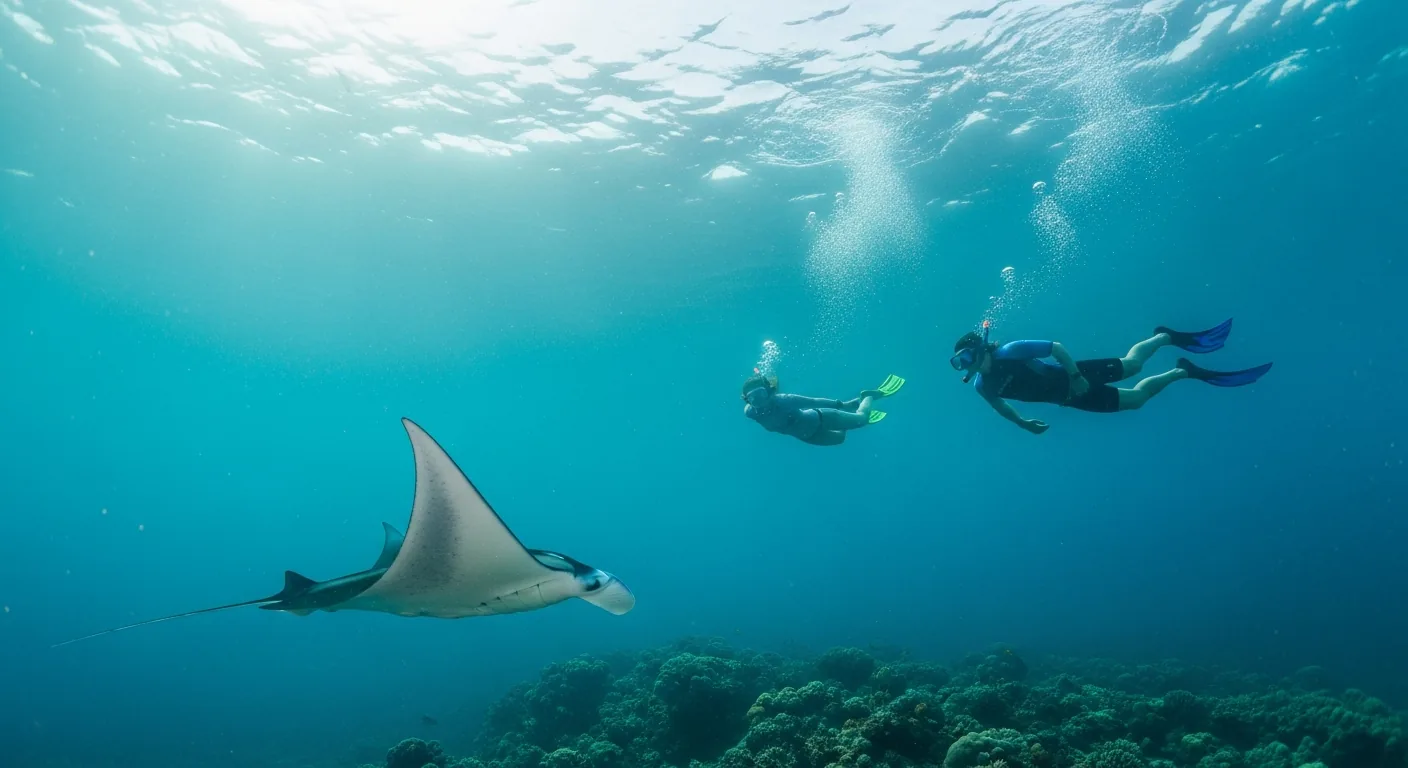
The water moves with purpose. Below the surface, the sound is a muted chorus of crackling reef life and the rhythmic exhalations from your regulator. You are drifting, carried by a current that serves as the lifeblood of Komodo National Park, a UNESCO World Heritage site established in 1980. The seascape of Karang Makassar is not one of dramatic coral walls, but a vast, sloping plain of rubble and sand, a seemingly austere environment. Then, a shadow detaches from the periphery. It resolves not into one shape, but dozens. A squadron of reef manta rays, some with wingspans exceeding four meters, glides effortlessly against the flow, their cephalic fins curled for feeding. This is the spectacle of Manta Point Komodo, an encounter that hinges less on luck and more on a precise understanding of season and science. See also: explore Dive Vs Snorkel Manta Point.
For discerning travelers, the central question is not if one should experience this, but when. Conventional wisdom points to the dry season (April to October) for its placid seas and clear skies. Yet, for those seeking the profound experience of witnessing large manta aggregations, the paradigm shifts. The period between November and March, Komodo’s wet season, presents a counterintuitive opportunity. The very conditions that deter some travelers—monsoonal rains and plankton-rich waters—are the precise catalysts for the archipelago’s most significant gathering of these majestic filter feeders. Understanding this ecological timing is the key to transforming a standard dive trip into a definitive marine biological event.
Decoding Komodo’s Seasons: Why the Wet Season Reigns for Manta Encounters
The marine ecosystem of the Komodo archipelago, which spans 1,733 square kilometers, is governed by two powerful forces: the Indonesian Throughflow, a massive volume of water moving from the Pacific to the Indian Ocean, and the distinct monsoonal seasons. While the dry season offers exceptional visibility, often exceeding 30 meters, the cooler water temperatures (ranging from 24-27°C) and reduced nutrient load result in more sporadic manta sightings. The mantas are present, but they are typically transient, moving between cleaning stations and feeding grounds. See also: explore Contact.
The wet season, from approximately late November through March, inverts this equation. The northwest monsoon winds push nutrient-rich surface waters into the region. This effect is compounded by terrestrial runoff from the rains, which washes organic matter into the sea. The result is a substantial, predictable plankton bloom—a veritable banquet for manta rays. This abundance of food is the primary driver for the large aggregations observed at Karang Makassar Komodo. While visibility may be reduced to a still-respectable 15-20 meters, the sheer density of marine life is amplified. Water temperatures are also more comfortable, averaging 26-29°C. Dr. Ardi Setyawan, a marine biologist with the Indonesian Institute of Sciences (LIPI), notes, “The wet season aggregations are primarily feeding-driven. We observe a significant increase in both the number of individuals and the duration of their presence at key sites like Karang Makassar during these months. It’s a critical period for their energy intake.”
Karang Makassar: Anatomy of Komodo’s Manta Epicenter
Manta Point, known locally and on nautical charts as Karang Makassar, is a unique dive site that defies typical expectations. It is not a reef in the traditional sense, but a vast, submerged channel of coral rubble and sand flats located between the islands of Komodo and Tatawa Besar. Its strategic position within the Lintah Strait makes it a funnel for strong currents, which can run between 2 to 4 knots. This constant flow is precisely what makes it an ideal feeding ground. See also: book Home.
The topography is relatively shallow, with depths ranging from 5 to 15 meters, making it one of the few world-class megafauna sites equally accessible to snorkelers and divers. The experience here is almost always a drift. Boats drop participants at the up-current end of the channel, and the group is carried along the length of the site. The key is not to fight the current but to use it, staying low to the substrate where the flow is weaker. Divers often use reef hooks (on bare rock or rubble only, never on living coral) to hold their position and observe the activity. Snorkelers, meanwhile, can enjoy the spectacle from the surface, watching the mantas cruise just meters below. The sheer scale of the site means that on a productive day during the wet season, it is possible to see 20, 30, or even more individuals in a single komodo manta dive or snorkel session.
The Manta Aggregation Phenomenon: A Scientific Perspective
The gathering at Manta Point Komodo is a complex biological event involving two distinct species: the Reef Manta (*Mobula alfredi*), with a wingspan of up to 5 meters, and the larger, more elusive Oceanic Manta (*Mobula birostris*), which can reach over 7 meters from tip to tip. While Reef Mantas are the more common residents, the nutrient-rich waters of the wet season also attract the pelagic Oceanic giants. See also: Manta Point Komodo About.
The behavior observed is primarily feeding. Manta rays are filter feeders, using their cephalic fins to funnel plankton-rich water into their mouths as they swim. During a strong bloom, you can witness remarkable displays of coordinated feeding, including “barrel rolling” and “chain feeding,” where multiple mantas line up head-to-tail to efficiently sweep a dense patch of plankton. This is the focus of a premier komodo manta snorkel experience. Beyond feeding, Karang Makassar also features several smaller, isolated coral bommies that serve as “cleaning stations.” Here, mantas hover patiently while cleaner wrasse and other small fish remove parasites from their skin and gills. This symbiotic relationship is a critical part of their life cycle and provides exceptional opportunities for underwater photographers to capture detailed behavioral shots.
- Feeding Behavior: Observe surface feeding, chain feeding, and barrel rolling, particularly during peak plankton blooms in January and February.
- Cleaning Stations: Small coral outcrops where mantas queue for cleaning services from wrasse, offering prolonged, close observation.
- Social Interaction: Witness courtship trains, where several males pursue a single female, a behavior more frequently observed during the high-energy wet season.
Planning Your Expedition: Logistics from Labuan Bajo
All excursions to Manta Point Komodo originate from the burgeoning harbor town of Labuan Bajo (Airport Code: LBJ) on the western tip of Flores. The journey to Karang Makassar typically takes between 1.5 to 3 hours, depending on the vessel. Day-trip operators offer a range of options, and choosing the right one can significantly shape your experience. The Komodo National Park entrance fee is a mandatory component, costing approximately IDR 275,000 (~$18 USD) per person on weekdays and IDR 350,000 (~$23 USD) on weekends and public holidays, payable directly to the park authorities.
| Vessel Type | Travel Time to Site | Approx. Cost (per person/day) | Capacity | Primary Advantage |
|---|---|---|---|---|
| Fiberglass Speedboat | 90 – 120 minutes | $150 – $250 USD | 8 – 16 guests | Speed; allows for more sites in one day (e.g., Padar Island, Pink Beach). |
| Traditional Phinisi | 2.5 – 3.5 hours | $100 – $180 USD | 15 – 30 guests | Comfort; spacious sundecks, stable ride, more relaxed pace. |
| Private Charter | Varies | $1,200 – $3,000+ USD (full boat) | Varies | Total itinerary control; ideal for photographers and dedicated groups. |
For a focused komodo manta dive expedition, a private charter or a trip with a dive-centric operator is recommended. This ensures the itinerary prioritizes optimal tide and current conditions at Karang Makassar, rather than adhering to a rigid, multi-stop tourist schedule. Contact our specialists at Manta Point Komodo to discuss a bespoke itinerary tailored to the peak manta activity during your travel window.
Beyond Karang Makassar: Manjarite and Other Essential Sites
While Karang Makassar is the main event for manta encounters, a well-rounded Komodo itinerary includes a diversity of underwater environments. After the exhilarating, high-current drift of Manta Point, a second dive or snorkel at a calmer site provides a welcome contrast. Manjarite Komodo is a superb example. Located closer to Labuan Bajo, this site is renowned for its crystal-clear, protected waters and a gently sloping reef covered in vibrant soft corals and sea fans.
With depths from 3 to 12 meters, Manjarite is perfect for a relaxed afternoon. The lack of strong current allows for unhurried exploration and is particularly well-suited for macro photography. Here, you can find mandarinfish, ornate ghost pipefish, and a variety of colorful nudibranchs. It serves as an excellent counterpoint to the wide-angle, big-animal focus of Manta Point. Other complementary sites often included in a day trip are Siaba Besar, affectionately known as “Turtle Town” for its high density of green sea turtles, and Batu Bolong, a world-renowned pinnacle teeming with fish life, though it is subject to very strong currents and suitable only for experienced divers.
Essential Gear and Photographic Strategy for Manta Point Komodo
Success at Manta Point, especially for photographers, requires specific preparation. The combination of current, large subjects, and variable visibility demands a considered approach to both diving equipment and camera systems. The goal is to remain stable, safe, and ready to capture the action without disturbing the animals or the fragile environment.
- Diving Equipment: A reef hook is highly recommended for divers to maintain a stationary position on rubble patches without expending energy. A dive computer is mandatory for monitoring bottom time. A 3mm full-length wetsuit is typically sufficient for the wet season’s warmer waters.
- Camera System: A wide-angle or fisheye lens (e.g., 10-22mm for crop sensors, 16-35mm for full-frame) is essential to capture the full wingspan of a manta ray and its environmental context. Given the shallow depth and ambient light, strobes are not always necessary but can be used to add color and fill light, especially on overcast days.
- Photographic Technique: Set your camera for fast-focusing and continuous shooting. A shutter speed of 1/125s or faster is needed to freeze the motion of both the manta and the drifting diver. Approach mantas slowly from the side, allowing them to dictate the encounter. Never chase, block, or swim directly above or below them, as this can be perceived as a threat.
Your Action Plan for a Premier Komodo Manta Experience
Executing a successful expedition to witness the wet season manta aggregation requires timely and informed planning. By focusing on the correct season and logistics, you can position yourself for one of the planet’s great marine spectacles. Follow these steps for a seamless experience:
- Target the Optimal Window: Arrange your travel to Labuan Bajo (LBJ) between December and March for the highest probability of witnessing large manta feeding aggregations.
- Secure Park Access: Pre-book your Komodo National Park tickets online via the official portal to ensure entry, especially during peak holiday periods within the wet season.
- Arrange Your Vessel: Contact a reputable operator to book your day trip. For a tailored experience focused on manta encounters and photography, a private charter is the superior option. Discuss your objectives clearly.
- Confirm Credentials: Ensure your dive certification is current and that you have comprehensive travel and dive insurance. PADI or SSI Open Water certification is sufficient for a komodo manta snorkel or dive at Karang Makassar, but Advanced certification is recommended for other Komodo sites.
- Pack Strategically: In addition to standard travel items, pack reef-safe sunscreen, a reusable water bottle, motion sickness medication if needed, and all necessary dive and camera equipment, including backup batteries and memory cards.
The manta ray aggregation at Karang Makassar is a testament to the raw, untamed beauty of Komodo National Park. By aligning your visit with the rhythms of the monsoon, you are not merely a spectator but a witness to a crucial act in the life of the ocean. To begin planning your expertly guided expedition, contact our team.
Manta Point Komodo
Phone: +62 811-3941-4563
Email: bd@juaraholding.com
Office Address: Jalan Sunset Road No. 88, Kuta, Badung, Bali 80361, Indonesia.