The Definitive Guide to Manta Point Komodo: Karang Makassar & Manjarite
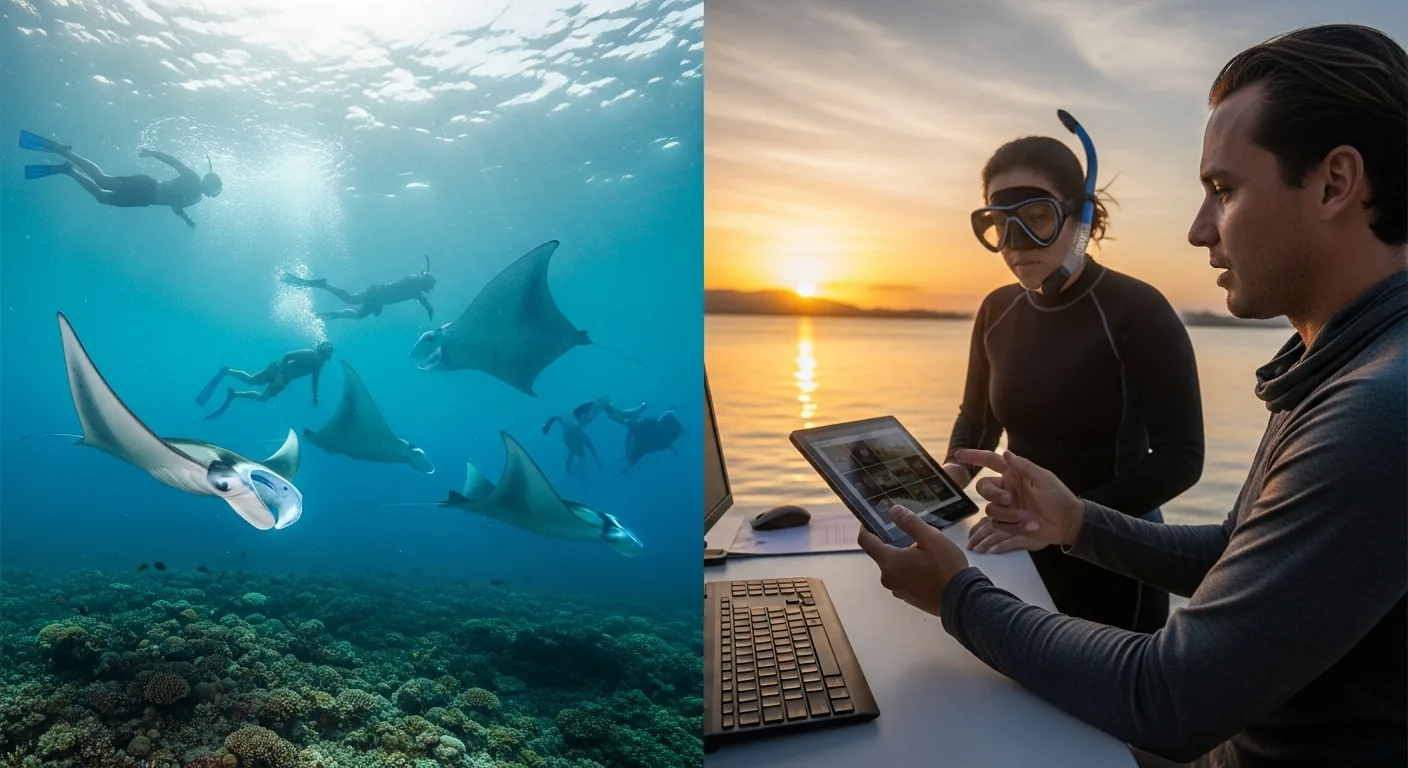
The water clarifies. What was a blur of blue resolves into a vast, sun-dappled expanse of rubble and sand, scrolling past at a determined pace. This is Karang Makassar, the site known throughout the diving world as Manta Point Komodo. There is no reef wall, no vibrant coral garden in the conventional sense. There is only the current, the clean-swept seafloor some 10 meters below, and the silent approach of a shadow. It grows, resolves into a diamond shape, and glides effortlessly against the force of the water—a Reef Manta Ray, *Manta alfredi*, with a wingspan of four meters. Soon, another appears, and another. You are not observing them; you are part of their procession, a guest in the grand, flowing ballroom of the Lintah Strait. This is the essence of a Komodo manta dive, an encounter defined not by static observation but by dynamic immersion. See also: learn about Manta Photography Tips Komodo.
This is a place of purpose. The strong currents that flow between the islands of Komodo and Rinca create a concentration of plankton, the primary food source for these filter-feeding giants. They gather here not for shelter, but for sustenance. To snorkel or dive at Karang Makassar is to witness a critical, natural behavior in one of the most significant manta ray aggregation sites on the planet. Our curated day trips from Labuan Bajo are designed to place you in the heart of this activity, conducted with the precision and respect that such a profound marine encounter demands. We pair the exhilarating drift of Manta Point Komodo with the serene ecological contrast of sites like Manjarite, offering a complete narrative of Komodo’s underwater realm. See also: this manta point komodo.
Karang Makassar: The Manta Aggregation Site Demystified
To understand the experience at Manta Point Komodo, one must first understand the topography and hydrodynamics of Karang Makassar itself. Unlike the dramatic walls of Batu Bolong, Karang Makassar is a subdued landscape. It’s an enormous, gently sloping channel, more than two kilometers in length, composed of coral rubble, sand patches, and the occasional bommie. Its seeming barrenness is its greatest asset. The channel acts as a funnel for the Indonesian Throughflow, with currents that regularly reach speeds of four knots or more. This constant flow of water is a conveyor belt of nutrition, delivering vast quantities of zooplankton that attract dozens, sometimes hundreds, of Reef Manta Rays (*Manta alfredi*). See also: Home.
The activity here is almost exclusively a drift. Whether snorkeling on the surface or diving at a depth of 5 to 15 meters, the objective is the same: to enter the water upstream and allow the current to carry you through the site. This method is both efficient and minimally invasive. Instead of fighting the water, you move with it, becoming a passive observer in the mantas’ world. The rays, accustomed to this powerful flow, hang almost motionless, their cephalic fins unfurled to channel plankton-rich water into their mouths. Others glide in elegant formations, banking and turning with minute adjustments of their pectoral fins. While the larger Oceanic Manta Ray (*Manta birostris*) is a rarer visitor to this specific site, the resident population of reef mantas provides a consistent and deeply moving spectacle. The key is observation, patience, and a deep respect for the power of the ocean that has shaped this singular environment. See also: Contact pricing.
Your Day Trip Itinerary: A Precisely Timed Marine Expedition
Our itineraries are structured to maximize time in the water during optimal tidal conditions while incorporating the diverse beauty of Komodo National Park. The day is a carefully orchestrated sequence of exploration, relaxation, and marine immersion aboard our 20-meter Phinisi-style day boat.
- 07:30: Your day begins with a private transfer from your accommodation in the Labuan Bajo area.
- 08:00: Departure from Labuan Bajo Harbor. Onboard, you’ll receive a comprehensive safety briefing and an introduction to the day’s dive and snorkel sites from your PADI-certified guide. Coffee, tea, and light pastries are served.
- 09:30: First water session at Manta Point Komodo (Karang Makassar). Guides will assess the current and select the ideal entry point for the drift. Divers and snorkelers enter the water in small, guided groups.
- 11:00: Surface interval. Fresh towels, fruit, and refreshments are provided as the boat repositions. This is a time for sharing observations and preparing for the second session.
- 12:30: Second water session. This could be a second drift at Karang Makassar if conditions and manta activity are exceptional, or a visit to a contrasting site like Manjarite for a different ecological perspective.
- 13:30: A freshly prepared Indonesian lunch is served on deck. Enjoy a selection of local dishes while anchored in a tranquil bay.
- 14:30: Afternoon activity. Depending on timing and guest preference, this may include a short trek on Padar Island for its iconic tri-bay panorama or a stop at the ephemeral sandbar of Taka Makassar.
- 16:00: The vessel begins its return cruise to Labuan Bajo, timed to coincide with the softer light of the late afternoon.
- 17:30: Arrival at Labuan Bajo Harbor, followed by a direct transfer back to your hotel.
The Komodo Manta Experience: Inclusions & Equipment
We believe a premium experience is defined by attention to detail, professional oversight, and the quality of the equipment provided. Our trips are all-inclusive to ensure your focus remains on the marine environment.
- Professional Guidance: Every trip is led by an experienced, PADI-certified Divemaster or Instructor with extensive knowledge of Komodo’s currents and marine life. We maintain a strict guide-to-guest ratio of 1:4 for divers.
- High-Quality Equipment: We provide a full set of well-maintained Scubapro and Aqualung snorkeling and diving gear, including 3mm wetsuits appropriate for the local water temperature of 26-29°C (78-84°F).
- All Park and Port Fees: Your fee covers the Komodo National Park entrance ticket (approximately IDR 275,000 for foreign nationals on weekdays, subject to change), local ranger fees, and all Labuan Bajo port clearances.
- Onboard Hospitality: Enjoy a full day of service, including a freshly cooked lunch, snacks, fresh fruit, unlimited mineral water, coffee, and tea.
- Seamless Transfers: Round-trip transfers between your hotel in Labuan Bajo and the harbor are included.
Manjarite and Karang Makassar: A Tale of Two Sites
A comprehensive Komodo manta snorkel or dive experience involves appreciating the different roles various sites play in the ecosystem. While Karang Makassar is the primary feeding station, nearby Manjarite offers a completely different, yet equally vital, function. Manjarite is a sheltered, shallow bay known for its calm conditions and a long, photogenic jetty extending over a gentle coral slope. It serves as a “cleaning station,” a place where mantas and other large marine animals come to have parasites removed by smaller cleaner wrasse and other fish. Witnessing this symbiotic relationship is a fascinating counterpoint to the feeding frenzy at Manta Point Komodo.
The contrast between the two sites is stark. Karang Makassar is an open, high-energy environment defined by currents and a sense of immense scale. It demands wide-angle lenses and an awareness of your position in the water column. Manjarite, with its mild-to-nonexistent current and depths from 2 to 12 meters, is an intimate setting. It’s a place for macro photography, for observing the delicate interactions on the reef, and for enjoying a relaxed snorkel among turtles, cuttlefish, and clouds of reef fish. Including both in a single day trip provides a more complete and satisfying portrait of the Komodo marine sanctuary.
| Feature | Karang Makassar (Manta Point) | Manjarite |
|---|---|---|
| Primary Activity | Drift Snorkel & Dive | Calm Snorkel & Macro Dive |
| Topography | Rubble slope, sand channels | Sheltered bay, coral jetty slope |
| Depth | 5 – 18 meters | 2 – 12 meters |
| Current | Moderate to Very Strong | Mild to None |
| Key Sighting | Feeding Reef Mantas (*Manta alfredi*) | Manta cleaning stations, green turtles |
| Best For | Adrenaline, wide-angle photography | Relaxation, macro photography, beginners |
Trip Pricing and Seasonal Considerations
We offer transparent pricing for our scheduled group day trips. Private charters can also be arranged for a more personalized expedition. Our commitment is to provide exceptional value through expert guidance, superior safety standards, and a comfortable, all-inclusive day on the water.
Scheduled day trips to Manta Point Komodo start from USD 150 per person for snorkeling and USD 185 per person for certified divers (includes 2 dives and full equipment).
The season can influence the conditions within Komodo National Park. The dry season, from April to December, generally offers the best sea conditions and water clarity, often exceeding 25 meters. The rainy season, from January to March, can see reduced visibility and rougher surface conditions. However, this period often corresponds with an increase in plankton, which can lead to larger aggregations of mantas at Karang Makassar, making it a compelling time for dedicated enthusiasts. Mantas are present year-round, and our experienced crew is adept at finding the best sites regardless of the season.
When is the best time of year to see mantas in Komodo?
Manta rays are present in Komodo throughout the year. While the dry season (April-December) offers calmer seas and better visibility, the peak numbers of feeding mantas are often observed from December to February, when plankton is most abundant. Each season offers a distinct and rewarding experience.
Do I need to be a certified diver to experience Manta Point Komodo?
No. The drift snorkel at Karang Makassar is an equally compelling way to witness the mantas. Because the animals feed close to the surface, snorkelers often have an excellent vantage point. Our guides provide a thorough briefing and accompany all snorkelers in the water.
What is the water temperature?
Water temperatures in the central Komodo region, where these sites are located, typically range from 26-29°C (78-84°F). We provide 3mm shorty or full-length wetsuits for your comfort.
Our Commitment to Safety and Manta Ray Conservation
Operating within the protected boundaries of Komodo National Park, a UNESCO World Heritage site, is a privilege we take seriously. Our operational philosophy is built on two pillars: uncompromising safety and proactive conservation. Our vessels are equipped with modern safety apparatus, including emergency oxygen, first aid kits, life rafts, and GPS navigation systems. Our captains have thousands of hours of experience navigating the complex currents of the region, and our guides are trained in emergency response.
For the protection of the manta rays, we strictly adhere to the Manta Trust’s code of responsible interaction. This is not just a guideline; it is a condition of joining our trips. Guests are briefed on the following protocols:
- Maintain Distance: Always stay at least 3 meters (10 feet) away from the manta rays.
- Do Not Touch: Touching a manta ray can remove its protective mucous layer, leaving it vulnerable to infection.
- Do Not Obstruct: Never block a manta’s path or swim directly in front of it. Position yourself to the side and let it pass.
- No Flash Photography: The use of camera flashes can startle the animals and disrupt their natural behavior.
By following these simple rules, we ensure our presence has a minimal impact, preserving this extraordinary ecosystem for future generations. A portion of our proceeds supports local conservation initiatives focused on marine protection and community education.
Are the currents at Karang Makassar dangerous?
The currents are strong, but not inherently dangerous when managed by professionals. We never fight the current; we drift with it. Our guides are experts at reading the conditions and will only enter the water when it is safe to do so. A dedicated tender boat follows the group for a simple and safe exit from the water.
What is your cancellation policy?
We offer a full refund for cancellations made more than 72 hours prior to the scheduled departure. Cancellations made within 72 hours are subject to a 50% cancellation fee. No-shows are non-refundable. We recommend comprehensive travel insurance.
Booking Your Komodo Manta Encounter in 4 Steps
Securing your place on a Manta Point Komodo expedition is a straightforward process. Our team is based in Bali and is available to assist with your arrangements and answer any further questions.
- Inquire: Contact our booking desk by emailing bd@juaraholding.com or calling +62 811-3941-4563. Please provide your preferred dates, the number of participants, and whether you will be snorkeling or diving.
- Confirm: Our team will respond within 12 hours with a detailed proposal confirming availability and the total cost.
- Secure: To confirm your reservation, a 50% deposit is required. This can be paid via secure credit card link or bank transfer.
- Prepare: Upon receipt of your deposit, you will receive a confirmation voucher and a pre-trip information package. This includes a detailed packing list, your pickup time, and contact information for our Labuan Bajo operations team.
Can I book a private charter?
Yes, we specialize in private charters for families, photography groups, or those seeking a fully customized itinerary. Private day charters for up to 12 guests start from USD 1,800 and allow for complete flexibility in site selection and timing.
What should I bring on the trip?
We recommend bringing reef-safe sunscreen, a wide-brimmed hat, polarized sunglasses, a reusable water bottle, your camera, and a towel. While we provide towels, having your own is always comfortable. Please bring your diving certification card if you are a certified diver.