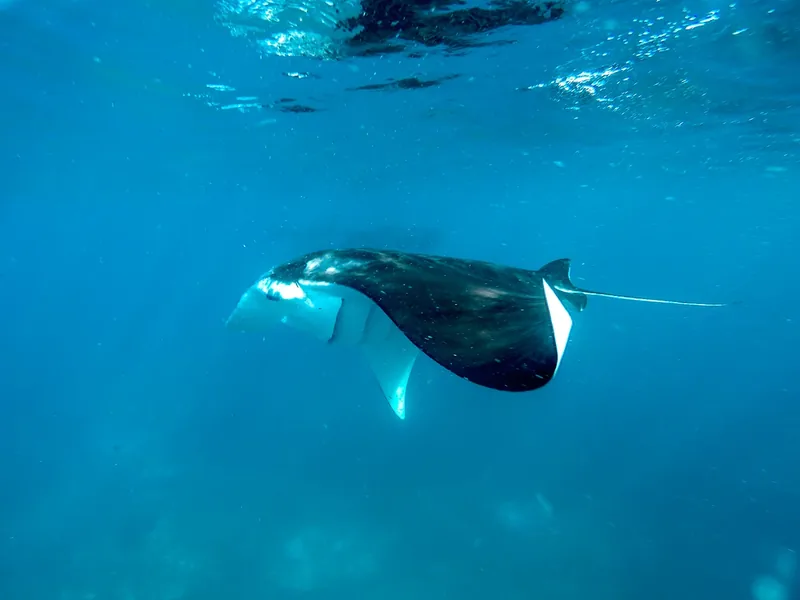
Reef manta ray
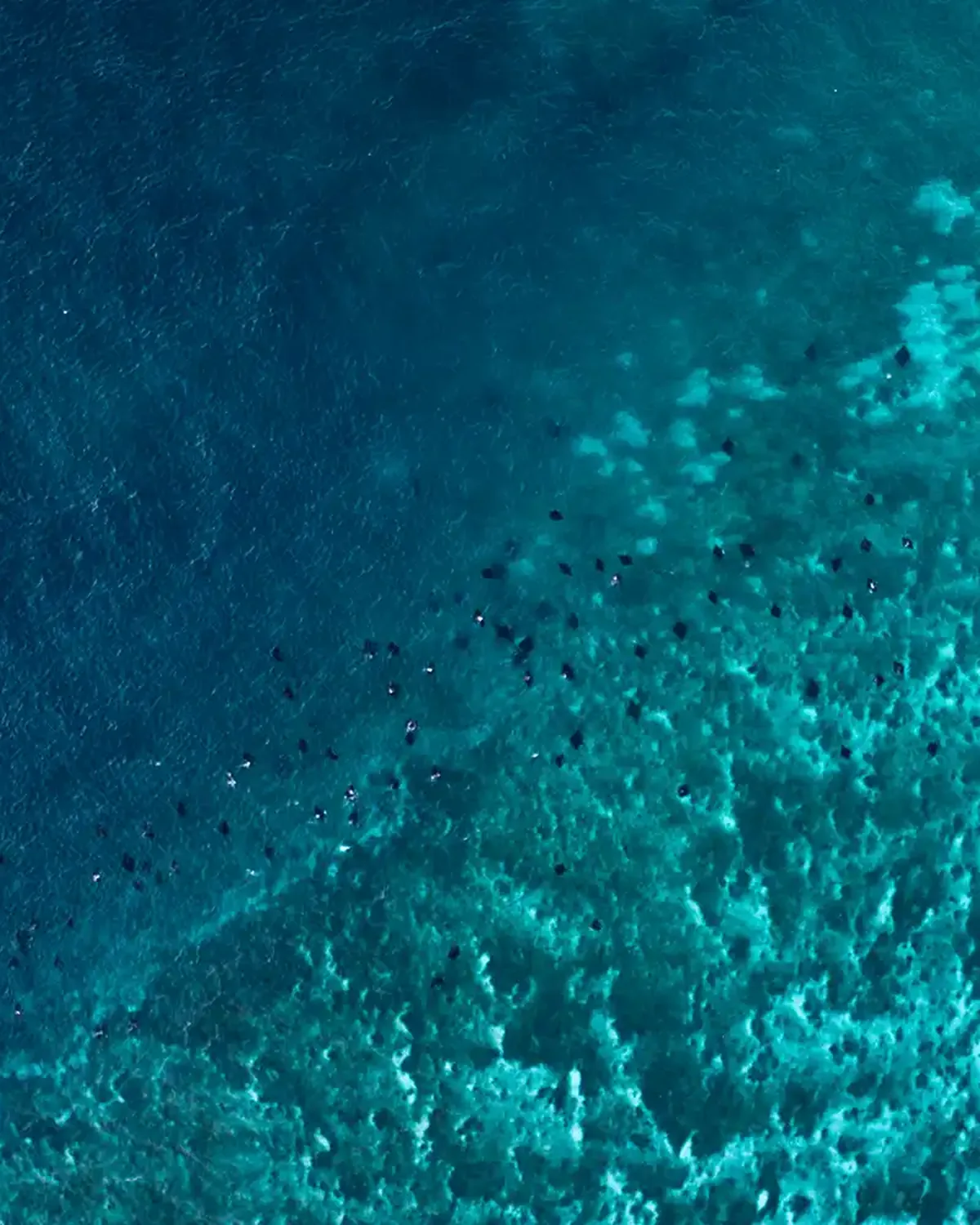
Mobula alfredi. Three to four and a half metres across, occasionally five and a half. Pale shoulder patch, pale mouth. One animal on a quiet day, a dozen in a wet-season bloom.
The Guide · Marine life
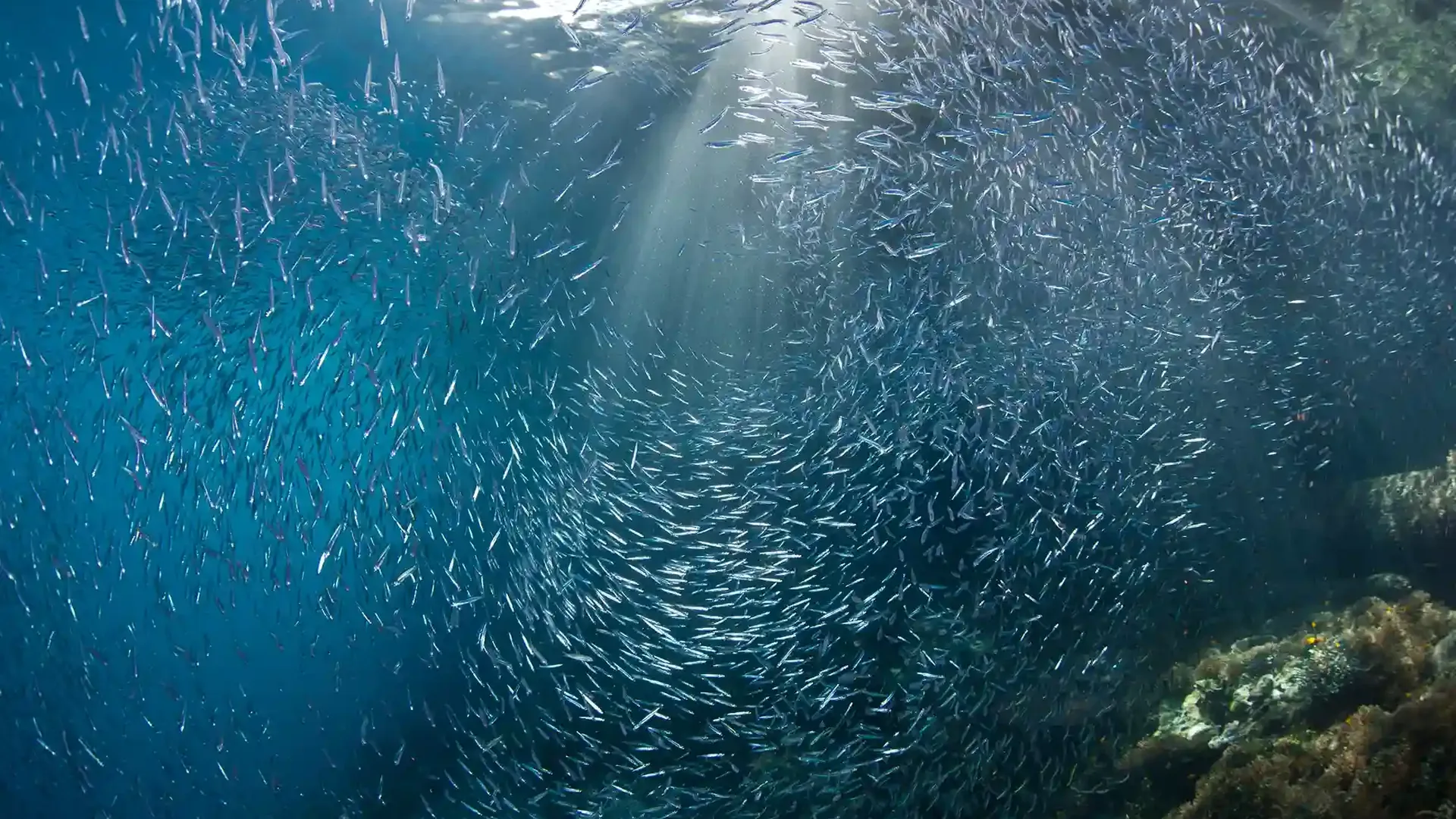
Whitetip reef sharks on the sand, green turtles on the reef flat, eagle rays in the current, trevally hunting the channel, and the fish schools that make the whole thing work.
Ask about a longer diveKarang Makassar is a rubble-and-sand plateau, not a coral garden. That is exactly why it works: open ground for mantas to feed and be cleaned, scattered bommies for everything else to live on.
The regulars
Reported often enough to expect, honestly enough to not promise.
Mobula alfredi. Three to four and a half metres across, occasionally five and a half. Pale shoulder patch, pale mouth. One animal on a quiet day, a dozen in a wet-season bloom.
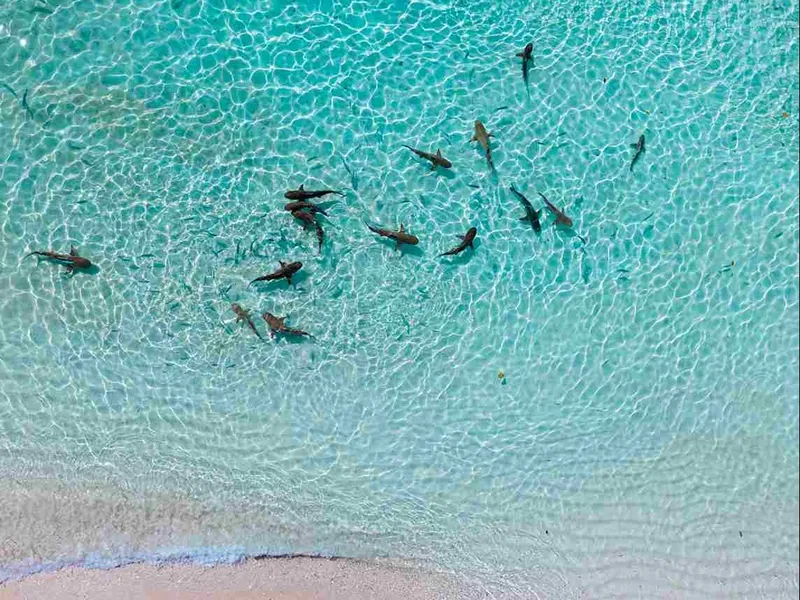
Triaenodon obesus, resting on sand or under ledges. Slow, bottom-associated and entirely unbothered by divers keeping their distance.
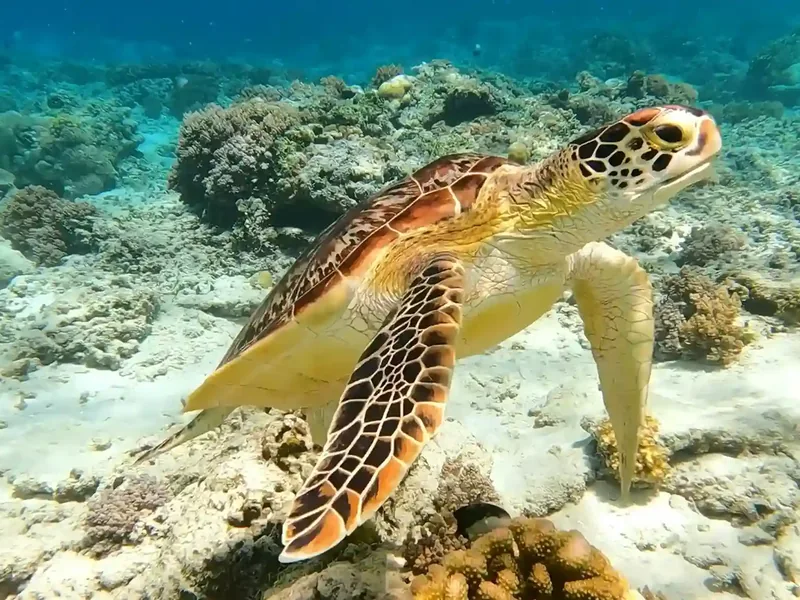
Feeding on the reef flat, often close enough to the surface that snorkellers see them without descending.
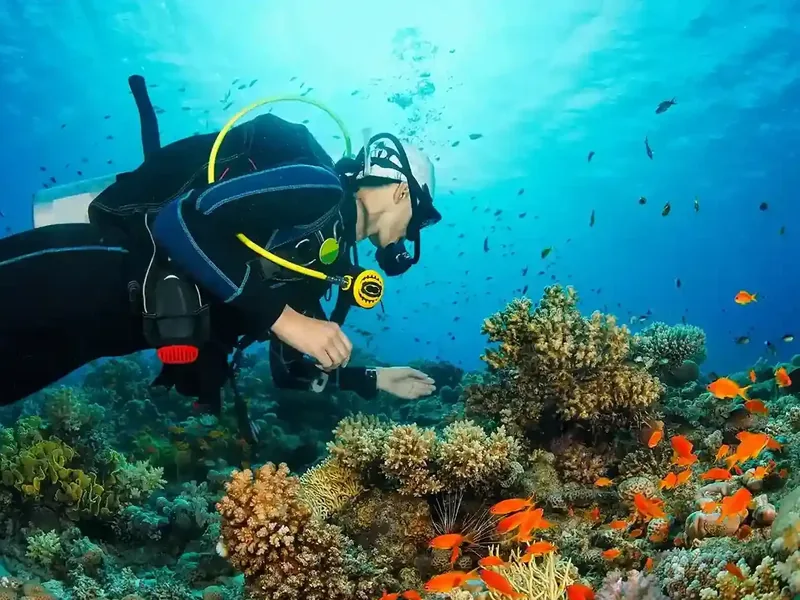
Spotted eagle rays gliding past in the current, usually mid-water and usually moving. A pass, not a stop.
Hunting the channel, which is why the baitfish schools ball up the way they do. Where the trevally are, the action is.
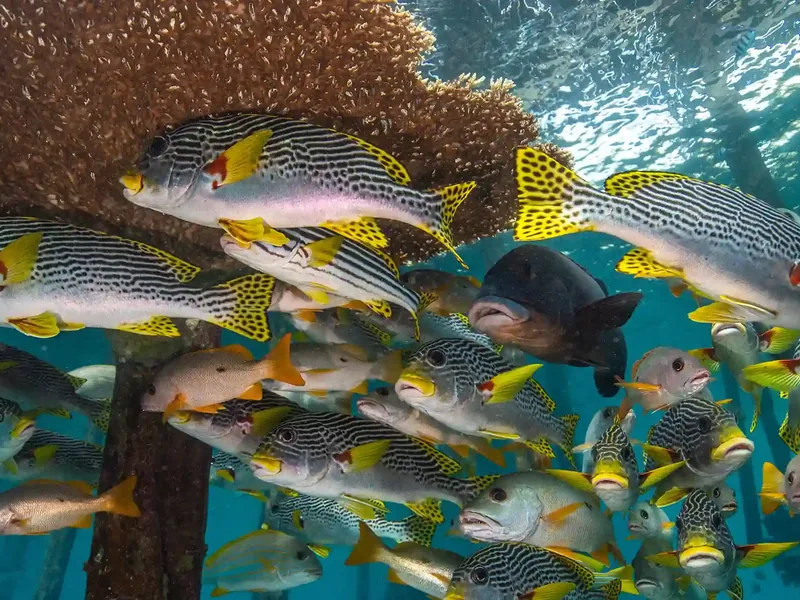
Dense mid-water schools, with groupers and snappers heavier and lower down. This is the background life the site runs on.
Divers who come to Manta Point expecting a Komodo coral garden are sometimes disappointed. The plateau is mostly sand and rubble with scattered coral heads, not a wall of soft coral.
That is not degradation, it is the habitat. Open ground is what lets mantas feed on the drift and hold position over a cleaning station, and the raised bommies are the stations themselves.
If you want the coral, Batu Bolong is twenty minutes away and covered in it. The two sites are answering different questions.
Rays
Sharks
Big fish
Mammals
Reef
Any page promising whale sharks at Karang Makassar is selling. The sources behind this one do not document them here as anything but rare and anecdotal.
The site itself, and the depth canon.
Read more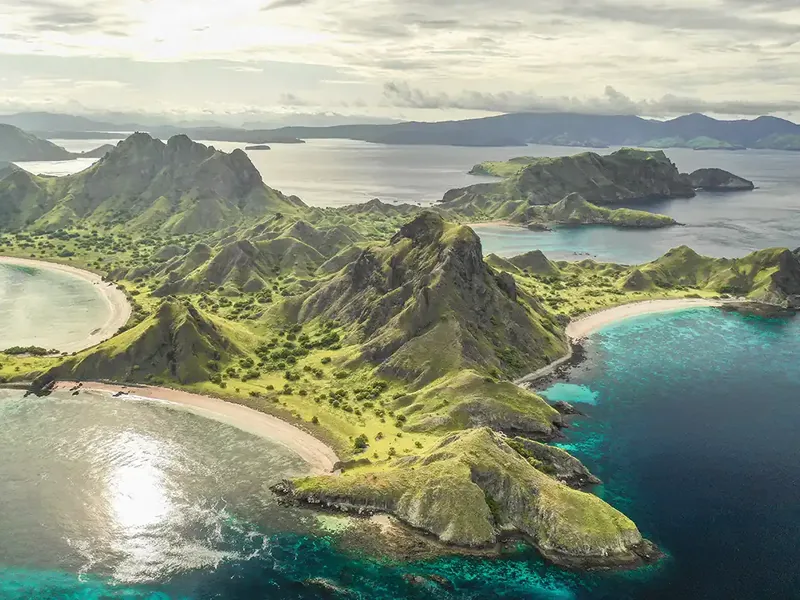
Coordinates and the crossing from Labuan Bajo.
Read more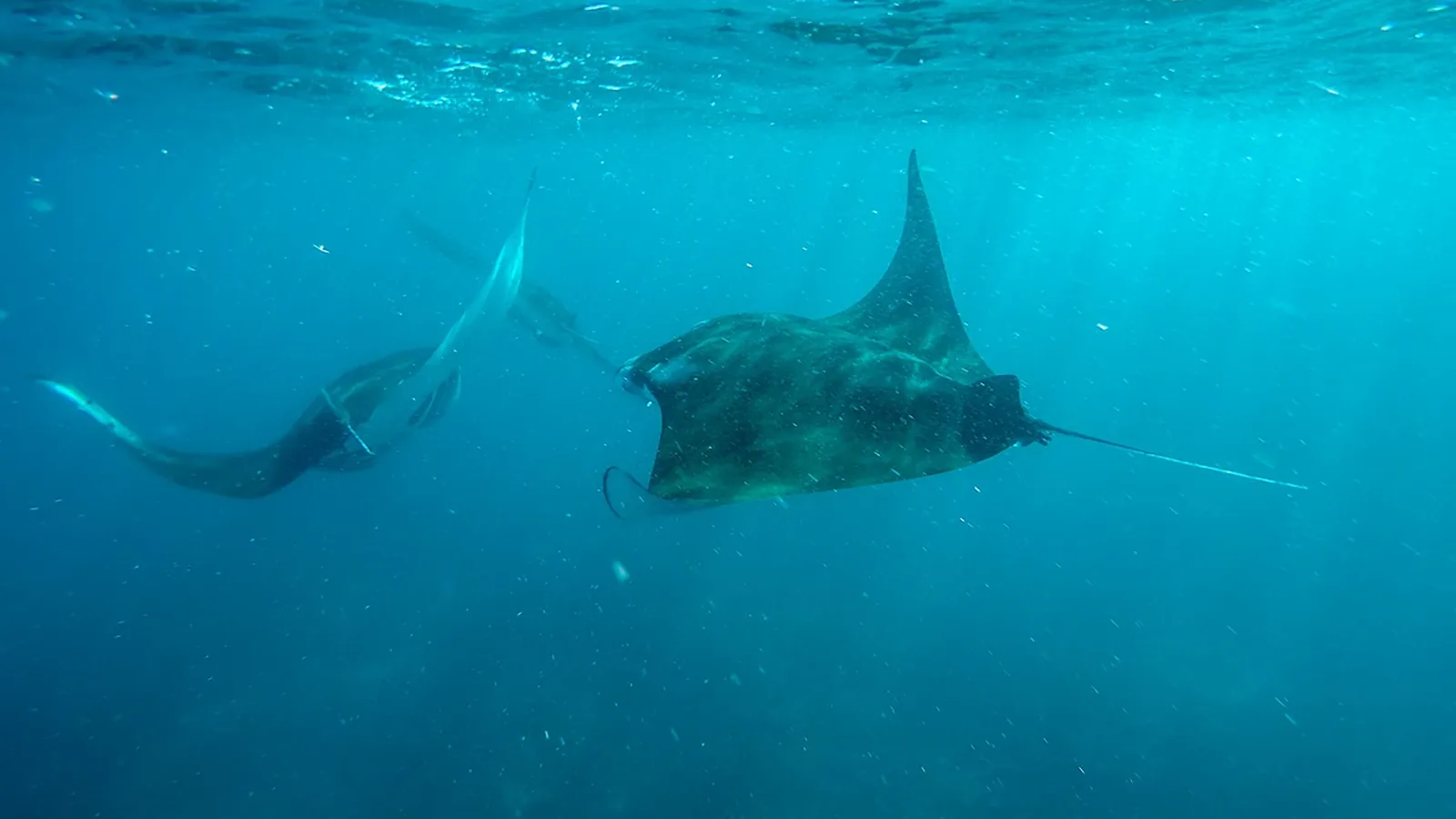
The southern site, and how it differs.
Read more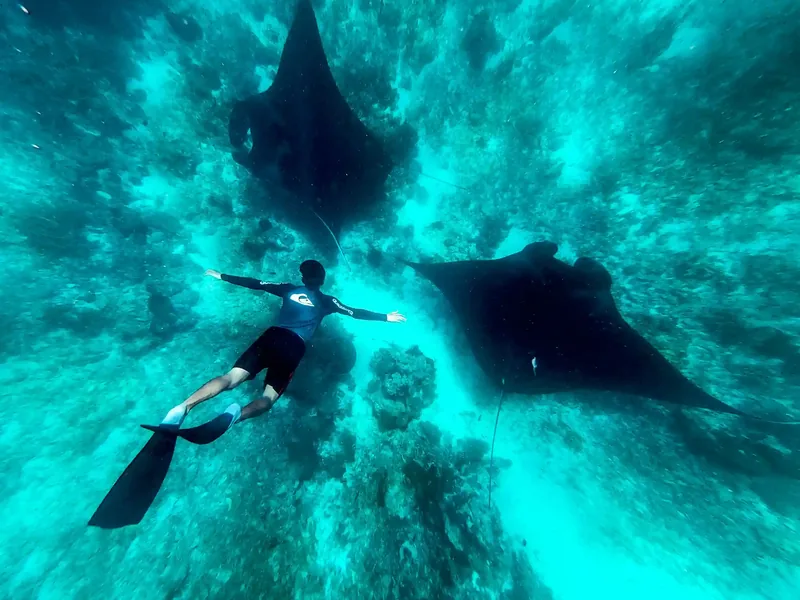
What actually protects these animals.
Read more
Light, settings and etiquette.
Read more
Every Manta Point topic this desk covers, in one index.
Read moreAsk Komodo Luxury about a day with an extended second dive. More bottom time is how you get past the mantas to everything else on the plateau.