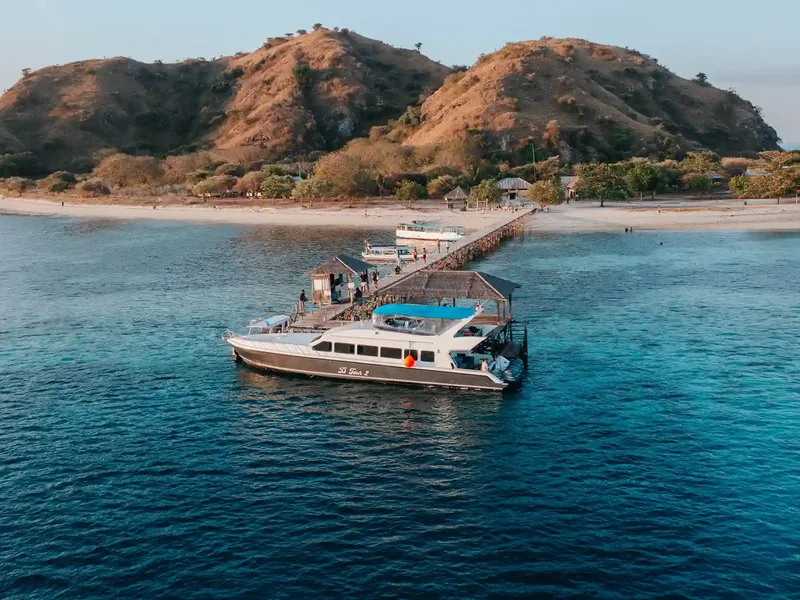
A live manta earns more
Manta tourism creates a direct economic reason to keep them alive. Entry fees fund the park; guides and crews depend on animals that come back.

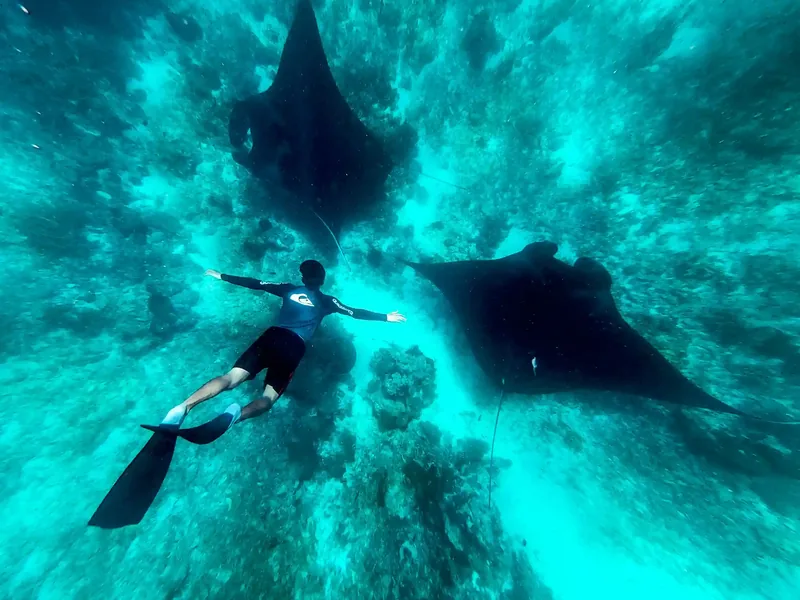
The Guide · Protection
Manta rays have been fully protected across Indonesian waters since 2014, and the reef manta is listed Vulnerable by the IUCN. Here is what each layer actually covers — and what it does not.
Book with a briefed operatorCapture and trade are banned nationwide under Ministerial Decree No. 4/KEPMEN-KP/2014. Komodo National Park bans collecting protected species in every zone. CITES Appendix II governs anything crossing a border.
The instruments
Named so you can check them yourself rather than take our word for it.
The 2014 decree covers roughly 6 million km² of national waters — at the time, the largest manta sanctuary in the world. IUCN reassesses periodically, so check the live entry if you need it for research or policy.
In practice
Law sets the floor. Whether mantas keep returning to these cleaning stations is decided in the water.
Manta tourism creates a direct economic reason to keep them alive. Entry fees fund the park; guides and crews depend on animals that come back.
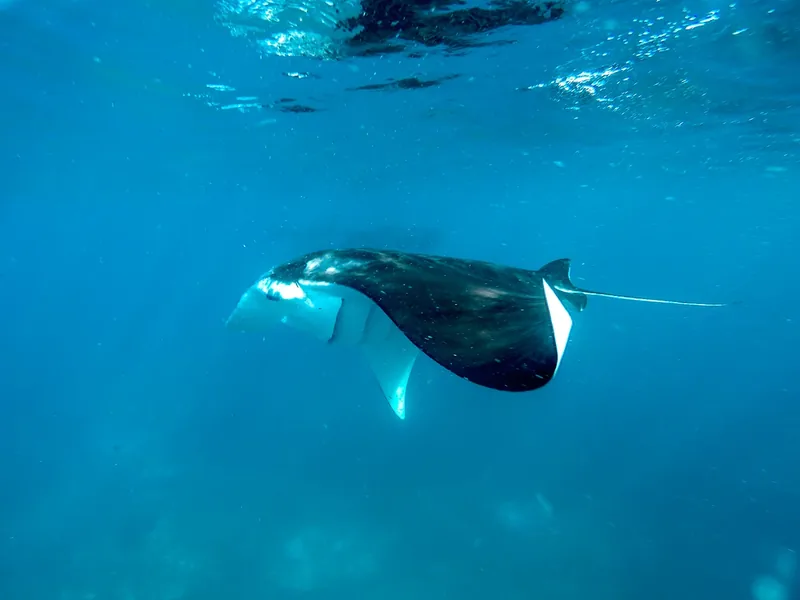
Every manta has a unique belly spot pattern. A clean underside photo goes into research catalogues and helps track individuals over years.
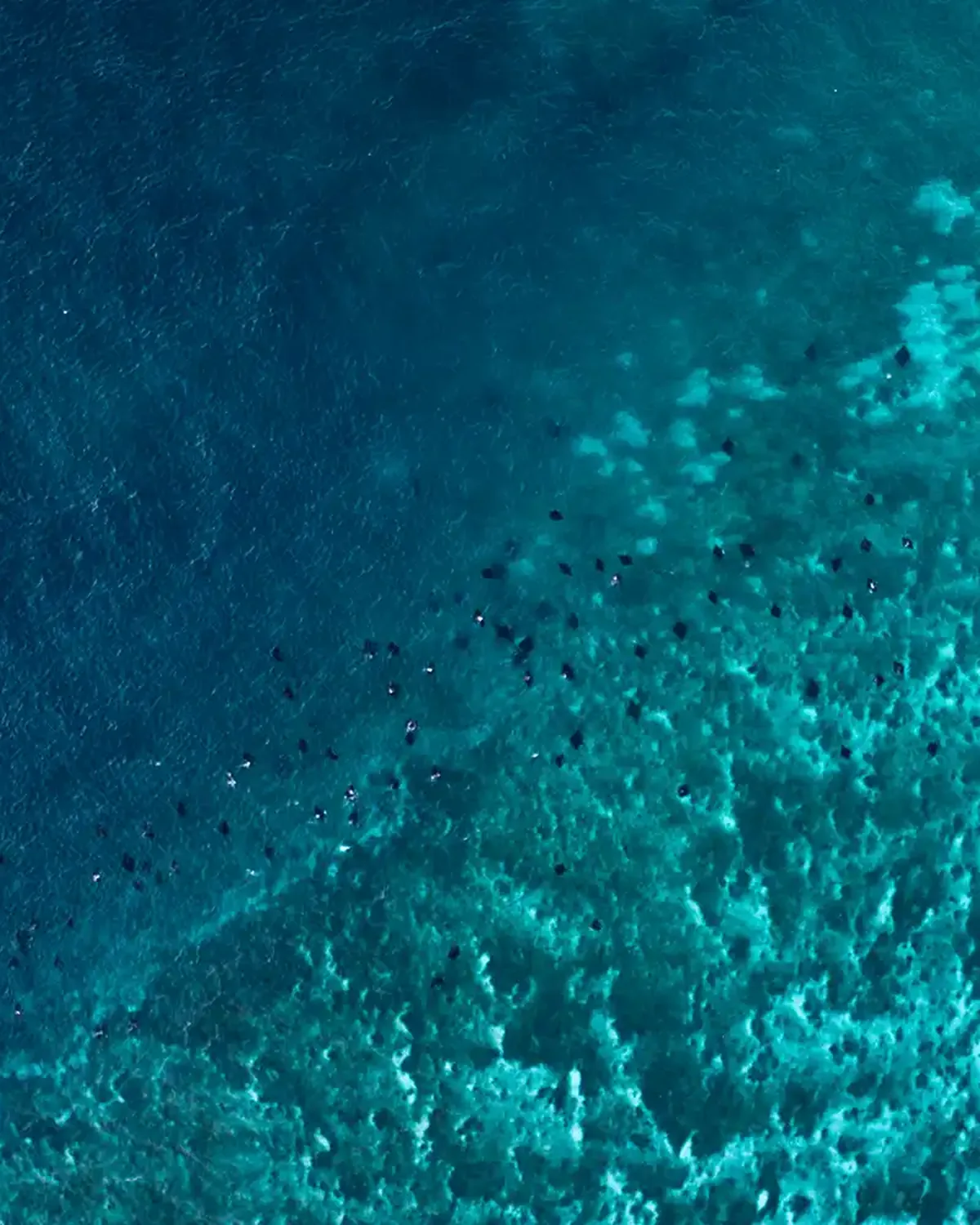
Undisturbed mantas return to the same coral heads. Crowded ones stop. Behaviour at the station is what decides whether the station keeps working.
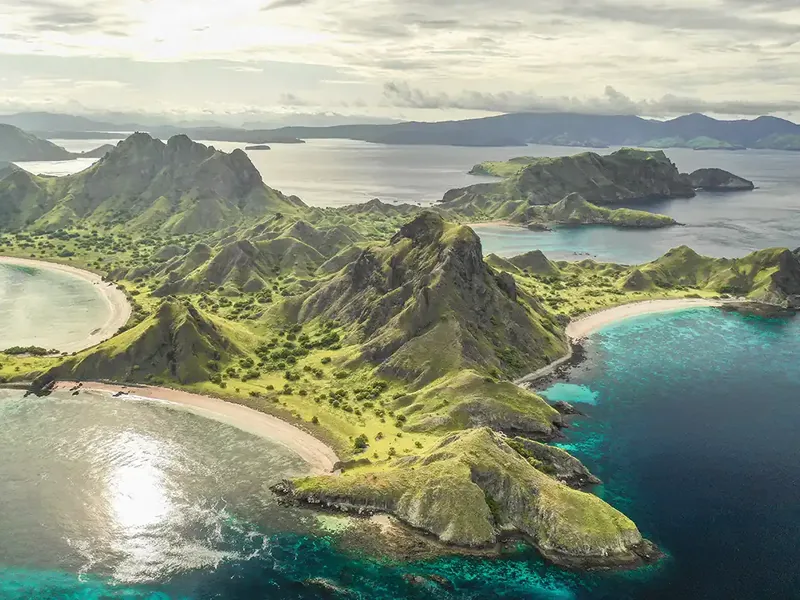
Enforcement across six million square kilometres is not done by patrol boats. It is done by the people whose livelihoods depend on the animals staying.
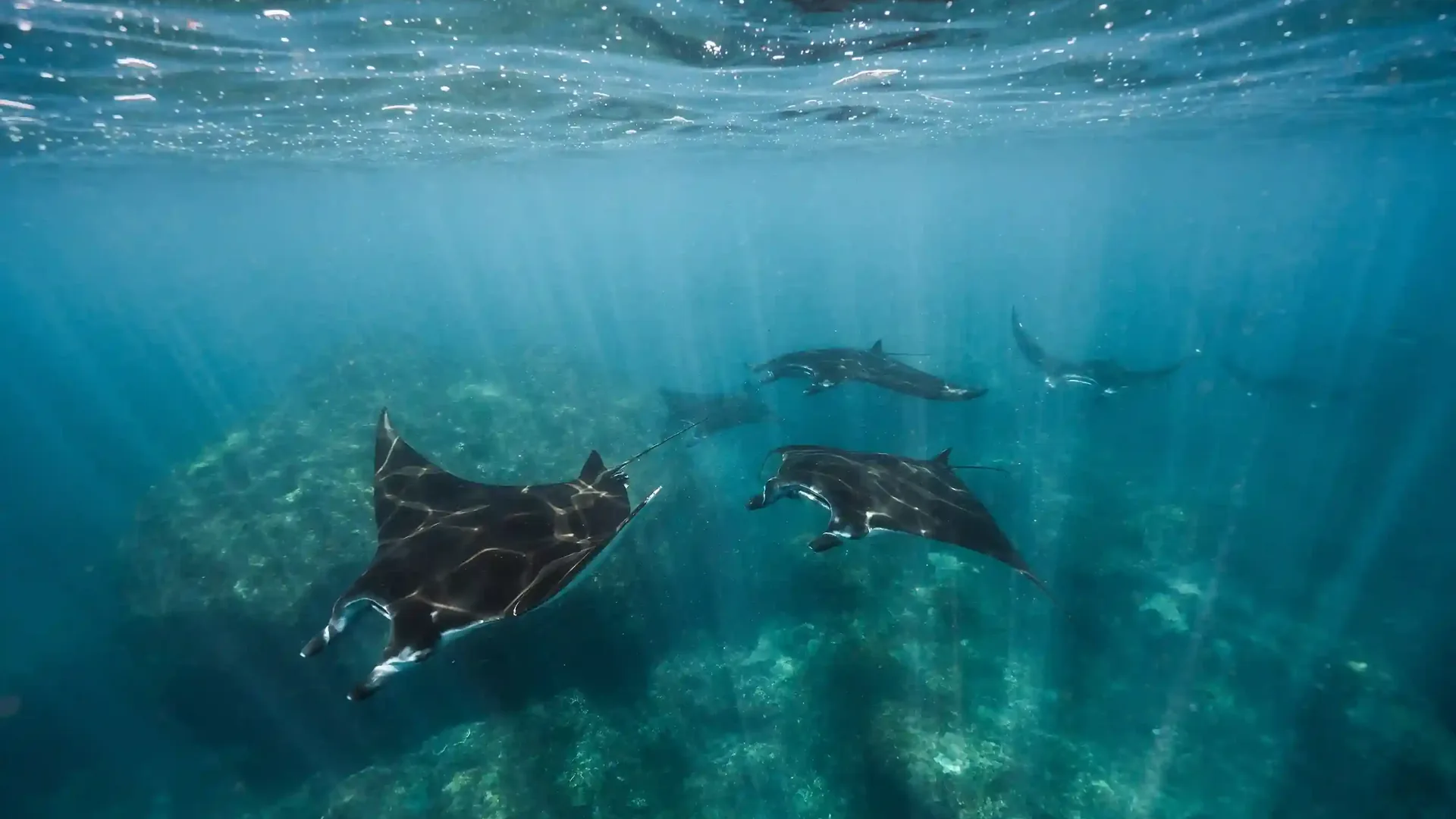
Hold at least three metres, measured horizontally. Never overhead, never head-on. That is the figure this site publishes and the only one it publishes.
We are straight about where it comes from. Indonesia publishes no manta-specific national minimum distance for snorkellers or for vessels. Three metres is the park-and-operator standard applied here, not a statutory number, and we would rather say so than imply a law that does not exist.
The reason it holds anyway is behavioural, not legal. A manta that keeps being crowded off a cleaning station eventually stops using it.
Every reputable operator briefs this before entry. None of it is optional.
Never above the animal, never in its path. Do not chase one that is moving away from you.
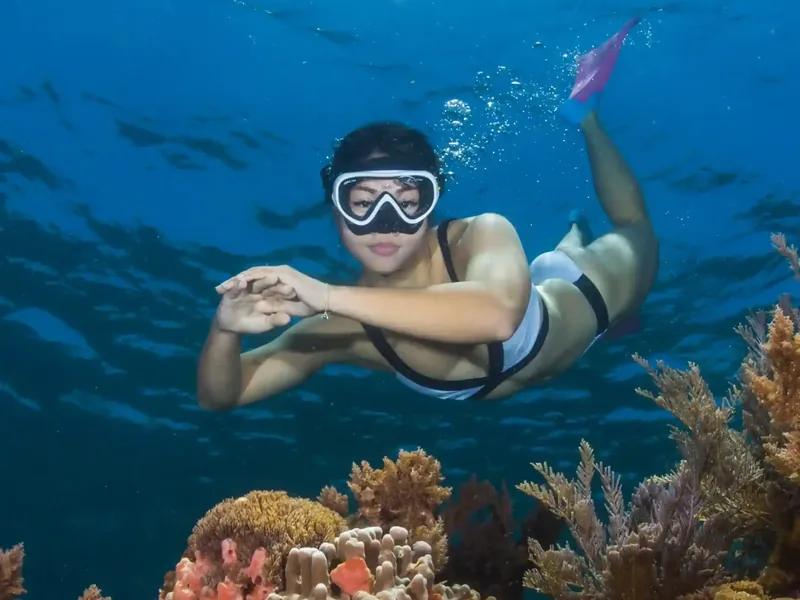
No touching the animals, no hands or fins near a cleaning station where a manta is stationary and vulnerable.
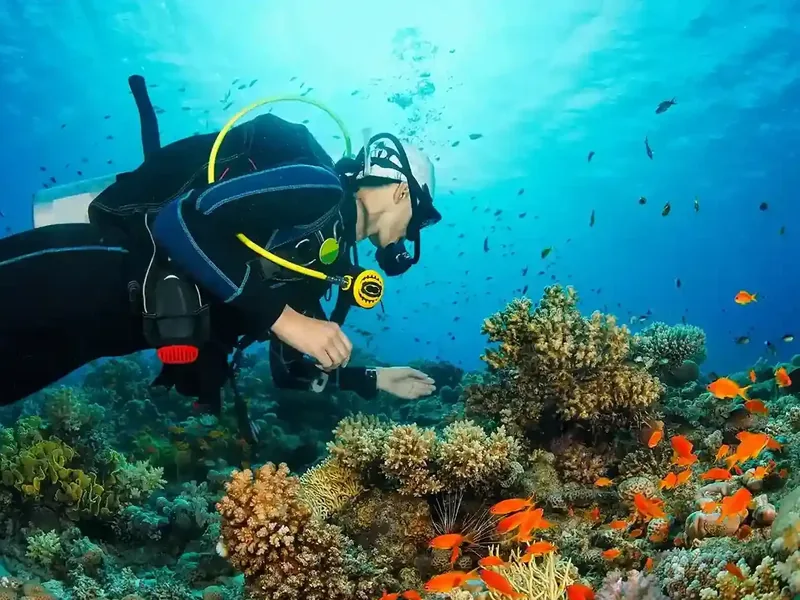
Ambient light only near the animals. The site is shallow enough that you do not need a strobe anyway.
Be sceptical of long-term trend claims in either direction. Operator observation is not a survey, and a good season is not a recovery.
The site itself, and the depth canon.
Read more
What else works the plateau.
Read more
Getting the shot without disturbing the animal.
Read more
The southern site, and how it differs.
Read more
Every Manta Point topic this desk covers, in one index.
Read moreThe single biggest thing you control is which operator you hand your money to. Ask Komodo Luxury how they brief conduct before entry.