
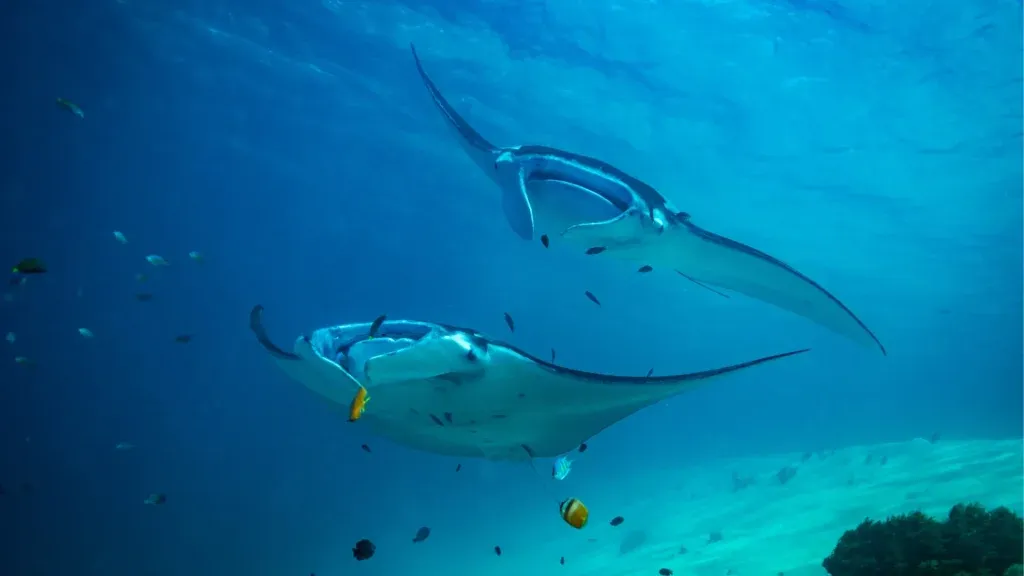
The best time of day to snorkel at Manta Point is driven by tide, not the clock — guides aim for slack tide or the calmer window around it, when current is more manageable and visibility tends to be better. Most day trips schedule the Manta Point stop for mid-morning to early afternoon, but the specific tide on your date matters more than a fixed hour.
Does Time of Day Actually Matter at Manta Point?
Yes, but indirectly — what actually matters is tide, and tide timing shifts by roughly 50 minutes each day, so “morning is best” is an oversimplification. Karang Makassar’s current is tidally driven; the calmest, most swimmable conditions cluster around slack tide (the brief period between tide changes when current is weakest), whichever time of day that falls on for your specific date. Guides check tide tables and plan the day’s Manta Point timing around that, not around a fixed departure hour.
Why Guides Still Tend to Favor Mornings
Morning departures are common for practical reasons beyond tide: calmer sea conditions before afternoon winds pick up, better overhead light for underwater visibility, and enough daylight buffer to fit Manta Point alongside other stops like Padar and Pink Beach on a combined day (see our full-day itinerary guide). None of this is a strict rule — on some tide cycles, an afternoon entry is genuinely the better window, and a good operator will say so rather than defaulting to habit.
Current Strength Through the Day
| Tide phase | Typical current | What it means for you |
|---|---|---|
| Slack tide (brief window between tide changes) | Weakest | Easiest drift, best for weaker swimmers and non-swimmers with a life jacket |
| Mid-tide (rising or falling) | Moderate to strong | Faster drift, more current-dependent positioning by your guide |
| Peak tide flow | Strongest | Some operators avoid entries during this window entirely |
Your guide reads the tide table for your specific date rather than relying on general time-of-day assumptions — this table is a starting framework, not a substitute for that on-the-day judgment call.
Morning vs Afternoon: The Honest Comparison
- Morning: Generally calmer seas, better light, fits well before an afternoon Padar or Pink Beach stop. Downside: boats can be busier if multiple operators schedule morning slots.
- Afternoon: Sometimes better tide timing depending on the day’s cycle, potentially fewer boats. Downside: afternoon winds can pick up on the open-water crossing, and light for underwater photos is less consistent later in the day.
How Does This Interact With the December-March Season?
Before the hour of the day matters, the month does. Reef mantas visit this cleaning station year-round, and the wet season from December through March is the stretch local operators report as most reliable — a pattern drawn from years of crew observation rather than from one published scientific study. Encounters outside those months stay ordinary; they are just less predictable. No government agency or dive-research body publishes an official month-by-month guarantee for Karang Makassar, so treat any fixed sighting percentage as marketing rather than verified data. Season and time-of-day are separate factors that both affect your trip — season determines the broader likelihood of manta activity across weeks and months, while time-of-day (really, tide) determines water conditions on your specific date. A good December date at the wrong tide window can still be a rougher swim than a good May date at slack tide, even though December sits within the more reliable season.
What You Can Actually Control
You generally cannot choose your exact entry time independently on a shared group trip — that is set by the operator’s schedule and the day’s tide. On a private charter, you have more room to discuss timing directly with the crew, including asking them to target the best tide window for your date specifically rather than a fixed departure slot.
Ask Your Guide Directly
The single best source for your specific date’s timing is your own guide on the morning briefing, not a general article like this one.
Ask Your Guide Directly
Some liveaboard itineraries deliberately schedule Padar’s sunrise viewpoint or a sunset stop elsewhere around the Manta Point timing, using the tide-driven manta window as the anchor point the rest of the day plans around, rather than the reverse.
If You Have Multiple Days, Does Timing Matter Less?
Yes, meaningfully. A single day-trip guest is exposed to whatever tide conditions exist on that one date; a multi-day liveaboard guest (see our liveaboard guide) can potentially revisit Manta Point on a different day if the first attempt’s tide and conditions were less favorable, which reduces how much any single day’s timing matters to your overall trip outcome.
What Guides Actually Check Before Setting Your Entry Time
Beyond the tide table, an experienced guide factors in wind direction and strength for the day, how many other boats are scheduled at Manta Point around the same window, and any real-time feedback from other boats already on site about current conditions. This is part of why the specific entry time is usually confirmed the morning of your trip rather than locked in weeks in advance — conditions genuinely change day to day in ways a fixed schedule can’t account for.
How Season and Daily Timing Interact
Because tide cycles shift daily regardless of season, there’s no permanent “best hour” that holds true across a whole December-March season — a specific date in January might have its best tide window at 8AM, while a date two weeks later might favor 2PM. This is exactly why operators plan Manta Point timing week-by-week and day-by-day rather than publishing a fixed departure time as a permanent policy. If you’re booking well in advance, don’t over-plan around a specific hour; trust that your guide will optimize timing once your actual date is set.
Frequently Asked Questions
What time of day is best to snorkel at Manta Point?
It depends on tide more than the clock — guides aim for slack tide or the calmer window around it, which shifts by about 50 minutes each day rather than falling at a fixed hour.
Is morning always better than afternoon at Manta Point?
Not always. Mornings tend to have calmer seas and better light, but the actual best window depends on that day’s tide cycle, which can favor an afternoon entry on some dates.
Can I choose my exact entry time at Manta Point?
On a shared group trip, no — the operator sets the schedule around tide and the day’s itinerary. A private charter gives more room to discuss timing directly with the crew.
Does time of day affect whether you’ll see a manta?
Tide affects water conditions and current more directly than manta presence itself; season (December-March) is the bigger factor for sighting likelihood, while time-of-day mainly affects comfort and visibility.
Ready to plan the trip? Share the time of year you plan to visit and your comfort in currents with sales@komodoluxury.com or by contacting +62 811-3823-875, so Komodo Luxury can suggest suitable Manta Point time-of-day options.
Putting Time of Day in Context With Season and Conditions
The most reliable manta encounters at Karang Makassar come from matching time of day with the season and that day’s sea state, rather than chasing a universal “best hour”. In the wet months, mantas often feed shallower through longer parts of the day, so mid-morning to early afternoon can work well when plankton is concentrated and light remains usable despite lower visibility.
In the clearer dry-season core, guides often steer towards an earlier schedule to minimise wind chop and maximise the chance of finding feeding lines or well-used cleaning patches before boat traffic peaks. Late-morning and early-afternoon dives are still productive, especially for cleaning behaviour, but surface conditions can be rougher and currents slightly less predictable as tides shift.
On shoulder months such as April–May and October–November, timing within the day is especially tied to tides. A dive or snorkel timed around a gentle, building current can be more effective than insisting on the first possible slot. The practical “best time” becomes the window when current, visibility, and surface conditions line up, which is why your guide will typically plan around tide tables rather than a fixed clock time.
Choosing Your Own “Best Time” to Visit in a Single Day
For visitors with only one full day from Labuan Bajo, the most balanced plan usually involves aiming for a late-morning or early-afternoon entry, after checking conditions at the site that same day. This window often avoids the chilliest early-morning thermoclines, keeps the sun high enough for easier spotting from the boat, and still fits safely within common speedboat or day-boat schedules.
Divers who prefer calmer surface conditions and are comfortable with cooler temperatures may favour an earlier slot during the dry-season core, when winds are typically lighter. Snorkellers, especially less-confident swimmers, often find a slightly later visit more comfortable, as crews have had time to observe how the current is running and choose the easier drift line or mooring point.
If you are planning multiple dives in Komodo National Park on the same day, the high-energy, current-dependent sites will often be prioritised first, with Manta Point arranged into the remaining safe tidal window. In that sense, the best time to be at Karang Makassar is often the time that allows the whole day’s plan to work safely, while still giving you an unhurried manta briefing and a manageable current for your experience level.
Frequently asked questions
What time of day is best for seeing mantas at Manta Point Komodo?
The most productive window is usually late morning to early afternoon, when light is good and guides have already checked how the current is behaving. Early mornings can also be excellent, especially in the dry season, but may feel colder and occasionally rougher. Operators will normally time your entry to match the tides and current, which matters more than a specific clock time.
Is it better to dive Manta Point Komodo in the morning or afternoon for mantas?
Both morning and afternoon dives can deliver strong manta encounters if tides and currents align. Many guides prefer morning for slightly calmer surface conditions and fewer boats, making briefings and entries easier. Afternoon dives can be just as active, particularly in the wet season, but may coincide with more chop or changing current, which some less-experienced divers find demanding.
Can I visit Manta Point Komodo in the afternoon or only in the morning?
You can visit in the afternoon; there is no rule limiting trips to the morning. Operators often schedule an afternoon snorkel or dive at Karang Makassar after other sites, especially in the wetter months when mantas may feed for extended periods. The main constraint is safe tidal timing and boat routing from Labuan Bajo, not a fixed requirement to be there early.
Does the hour of the day change your chances?
The best time of day is the tide window that gives a steady but manageable current, often falling between mid-morning and mid-afternoon. That is when mantas are likely to use cleaning areas and feeding lines while visibility and light are still workable. Because tides shift daily, the specific hour that works best will vary with your travel dates and the season.
Which part of the day gives the best light for photographs?
Underwater photography usually benefits from late morning to early afternoon, when the sun is high enough to reduce shadows and help autofocus. In the dry-season core, this coincides with clearer water, giving better contrast and colour. In the wet months, shooting slightly earlier or later in the day can soften backscatter, so adjusting to that day’s visibility and plankton load is useful.
Keep reading

Trip Planning
Reef-Safe Sunscreen for Manta Point
Wear mineral reef-safe sunscreen (zinc oxide or titanium dioxide, non-nano) for any Manta Point Komodo trip. We have not found…
Trip Planning
Renting Snorkel & Dive Gear in Labuan Bajo
Most Manta Point boat trips include basic snorkel gear — mask, snorkel and fins — in the price, while wetsuits,…
Trip Planning
Travel Insurance for a Manta Point Trip
Travel insurance for a Manta Point trip should explicitly cover water activities (snorkelling always, scuba diving specifically if you plan…