Family Manta Snorkeling in Komodo
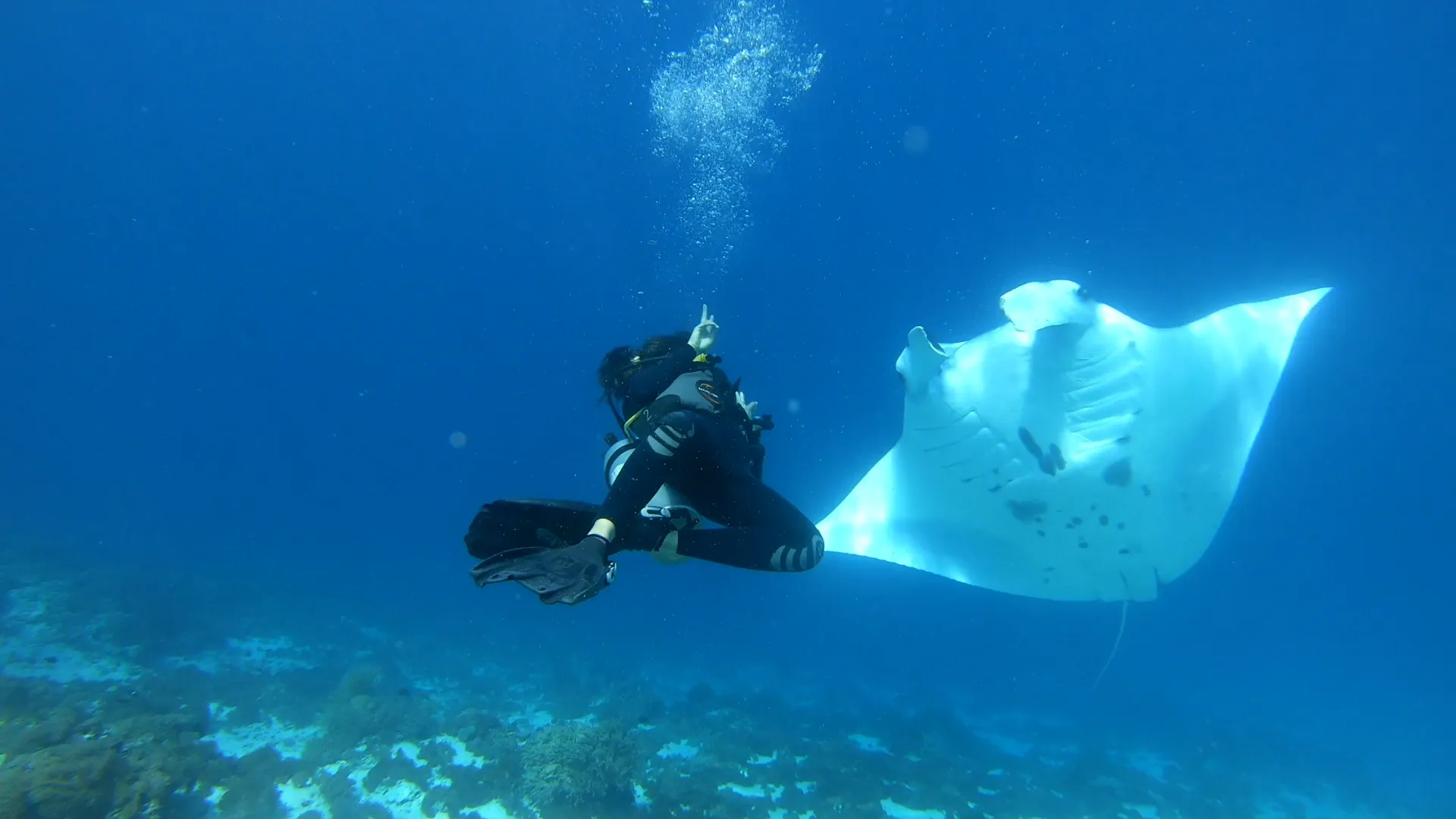
Family manta snorkelling at Manta Point works well for children comfortable swimming in open water with a life jacket or flotation aid, on a private trip paced around the kids rather than a fixed shared schedule. This guide covers age guidance, safety gear and how to structure the day.
Last updated: 29 August 2026.
Is Manta Point suitable for children?
Many families do successfully snorkel with children at Manta Point, but it is open water – not a shallow, enclosed lagoon – so the honest answer depends on your child’s swimming confidence and comfort with a mask and snorkel, not their age alone. A calm, confident 8-year-old who swims regularly may do better than a nervous 12-year-old unfamiliar with open water. Komodo Luxury asks about your children’s swimming experience when booking so they can advise honestly rather than assuming an age cutoff.
What safety gear should children use?
A properly fitted life jacket or snorkel vest is standard for children at Manta Point, even if they swim well – the open-water setting and occasional current make flotation support sensible regardless of skill level. Bring a well-fitting child-size mask from home if possible, since a leaking or ill-fitting mask is one of the most common reasons children struggle to enjoy snorkelling. See our Manta Point snorkelling page for general gear guidance that applies to all ages.
How should a family day be paced differently from a standard trip?
A private trip (rather than a shared open trip) gives you control over timing – shorter water sessions with breaks, an earlier return if energy flags, and the flexibility to skip a stop like the Rinca dragon trek’s longer walking routes if it does not suit younger children. See our manta tour formats guide for private trip options and our 3D2N private trip page if you want to spread the day across a slower multi-day itinerary.
What if a child does not want to get in the water?
That is a completely normal outcome and not a failed trip – most boats can accommodate a family member staying aboard while others snorkel, and the boat ride itself, spotting manta shapes from the surface, and the Padar viewpoint climb (a land-based activity, no swimming required) are still enjoyable without entering the water. Tell Komodo Luxury in advance if this is a possibility so they can plan a boat with comfortable on-deck space.
Does the season affect a family trip differently than an adult-focused one?
Calmer, clearer dry-season conditions (see our manta season guide) are generally easier and less intimidating for nervous or first-time child snorkellers than choppier wet-season days, even though the wet season statistically brings more manta activity. If your child is a nervous swimmer, the Komodo Luxury team may weight its season advice toward calmer conditions over maximum manta density – a trade-off worth discussing with them directly.
What about seasickness on the crossing?
The 1-1.5 hour speedboat crossing can affect children prone to motion sickness more than adults. Child-appropriate motion sickness remedies, a seat with a view of the horizon rather than below deck, and a light breakfast rather than a heavy one before departure all help. See our travel insurance guide for coverage considerations relevant to family trips.
How does group size affect a family trip?
Larger extended-family groups (grandparents, multiple children of different ages) usually benefit most from a private boat rather than a shared open trip, since the pacing needs vary widely across ages – a grandparent may prefer to stay on deck while a teenager wants a longer swim, and a private trip accommodates both without disrupting other passengers. See our island transfer guide if your family is staying on a resort island rather than in Labuan Bajo town.
What about accessibility for family members with limited mobility?
Boat boarding, ladder access for re-entering after snorkelling, and the Padar viewpoint’s uneven hiking trail can all be genuine obstacles for guests with limited mobility, not just young children. Tell Komodo Luxury about any mobility considerations in your group when booking so they can recommend a boat with easier boarding and adjust the itinerary rather than assuming a standard trip works for everyone.
Should you brief children on manta etiquette before the trip?
Yes – a short, simple briefing beforehand (no touching, no chasing, stay with the guide) helps children understand the “why” before they are excited and in the water, rather than relying purely on in-water instructions. Guides repeat this briefing on the boat regardless, but a home conversation beforehand reinforces it. See our conservation notes for the full etiquette guidance briefed to every guest, adults and children alike.
Frequently asked questions
Is there a minimum age for Manta Point snorkelling?
Operators on these trips do not apply a strict age cutoff, since swimming confidence varies more than age does – describing your child’s swimming experience when you enquire gets a more honest answer than guessing from age alone.
Can we bring our own child-size snorkel gear?
Yes, and it is worth doing – a well-fitting mask brought from home is often more comfortable than a generic rental, particularly for smaller faces.
Is a private trip necessary for families, or can we join a shared open trip?
A private trip gives more flexibility for children’s pacing and comfort, but families with confident young swimmers can and do join shared open trips successfully – it depends on your children’s temperament and swimming ability.
Plan a family-friendly manta day
Family-focused safety standards and suitable ages
Operators visiting Karang Makassar usually welcome children, but the crucial question is whether each child is safe and comfortable on that day’s sea conditions. Most boats accept children from about 4–5 years old for the boat ride itself, provided an adult supervises closely. For actual snorkelling in the channel, many guides prefer that children are at least strong, confident swimmers who are comfortable in open water, not just a pool.
Parents should ask specifically how the crew assesses conditions before allowing children in. On days with stronger current, younger or less experienced youngsters may be asked to stay on the boat or snorkel only in quieter sections of the reef plateau. Some family groups bring one adult who swims and another who stays aboard with smaller children, so no one feels pressured to enter the water. Freediving is usually discouraged for anyone under formal training age because of equalisation and breath‑hold risks.
Guides also look at how a child behaves in their lifejacket and mask during an easy test in calm water. A child who is anxious, repeatedly removes their mask, or cannot follow simple hand signals is safer watching from the boat. For most families the safest pattern is short, closely supervised snorkels for older children, with younger siblings observing mantas from the deck.
Trip structure, group size and private guiding for families
Group size has a direct effect on how manageable a day at Manta Point feels with children. Small groups make it easier for a guide to track everyone during drift snorkels and to adapt entry and exit points to the slowest swimmer. Families often prefer boats that cap snorkellers to roughly a dozen or fewer in the water per guide, or that provide an extra in‑water guide when several children are present.
Some operators in Labuan Bajo offer private charters or semi‑private guiding where one professional is assigned exclusively to a single family. That arrangement usually carries a higher overall trip cost than joining a mixed group, but it allows the guide to shorten snorkel times, reposition the boat more often, or skip exposed manta passes if any child is tired or nervous. Parents can ask in advance whether an in‑water guide can hold a tow‑line or surface float for children to rest on between manta passes.
A family‑sensitive itinerary tends to avoid stacking long current‑exposed stops back to back. Many boats combine Karang Makassar with a sheltered beach or calm bay where children can rest and warm up after cooler water around the reef plateau. On days with forecast wind or swell in the afternoon, some captains time the crossing so families reach Manta Point earlier in the day, then move to more protected sites as conditions build.
Weather, freediving and emergency readiness
Weather in Komodo can change quickly, with local squalls arriving even in a generally dry period. Reputable crews monitor forecast and sky throughout the day, shorten manta sessions if dark clouds, rising chop or distant lightning appear, and move early to more sheltered routes back to Labuan Bajo. On open boats, families should expect to secure loose items, put children in long layers against wind chill, and use the provided rain covers rather than staying exposed on the bow.
Every licensed vessel in Komodo National Park is required to carry lifejackets, basic first‑aid equipment and communication devices. Parents can check that lifejackets fit each child properly, that there is a radio or mobile signal plan, and that the skipper has a clearly explained procedure if someone is separated from the group during a drift. Asking how crew practise man‑overboard and lost‑snorkeller drills is reasonable and often welcomed by safety‑minded operators.
Strong freedivers sometimes join manta trips and wish to dive below the main group. At Karang Makassar this raises specific risks: down‑currents near the cleaning stations, unpredictable boat traffic and the risk of surfacing far from the float line. Any breath‑hold diving should only occur with guide consent, well away from children, and never underneath other snorkellers or close to mantas’ path. For mixed groups including families, many guides restrict freediving so that supervision remains focused on surface swimmers and younger participants.
Frequently asked questions
Is oxygen usually available on boats heading to Manta Point Komodo for safety reasons?
Most well-prepared boats visiting Manta Point carry emergency oxygen as part of their standard safety kit. You should still ask explicitly before booking, as smaller or older vessels may not have it or may carry only limited supplies. Confirm that crew are trained to use the equipment and that they also carry first-aid materials, communication devices and a clear plan for returning to Labuan Bajo in an emergency.
Are children allowed on liveaboards visiting Manta Point Komodo, and is there a minimum age?
Many liveaboards in Komodo accept children, but each vessel sets its own minimum age and rules. Some require a certain age for safety reasons, especially on boats with steep stairs or open railings, and may ask that very young children remain on board during drifts. Families should ask about cabin layouts, lifejacket sizes, supervision expectations and whether the itinerary can be adjusted to include gentler snorkelling sites.
Is there a recommended minimum age for children visiting Manta Point Komodo by boat?
There is no park-wide legal minimum age, but practically, children of about 4–5 years and older cope better with the long boat ride. For snorkelling near mantas, guides usually prefer older, confident swimmers who can follow instructions and stay calm in current. Younger siblings can often join the trip but remain on the boat, watching from the deck and wearing lifejackets throughout the crossing.
Minimum age for kids to snorkel at Manta Point Komodo?
Operators commonly look for children to be strong, confident swimmers rather than setting a strict numerical age. Many suggest around 8–10 years as a realistic minimum for snorkelling in open water with current, especially during drift entries. Parents should be honest about their child’s ability, accept if a guide recommends staying on the boat, and consider a private guide if siblings have mixed swimming skills.
Family friendly Labuan Bajo hotel near harbor for manta trips?
Labuan Bajo has several family-oriented hotels and guesthouses within a short drive of the harbour, from simple rooms to more upmarket options. This site does not list or rate individual properties. When choosing, look for easy early-morning access to the pier, flexible breakfast times, quiet rooms so children can rest after the trip, and space to rinse and dry snorkelling gear.
Can pregnant travellers join a snorkel trip?
Pregnant women sometimes join manta trips, but medical advice from a personal doctor is essential before committing. The crossing can be bumpy, ladders may be steep, and drift snorkels involve exertion in current and repeated entries from the boat. If a doctor approves travel, discuss pregnancy openly with the operator so they can suggest calm-weather days, gentler sites and easier entry methods, or recommend staying on board during stronger drifts.
Reviews of Manta Point Komodo tours with strong safety focus?
This site does not publish or aggregate tour reviews, so it cannot rank operators. For a safety-focused choice, look for boats that emphasise briefings, carry visible safety gear, limit group size in the water, and talk clearly about currents and manta etiquette. Independent review platforms and diver forums can provide recent feedback, but you should still ask direct safety questions before booking.
Do Komodo liveaboards offer safety saus and whistles for Manta Point dives?
Many liveaboards provide surface marker buoys, whistles and sometimes personal locator devices, but the exact equipment varies. Safety saus (SMBs) are more often standard for divers than for snorkellers. Before confirming a trip, ask which signalling devices are issued per person, whether crew expect snorkellers to carry them, and if additional gear can be rented or brought from home for extra visibility in current.
Can I use selfie stick with GoPro at Manta Point Komodo?
Selfie sticks are usually allowed, but they must be handled carefully to avoid striking animals or other snorkellers. Guides often ask that cameras be kept close to the body and never pushed towards a manta or over a cleaning station. Extending a pole underwater can also affect your balance in current, so practise in calm water first and prioritise awareness of distance and fin control over getting closer footage.
Keep reading
Diving & Snorkelling
Boat Traffic Rules at Manta Point
Boat traffic rules at Manta Point exist to stop overcrowding around feeding and cleaning mantas - guides coordinate entry timing…
Diving & Snorkelling
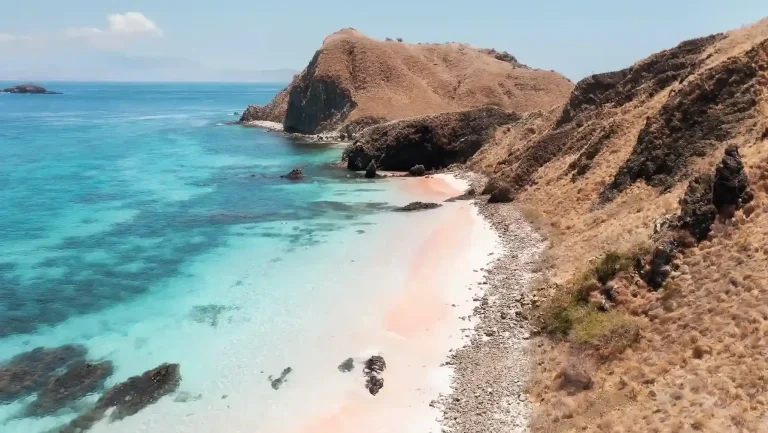
Manta Point vs Pink Beach for Snorkelers
Manta Point is an open-water manta-ray site; Pink Beach is a calm, shallow coral-sand bay with reef fish but no…
Diving & Snorkelling
Water Temperature & Visibility at Manta Point
Operator-reported ranges for Manta Point: wet season (Dec-Mar) water around 27-29°C with visibility roughly 10-20 m, sometimes dropping into single…