
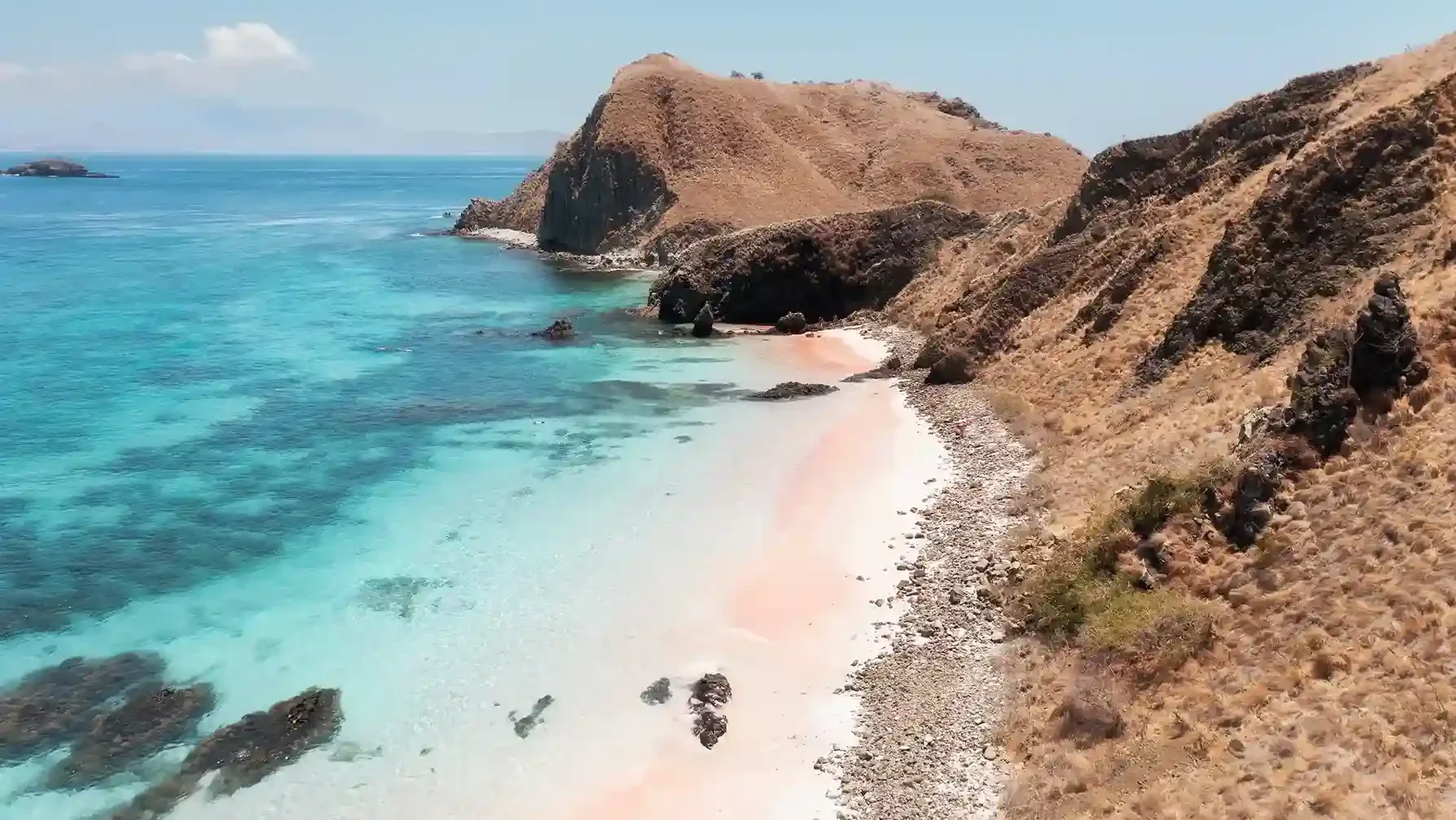
Manta Point is an open-water manta-ray site; Pink Beach is a calm, shallow coral-sand bay with reef fish but no mantas. Choose Manta Point if seeing a manta ray is the goal, Pink Beach if you want a gentler swim and photogenic sand – or combine both in one day, since they pair naturally on most itineraries.
Last updated: 29 August 2026.
What is the core difference between these two stops?
Manta Point is a channel site where reef manta rays gather to feed or be cleaned, requiring open-water snorkelling or diving skills and comfort with some current. Pink Beach is a sheltered bay named for coral fragments that tint its sand pink, offering shallow, calm snorkelling among reef fish and coral gardens with no manta component at all. They serve genuinely different purposes on a Komodo itinerary rather than competing for the same traveller.
Which suits nervous swimmers or first-time snorkellers better?
Pink Beach is the gentler introduction – shallow, calm and close to shore, making it forgiving for first-timers or nervous swimmers building confidence before an open-water site. Manta Point’s deeper, more current-affected water suits swimmers already comfortable in open water. Many visitors use Pink Beach as a warm-up earlier in the day before Manta Point, or reverse the order if the manta site’s morning conditions are calmer.
Which has better underwater photography?
Pink Beach’s clear, shallow water and colourful coral make it excellent for casual photography without specialized gear, since natural light penetrates fully at shallow depth. Manta Point’s photography reward is the manta encounter itself, but the water can be less clear during the wet-season plankton bloom that also brings the mantas – see our manta season guide for that trade-off. Neither is strictly “more photogenic” – they reward different kinds of photos.
Can you combine both in one day trip?
Yes, and this is one of the most common day-trip pairings in Komodo, typically Manta Point earlier in the day (calmer, ahead of the crowds) followed by Pink Beach in the afternoon for a relaxed swim before the return to Labuan Bajo. Padar’s viewpoint is often added as a third stop on the same day – see our manta tour formats guide for the full three-stop itinerary.
Do both stops cost the same in park fees?
Yes – both sit inside Komodo National Park, so a single entrance ticket under PP 36/2024 (archived 11 Feb 2026, for when the government host is unreachable) (IDR 250,000 flat for foreign visitors, plus a shared ranger fee) covers a day visiting both, rather than requiring separate tickets per site.
Which would we recommend if you can only pick one?
If a manta ray encounter is a must-have for your trip, Manta Point is the non-negotiable choice – Pink Beach cannot substitute for that experience. If your priority is a calm, easy, photogenic swim and mantas are not essential, Pink Beach alone is a satisfying, lower-effort stop. Most guests, given the choice, do not need to choose – see our full site comparison for how these two fit alongside Padar, Batu Bolong and Manta Alley.
How does timing between the two stops usually work?
Most operators visit Manta Point first, while the morning tide and light are typically at their best for manta activity, then move to Pink Beach in the early-to-mid afternoon once the group has had a full manta session. Reversing the order is sometimes done if a particular morning’s manta conditions look poor and the guide wants to wait for the tide to turn – your captain and guide will make this call based on the day’s actual conditions rather than a fixed script.
Is one stop more crowded than the other?
Both can see multiple boats on a given day, since they are two of the park’s most visited stops, but early departures materially reduce crowding at both – arriving at Manta Point before 8am and Pink Beach before midday typically means fewer other groups in the water. This is one advantage of a private trip’s flexible timing over a shared open trip’s fixed schedule.
Which stop takes longer?
Manta Point sessions are often longer since the manta encounter itself can run anywhere from 20 minutes to over an hour depending on activity, while Pink Beach visits are typically a more fixed 45 minutes to an hour for a relaxed swim and walk on the sand. Total time at each stop ultimately depends on your itinerary and how much the group wants to linger.
Does the season affect Pink Beach the way it affects Manta Point?
Less so – Pink Beach’s shallow, sheltered bay is comfortable across most of the year, while Manta Point’s manta activity and water clarity shift more noticeably with the monsoon pattern described in our manta season guide. This is one reason Pink Beach makes a reliable “always works” stop to pair with a more weather-dependent Manta Point morning.
Frequently asked questions
Are there manta rays at Pink Beach?
No – Pink Beach is a shallow reef bay with no manta population. Manta Point and Manta Alley are the only sites in this comparison set with reliable manta sightings.
Is Pink Beach good for children?
Yes, generally more so than Manta Point, given its shallow, calm water – see our family manta snorkelling guide for how to sequence both stops with children.
Do we need different gear for Pink Beach versus Manta Point?
No – the same mask, snorkel and fins work for both; Pink Beach’s shallower water simply makes entry and exit easier.
Plan a Manta Point + Pink Beach day
How Manta Point and Pink Beach fit into a wider Komodo itinerary
Both stops sit inside Komodo National Park but offer very different roles in a day’s route. Karang Makassar is a current-exposed reef plateau used as a feeding and cleaning area by manta rays, so boat skippers plan arrivals for slack or manageable tides. The pink sand cove, by contrast, is sheltered and usually slotted around the middle of the day as an easier, low-effort snorkel and rest stop.
For most visitors, the comparison only makes sense inside a full-day loop that may also include Padar, Komodo or Rinca for dragons, and one or two snorkel drifts. Manta-focused divers often run two boat entries at Karang Makassar and skip the coloured sand entirely, while mixed groups with non-divers typically trade one manta session for unhurried time ashore at the beach.
Distances, currents and how boats actually link the two
The shallow plateau used for manta encounters lies several kilometres north-east of the island that holds the pink shoreline, but boats do not travel in a straight line between GPS points. Skippers follow channels, avoid strong surface rips and time crossings with tide tables, so the interval between the two stops can sit anywhere between 30 minutes and over an hour depending on hull speed and sea state.
At Karang Makassar itself, guides talk about upcurrent and downcurrent sectors rather than a single fixed spot. The upstream end of the reef receives cooler, plankton-rich water, can feel more demanding and is where experienced divers may sit slightly deeper to watch cleaning behaviour. The downstream area is usually calmer, better suited to snorkellers who prefer gentler drift, but still requires staying clear of boat lanes and the raised cleaning patches.
Operators, departures and where overnight stays fit in
Boats running the same broad route can deliver very different experiences. Lower-cost day trips often mix many abilities in one group, rely on brief manta briefings and may have limited flexibility if currents or visibility change. More established operators tend to keep ratios tighter, enforce distance rules around rays, and are more willing to skip a manta stop if conditions would push nervous swimmers beyond their comfort level.
Most departures leave from the main harbour in Labuan Bajo, with some liveaboards and day boats also picking up near Waecicu Beach where several shore properties face the anchorage. Staying by the harbour shortens the transfer to the pier and suits early starts, while a night near the quieter beaches offers easier access to afternoon swims but usually needs a car ride to join the morning check-in for park trips.
Frequently asked questions
Is Manta Point Komodo a good stop for families with teenagers?
Yes, families with teenagers usually cope well, provided the teens are confident in the water. The site involves surface currents, repeated boat pick-ups and sometimes choppy chop, so weak swimmers may find it stressful. A short test snorkel at a calmer reef first, plus clear rules about staying close to the guide and not chasing rays, makes the experience more manageable.
Is Pink Beach worth trading a manta session for?
Manta encounters offer the rarer wildlife moment, so most visitors rate Karang Makassar as the higher priority. Pink Beach gives easier swimming, shore time and wide-angle reef colours suited to people less focused on big animals. If you are nervous about currents or travel with very mixed abilities, a longer stop at the beach plus a single, brief manta drift often balances the day best.
Can one departure from Labuan Bajo cover both?
The common way is to book a shared or private boat that includes both stops inside a full Komodo National Park day route. Boats usually leave Labuan Bajo early, aim for mantas while conditions are manageable, then continue to the coloured beach and possibly one or two additional islands. Currents and tides dictate the exact order, so flexibility on timing is important.
Is it better to stay near waecicu beach or town in Labuan Bajo?
Staying in town gives quicker access to the main harbour, restaurants and early-morning tour check-ins. Waecicu Beach is quieter, with water access and views over the anchorage, but usually requires a longer car transfer to the pier unless your operator offers direct pick-up. If you expect several pre-dawn departures, town tends to be more practical despite being busier.
Manta Point Komodo combo tour with Pink Beach reputable operators?
Reputable providers focus on safety briefings, group size, guide experience and manta interaction rules rather than aggressive schedules. They carry proper safety gear, adjust or cancel snorkels if currents spike, and make clear that rays must not be chased or touched. Trips to this area operated by Komodo Luxury can be arranged through sales@komodoluxury.com or WhatsApp +62 811-3823-875.
Manta Point Komodo admission cost high season vs low season?
Park entry for foreign visitors is set by regulation at IDR 250,000 per person under PP No. 36/2024, with an additional ranger fee per small group and minor conservation charges. These components apply year-round, so the official admission does not change between seasons. Tour package prices may still vary by demand, fuel and boat availability, which sit outside the government fee structure.
Should I use nitrox for Manta Point Komodo dives?
Nitrox can extend no-decompression limits if you plan multiple dives, but many manta interactions occur in relatively shallow water where bottom time on air is already generous. Using enriched air adds cylinder labelling, mix analysis and depth-limit considerations, which require proper training. For single or two-dive days focused mainly on mantas, good gas planning on air usually suffices.
Keep reading
Diving & Snorkelling
Boat Traffic Rules at Manta Point
Boat traffic rules at Manta Point exist to stop overcrowding around feeding and cleaning mantas - guides coordinate entry timing…
Diving & Snorkelling
Water Temperature & Visibility at Manta Point
Operator-reported ranges for Manta Point: wet season (Dec-Mar) water around 27-29°C with visibility roughly 10-20 m, sometimes dropping into single…
Diving & Snorkelling
Manta Point vs Batu Bolong for Divers
Short answer: Manta Point (Karang Makassar) is the easier, more beginner-friendly site — a shallow drift with mild-to-moderate current, suitable…