
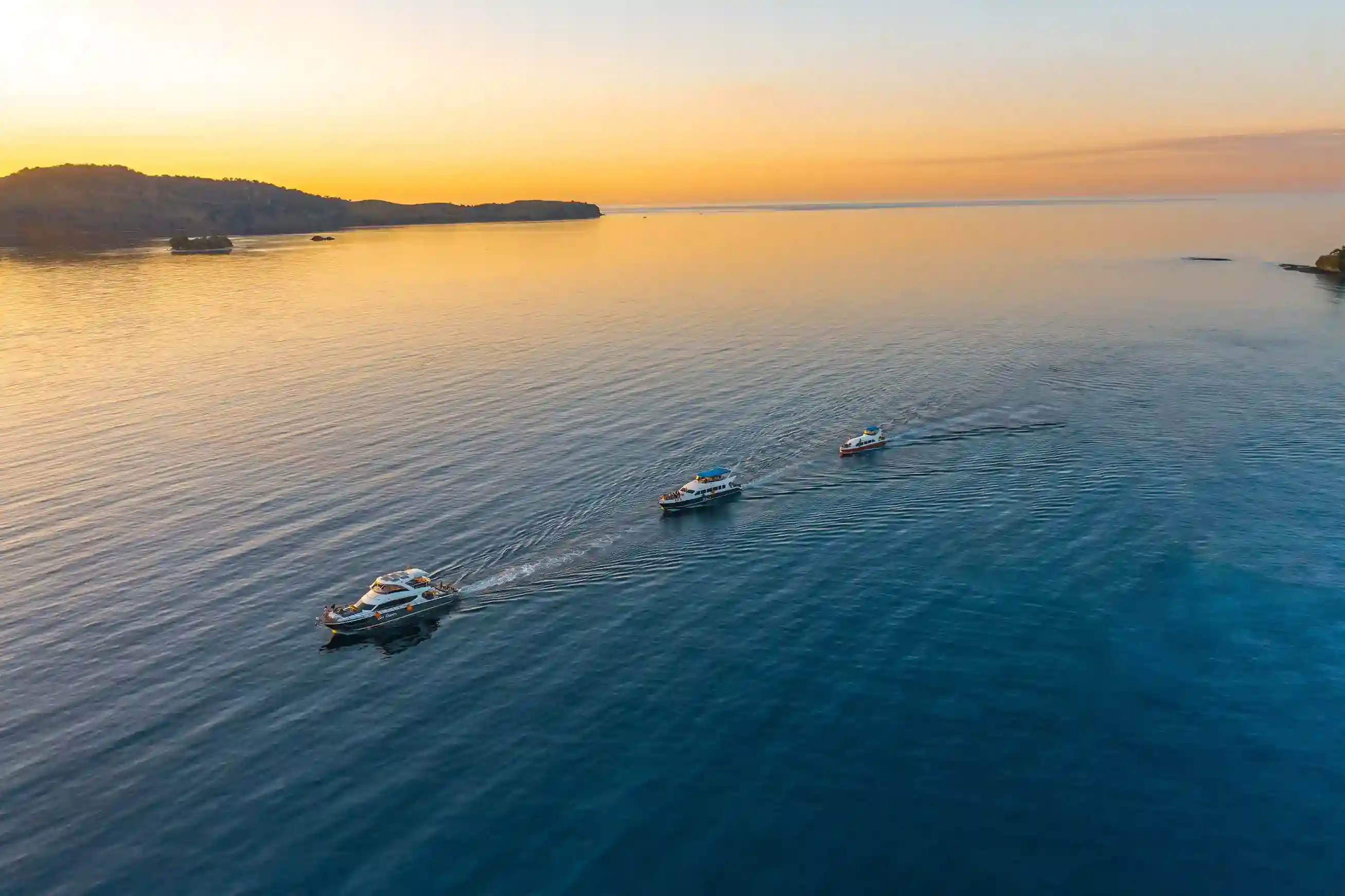
A typical Komodo manta day-trip itinerary for 2027 departs Labuan Bajo around 06:00-07:00, covers a morning highlight (Padar’s viewpoint or a Komodo dragon trek), reaches Manta Point in the early-to-mid afternoon for a single snorkel session, adds a closing stop like Pink Beach, and returns to Labuan Bajo by early evening. Trip price depends on operator and group size — ask for a current quote, not a fixed figure.
What does a full-day manta itinerary actually look like, hour by hour?
| Approx. time | Stop | What happens |
|---|---|---|
| 06:00-07:00 | Labuan Bajo harbour | Departure, safety and itinerary briefing |
| 07:30-10:00 | Padar Island or Komodo/Rinca trek | Sunrise viewpoint hike, or ranger-guided dragon trek, depending on itinerary |
| 10:30-12:00 | Sailing / lunch aboard | Transit toward central Komodo, lunch served on the boat |
| 13:00-14:30 | Manta Point | Guided snorkel session at the cleaning station, typically 30-60 minutes in water |
| 14:30-16:00 | Pink Beach or Taka Makassar | Closing stop before the return crossing |
| 16:00-18:00 | Return to Labuan Bajo | Arrival back at harbour, typically before dark |
This is a representative pattern based on how most Komodo day-trip operators structure a full-day circuit, not a fixed schedule every boat follows exactly — stop order, timing, and which two or three highlights are included vary by operator and by which specific package you book. Always confirm your own boat’s planned itinerary rather than assuming this exact timetable.
Why does Manta Point usually come in the afternoon, not the morning?
Most day-trip operators front-load the itinerary with land-based stops (Padar’s hike, or a dragon trek) while morning light and energy levels are best for walking, then move to the water-based manta stop once the group has already covered the physically demanding parts of the day. It also reflects simple geography: Manta Point sits roughly in the middle of the central-Komodo circuit, so a boat working outward from Labuan Bajo in the morning and back in the afternoon naturally passes through it partway along the route rather than at the very start or end.
What’s actually included in a standard day-trip package?
- Return speedboat transport from Labuan Bajo.
- Snorkeling gear (mask, fins, life jacket) — bring your own mask for a better fit if you have one.
- A guide for each stop, including a manta-etiquette briefing before entering the water at Manta Point.
- Lunch aboard, on most full-day packages.
Komodo National Park’s official entrance fee and ranger fee are separate from your boat fare — see the fee section below. Confirm your specific operator’s inclusions before booking, since packages vary.
What park fees apply on a 2027 day trip?
The park’s official entrance fee under Government Regulation PP No. 36/2024 is a flat IDR 250,000 per foreign visitor, plus a mandatory ranger fee of roughly IDR 150,000 per group of 1-5 people — a practical all-in budget of about IDR 400,000-525,000 per person. Since 1 April 2026, this is booked through the official SiOra e-ticket system (siora.id) rather than paid on arrival, and there is no indication in the park authority’s own published material of a further fee change specifically for 2027. Source: tnkomodo.ksdae.kehutanan.go.id (archived 11 Feb 2026, for when the government host is unreachable), Komodo National Park Authority. This is the same figure used consistently across this site.
We do not quote a fixed total trip price on this page (boat fare plus park fee combined) because boat fare depends on operator, group size and boat type in a way the park fee does not — see Komodo Luxury’s one-day trip page for a current quote.
How much snorkel time do you actually get at Manta Point?
Operator itineraries commonly describe a single in-water session at Manta Point in the roughly 30-60 minute range on a day trip, since the boat still has a return crossing and possibly another stop to fit into the remaining daylight. This is meaningfully shorter than the flexible, tide-timed access a multi-day liveaboard can offer — see our day trip vs liveaboard comparison if session length and crowding matter more to you than a single-day schedule.
What to pack for the full day
- Reef-safe (mineral) sunscreen, applied before boarding — you will be exposed to sun for most of the day, both on deck and during land stops.
- Comfortable closed-toe shoes for the Padar hike or dragon trek, not just sandals.
- A rash guard or light long-sleeve top for the manta snorkel session.
- Motion-sickness precautions for the boat legs, particularly the crossing to and from Manta Point.
- A dry bag for phone, cash and any documents, since the deck and boarding points get wet.
- Drinking water beyond what’s provided, especially during the hiking portion of the day.
How a private charter changes this same itinerary
Everything above describes a standard, shared-boat day trip. A private charter covering the same stops can shift the schedule meaningfully: an earlier or later departure to avoid the busiest window at any one stop, more or less time allocated to Manta Point specifically if that is your priority, and the freedom to drop a stop that doesn’t interest your group in favour of extra time somewhere else. The park fee and the manta encounter itself are unaffected by boat type — what changes is control over pacing and crowding. See our manta snorkel day trip page for the shared-vs-private comparison in more depth.
What if the boat can’t reach Manta Point that day?
Sea conditions occasionally mean an operator swaps a planned stop for an alternative site — this is a safety decision made by the boat’s captain and crew, not a service failure, and it is worth asking your operator in advance how they handle itinerary changes due to weather. A reputable operator will explain the alternative plan rather than simply skipping a paid-for stop without comment. This is one more reason a multi-day cruise, which can attempt a stop more than once, has an advantage in reliability over a single fixed day-trip slot — see our day trip vs liveaboard comparison for that trade-off.
Planning your own 2027 day-trip dates
For the best statistical odds of larger manta groups, aim for the wet season, roughly December-March, consistent with the season guidance used across this site. Outside that window, reef mantas remain resident at Manta Point year-round, so a day trip booked for other reasons (school holidays, work schedule, cheaper shoulder-season flights) is not a wasted choice — treat any manta encounter as a highlight rather than a guarantee on any date.
Frequently asked questions about the 2027 day-trip itinerary
What time does the manta day trip usually reach Manta Point?
Most operator itineraries reach the site in the early-to-mid afternoon, roughly 13:00-14:30, after morning stops elsewhere in the park.
How long is the snorkel session at Manta Point?
Typically 30-60 minutes, based on standard operator itineraries — confirm the specific duration with your operator.
Has the itinerary or park fee changed for 2027?
The park’s official fee structure (PP No. 36/2024) and the SiOra booking system, both already in effect from 2024 and April 2026 respectively, continue as the basis for 2027 visits. No further official change has been published as of this page’s last review.
Can I customise the day-trip itinerary?
A shared open-trip boat follows a fixed schedule; a private charter lets you set your own stop order and timing. See our manta snorkel day trip page for the comparison.
What happens if weather prevents reaching Manta Point on the scheduled day?
A responsible operator will substitute an alternative stop for safety reasons and explain the change — ask about this policy before booking rather than assuming every itinerary runs exactly as printed.
Last updated: 29 August 2026. Park-fee figures are sourced to the Komodo National Park Authority; itinerary timing is a representative pattern based on standard operator day-trip structures, not a fixed schedule guaranteed by any single boat. For the underlying product, see Komodo Luxury’s one-day trip page.
Comparing half-day and full-day manta tours
A short outing that advertises manta encounters typically focuses on a small cluster of sites close to Labuan Bajo and skips the longer run down to Karang Makassar. Travel time to the central part of Komodo National Park already uses several hours of a day, so a genuine manta-focused schedule almost always needs a full day on the water to allow reasonable time in the water once you arrive.
Full-day tours trade convenience for range. You leave earlier, come back later, and spend more hours under way, but gain access to the main manta cleaning and feeding areas plus at least one reef or beach stop. These longer programmes usually include more structured snorkel briefings, extended surface intervals, and a clearer safety margin around changing currents than compressed half-day options.
For snorkellers who tire quickly or travellers who dislike long boat rides, a shorter programme can still work if expectations are framed correctly as a scenic coastal trip with a chance of large fauna rather than a targeted manta session. Divers and dedicated wildlife watchers generally benefit more from the extra time, especially in the transitional months when mantas may move between several patches of the plateau during the day.
How a Komodo manta day from Flores actually runs
Most visitors base themselves in Labuan Bajo on the western tip of Flores, then join a boat that reaches Karang Makassar as part of a wider circuit through Komodo National Park. The day usually starts before sunrise with hotel pickup and boat boarding, then a crossing of about 1–1.5 hours by speedboat, or 3–4 hours on a traditional wooden boat, before the first snorkel or dive at a site with more sheltered conditions than the manta plateau.
A central Komodo circuit typically links a mix of shallow coral gardens, a viewpoint hike, or a beach stop with one or two dedicated sessions at the manta cleaning and feeding areas. Operators plan these segments around tide tables and park regulations, slotting Manta Point into the window that best balances current strength, boat congestion, and light. The long return to Flores late afternoon closes the day, so you are usually back at your accommodation by early evening.
Travellers arriving on early-morning flights into Labuan Bajo sometimes hope to board the boat directly, but schedules are tight and delays are common. Staying at least one night in town before you head out keeps the itinerary realistic and leaves room for a proper safety briefing, equipment check, and ranger ticketing through the SiOra system.
Money, luggage, and short 2D1N boat stays
Park fees for Komodo National Park are set by regulation, but the extra charges that build up around a day trip vary by operator. Beyond the official entry fee, ranger contribution, and small conservation levies, you may see line items for equipment hire, guided diving, or private guiding. Because legal requirements change over time, written “price lists” from earlier years often become outdated; confirming the current breakdown just before payment is the reliable approach.
Most boats do not have lockable personal lockers, so visitors normally leave large suitcases at their hotel and bring only a day pack on board. Accommodation in Labuan Bajo is generally used to storing bags during trips, though policies differ and valuables should travel with you. On the vessel, a dry cabin or covered bench space is usually allocated for smaller bags, with an emphasis on keeping decks clear for safe movement while people kit up.
An overnight 2D1N schedule built around mantas usually spreads similar activities over two days, giving flexibility for weather, tides, and personal energy. The first day often combines an approach from Labuan Bajo with snorkelling or diving at a coral site and a late-afternoon or early-morning manta session, followed by dinner and sleep on the moored boat. The second day can then repeat the plateau or explore a secondary site such as Manta Alley in the south when conditions and distance allow, before the longer return run to town.
Frequently asked questions
How early do day trips from Labuan Bajo leave to reach Manta Point Komodo?
Boats that intend to reach Manta Point typically depart Labuan Bajo between 06:00 and 08:00. Earlier departures give more flexibility with tides, time at secondary sites, and surface intervals. Speedboats can leave slightly later than wooden boats and still keep a full programme, but very late starts compress snorkel windows and may force a change in the order or choice of sites.
Is lunch usually included on Manta Point Komodo day trips, and what kind of food?
Most full-day programmes include lunch, usually a simple Indonesian-style meal served on board. Expect combinations of rice or noodles, vegetables, eggs, chicken or fish, plus fruit and drinking water. Dietary restrictions often need to be requested in advance, and exact menus vary by operator, boat facilities, and whether there is a dedicated galley or food is pre-packed ashore.
What happens if the seas are rough on the day of my Manta Point Komodo tour?
If conditions are rough, the skipper may alter the route, substitute more sheltered snorkel sites, or cancel the trip entirely if safety margins are not acceptable. Currents around Komodo can be strong even in fair weather, so conservative decisions are normal. In practice this can mean fewer sites, shorter water sessions, or skipping Manta Point in favour of safer locations nearby.
What belongs in a day bag for this trip?
Bring swimwear, a towel, reef-safe sunscreen, a hat, sunglasses, and a light cover-up for wind and sun. Many guests add a reusable water bottle, dry bag for electronics, and personal medication such as motion-sickness tablets. Snorkelling equipment is usually available but fit varies, so regular snorkellers often prefer their own mask; photographers should bring housings and spare batteries.
Manta Point Komodo one day trip itinerary from Labuan Bajo?
A typical day from Labuan Bajo starts with early hotel pickup, boat boarding, and a morning run to central Komodo sites for the first snorkel or dive. Late morning and early afternoon often combine a beach or hike with manta sessions at Karang Makassar, timed to suitable tides. After surface intervals and lunch, the boat returns to town, usually docking by late afternoon or early evening.
Two day one night itinerary Manta Point Komodo from Labuan Bajo?
A compact 2D1N plan usually leaves Labuan Bajo late morning or midday, visits a reef or island viewpoint, and aims for a first manta session when currents ease. Guests then sleep on the boat at anchor. The second day allows a repeat visit to the plateau or a different manta site, plus another reef or beach stop, before steaming back to town by late afternoon.
Keep reading

Trip Planning
Reef-Safe Sunscreen for Manta Point
Wear mineral reef-safe sunscreen (zinc oxide or titanium dioxide, non-nano) for any Manta Point Komodo trip. We have not found…
Trip Planning
Renting Snorkel & Dive Gear in Labuan Bajo
Most Manta Point boat trips include basic snorkel gear — mask, snorkel and fins — in the price, while wetsuits,…
Trip Planning
Best Time of Day to Visit Manta Point
The best time of day to snorkel at Manta Point is driven by tide, not the clock — guides aim…