
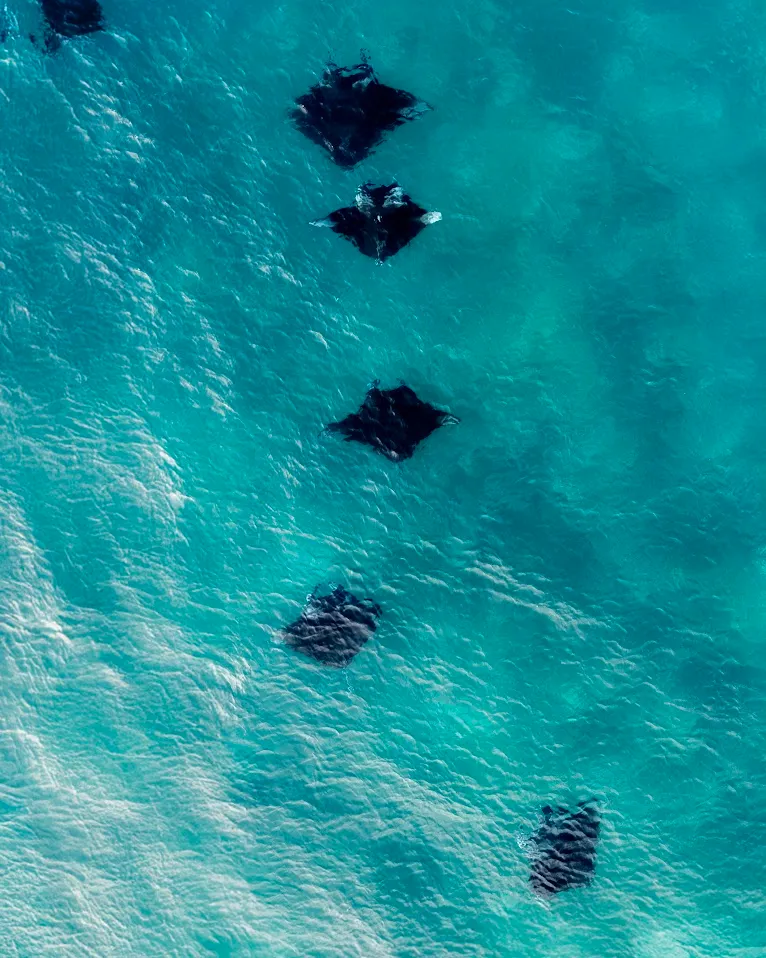
Researchers identify individual reef manta rays by the unique pattern of dark spots on their belly, especially the area between the gill slits – as distinctive as a human fingerprint and stable over an animal’s lifetime. Divers and snorkellers at Manta Point Komodo can contribute their own photos to global databases like MantaMatcher and the Manta Trust’s MantaBase. Checked August 2026.
How Do You Tell Individual Manta Rays Apart?
The primary method is photographing the manta’s ventral (belly) surface, particularly the area between and just behind the gill slits, where each individual carries a unique arrangement of dark spots. Some reef mantas have bellies densely covered in spots; others have very few – the variation in density, size, and arrangement is what makes the pattern usable as an identifier, the same way no two human fingerprints match. Unlike a scar or a fin nick, this spot pattern remains largely stable throughout a manta’s life, making it the reliable long-term marker researchers rely on.
What Other Features Help Confirm an Individual’s Identity?
Beyond the belly pattern, researchers also note scarring on the pectoral fin edges or dorsal surface (from shark bites, fishing gear, or boat strikes), nicks or deformities on the cephalic fins (the rolled “horns” near the mouth), and dorsal colour patterns – reef mantas typically show a distinctive Y-shaped marking on their back, and some individuals display a “chevron” morph with white patches. These secondary features help confirm a match when a belly photo is incomplete, but the ventral spot pattern remains the primary, most reliable identifier.
How Does Photo-ID Matching Actually Work?
Global platforms such as MantaMatcher use pattern-recognition software – a scale-invariant feature matching algorithm – to compare a new belly photo against a database of previously catalogued individuals, returning a ranked list of likely matches for a researcher to confirm. The Manta Trust runs a parallel system, MantaBase, with its IDtheManta matching interface, built from thousands of ventral photos contributed by both researchers and citizen scientists worldwide. Divers submit a photo along with the date, location, and any visible details; the system either matches it to a known individual or logs it as a new one.
| Feature | Role in identification |
|---|---|
| Ventral (belly) spot pattern | Primary identifier; unique and stable over time |
| Scarring (fins, dorsal surface) | Secondary confirmation, especially with incomplete photos |
| Cephalic fin nicks/deformities | Secondary trait, useful in side/frontal views |
| Dorsal Y-shaped marking | Species-level trait (distinguishes reef from other manta species) |
| Colour morph (standard vs chevron) | Supplementary, not used alone for individual ID |
Can Snorkellers and Recreational Divers Contribute to This Research?
Yes – this is genuinely citizen science, not a researchers-only activity. Anyone with an underwater camera or housed phone can photograph a manta’s belly during a Manta Point encounter and submit it through MantaMatcher or the Manta Trust’s IDtheManta platform, along with the date, location, and any notes on the encounter. Contributions from divers and snorkellers make up a meaningful share of the photos in these global catalogues, since researchers can’t be present at every site on every day the way tourists collectively are.
What Makes a Useful Identification Photo?
The priority is a clear, well-lit shot of the manta’s underside, ideally capturing the area between the gill slits where the spot pattern is most distinctive – even a partial shot of this zone is useful if you can’t frame the whole animal. Shooting from slightly below or to the side as the manta passes overhead is the most common way divers capture this angle naturally, without needing to chase or position awkwardly. Avoid flash where possible, since it can startle mantas away from a cleaning station mid-session – natural or continuous light works better both for the animal’s comfort and for photo clarity.
Why Does This Research Matter for Manta Point Komodo Specifically?
Long-term photo-ID tracking lets researchers estimate population size, understand site fidelity (whether the same individuals return repeatedly to Karang Makassar’s cleaning stations), and monitor injury rates or reproductive status over time. A published study on reef mantas in Komodo has referenced MantaMatcher directly as the accessible public database for retrieving individual sighting histories using assigned ID numbers – meaning tourist-contributed photos genuinely feed into scientific understanding of this specific population, not just a general global catalogue.
Can You Recognise a Manta You’ve Seen Before Without Formal Software?
With practice, yes, at a basic level – if you photograph the same distinctive belly pattern on two different dives, you can visually compare them yourself even without running them through matching software. This is a popular way for repeat visitors and dive guides who work the same site regularly to informally track “regulars” at specific cleaning stations, even before any photo is submitted to a formal database.
What Mistakes Do First-Time Contributors Make?
The most common mistake is photographing the manta’s back or top side instead of its belly – a beautiful shot, but not usable for individual identification since the dorsal Y-marking only confirms species, not the individual. A second common mistake is getting too close in an attempt to fill the frame, which can disturb the animal and cut the encounter short before a clear photo is even captured. A calm, moderate-distance shot of the full underside, taken as the manta passes naturally overhead, is more useful to researchers than a close-up crop of just part of the pattern.
How Does This Data Feed Into Broader Conservation Understanding?
Repeated sightings of the same identified individuals over months or years let researchers build a picture of how site-faithful Karang Makassar’s manta population actually is – whether the same animals return regularly or the aggregation is made up of more transient visitors. This kind of long-term population data underpins broader conservation and management decisions for manta-related tourism sites, even though any single tourist’s contributed photo is a small piece of a much larger dataset built collectively over years.
Is There a Local Komodo-Specific Manta Catalogue?
Individual photo-ID projects in other parts of Indonesia, such as the Bird’s Head Seascape project in Raja Ampat, maintain regional catalogues that feed into global systems like MantaMatcher. We have not found a dedicated, standalone public catalogue specific to Komodo’s Karang Makassar population separate from the global databases – contributions from this site are most reliably routed through MantaMatcher or the Manta Trust’s global system rather than a Komodo-only project.
Manta Identification FAQ
What is the best angle to photograph for manta identification?
The ventral (belly) side, especially the area between and just behind the gill slits, where each individual’s dark spot pattern is most distinctive.
Can I submit my own manta photos to a research database?
Yes – platforms like MantaMatcher and the Manta Trust’s IDtheManta accept public submissions from divers and snorkellers worldwide.
Do reef and oceanic manta rays have the same identification method?
The belly-spot-pattern method applies to both, though reef mantas (the common species at Manta Point Komodo) also show a distinctive dorsal Y-shaped marking useful for species-level identification.
Does touching a manta help get a better identification photo?
No – touching a manta can strip its protective mucus layer and is not necessary; useful ID photos are taken from a respectful distance as the animal passes naturally.
Planning a Manta Point trip where you might contribute your own identification photos? See Komodo Luxury’s sailing trip for booking, or our diving and snorkelling guides for how to position yourself for the best encounter.
How Photo Identification Fits Into Komodo’s Manta Research
Researchers in Komodo National Park rely heavily on photographs to track individual reef mantas over many years. The key image is the belly, captured as the animal glides overhead or banks in a slow turn. Each clear underside shot can confirm whether a ray has been recorded before, reveal how often it returns, and show movements between Manta Point, Manta Alley and other reefs.
Side and back images add context that helps refine those matches. Photos showing the shoulders, tail and dorsal fin document injuries, entanglement scars and natural changes such as pregnancy or the loss of a remora. Taken together, sequences from different seasons show how animals use cleaning stations versus feeding grounds, and whether the same individuals appear at surface-feeding events in the wet season and at cleaning stations in clearer dry-season water.
Because visibility and current vary, a single dive rarely gives every angle. Divers and snorkellers who understand this method can plan for at least one good underside shot, then add secondary views when conditions and manta behaviour allow. Over time, that disciplined approach builds a robust local archive that complements satellite observations and broader regional studies of Mobula alfredi movements.
Citizen Science and Research Groups Active Around Manta Point
Several long-running manta research programmes include Manta Point and nearby sites in their databases, and they all depend on visitor contributions. Most operate open photo-ID catalogues where anyone can upload images, receive a match result, and see if “their” ray already has a profile. Submissions from casual snorkel trips can fill gaps between formal survey expeditions and capture unusual visitors like the occasional Mobula birostris.
On boats from Labuan Bajo, you may hear briefings referencing these catalogues, even when the specific project is not named. Guides often encourage guests to share a selection of their clearest images by email after the trip, so staff can forward them to established researchers. That indirect route avoids confusing guests with multiple platforms while still feeding consistent data into recognised scientific networks.
Language differences between international guests and Indonesian crew can affect how well these projects are explained. Many guides speak practical English but may not have the vocabulary to describe genetics, site fidelity or demographic modelling. Asking targeted questions such as “Where can I submit ID photos?” or “Do you work with a manta research organisation?” usually produces clearer answers than open-ended discussion, and gives the crew a chance to share what they know in simple terms.
Where communication is limited, visual aids on the boat help. Some operators carry laminated diagrams showing which parts of the manta to photograph and how to frame the belly without diving down onto the animal or blocking its path. Paying attention to those briefings is often more productive than pressing for complex scientific detail that time, language and conditions do not support.
Photography, Social Media and Respectful Images at Karang Makassar
Many visitors hope to capture images they can share on social media while still contributing to manta identification work. The most useful conservation photographs are not always the most dramatic: a well-lit, level underside shot from several metres away tells researchers far more than a close-up selfie that cuts off the belly. Planning a few deliberate identification frames at the start of an encounter leaves time later for more creative photography.
The reef-plateau layout at Karang Makassar means typical “Instagrammable” compositions show a manta cruising above the rubble and coral patches with divers or snorkellers in the background. Strong currents and variable visibility mean it is rarely safe or ethical to pose directly under an animal or ask a guide to position you in a specific way. Remaining slightly down-current and off to the side lets the ray pass naturally while still placing it clearly in the frame.
Surface shots from the boat can also be distinctive. During wet-season feeding aggregations, mantas sometimes feed close enough to record the tips of their wings breaking the surface or the circular patterns of feeding trains. Those images are less useful for identification, but they document seasonal behaviour and can be shared alongside ID shots taken in the water, giving a fuller view of the encounter without needing to crowd the animals.
Social media captions offer an extra opportunity to support research. Mentioning that images were taken inside Komodo National Park, noting the month and year, and indicating whether the encounter happened at a cleaning station or during surface feeding can all help scientists who later come across those public posts. Clear statements about keeping distance and avoiding contact also reinforce good practice for others planning their first visit.
Frequently asked questions
Is it possible to rent a dive computer for Manta Point Komodo from local dive shops?
Yes, many Labuan Bajo dive centres can rent dive computers for trips to Manta Point. Availability and models vary, so request one when you book rather than on the morning of departure. Check that staff demonstrate basic functions, including no-decompression limits and safety-stop prompts, and confirm whether the rental covers the full day or only a single dive.
How do researchers tell one manta from another?
Individual mantas are identified by the unique black spot patterns on the white underside between the gills and tail. Good ID shots show this belly area flat and in focus, ideally with the whole width of the disc visible. Supplementary photos of the dorsal fin, tail and any scars help confirm matches over time, especially if the animal’s condition changes between seasons.
Is Manta Point same as Karang Makassar?
Yes, divers use “Manta Point” and “Karang Makassar” for the same reef plateau in Komodo National Park. Charts, guidebooks and briefings may choose one name or the other, and GPS positions can differ slightly because the site is large. When arranging a trip from Labuan Bajo, clarifying that you mean the manta cleaning and feeding area removes any remaining ambiguity.
Keep reading
Manta Guides
Whale Sharks, Turtles and Other Megafauna
Beyond reef manta rays, Manta Point Komodo (Karang Makassar) hosts blacktip and whitetip reef sharks, eagle rays, green turtles, and…
Manta Guides
Cleaning Station Behaviour at Manta Point
Manta Point is a cleaning station, not a feeding ground — reef mantas hover there to let small cleaner fish…
Manta Guides
Plankton, Tides and Why Mantas Show Up
Short answer: Manta rays gather at Manta Point (Karang Makassar) because it sits in a narrow tidal channel where currents…