Snorkel or Dive at Manta Point Komodo?
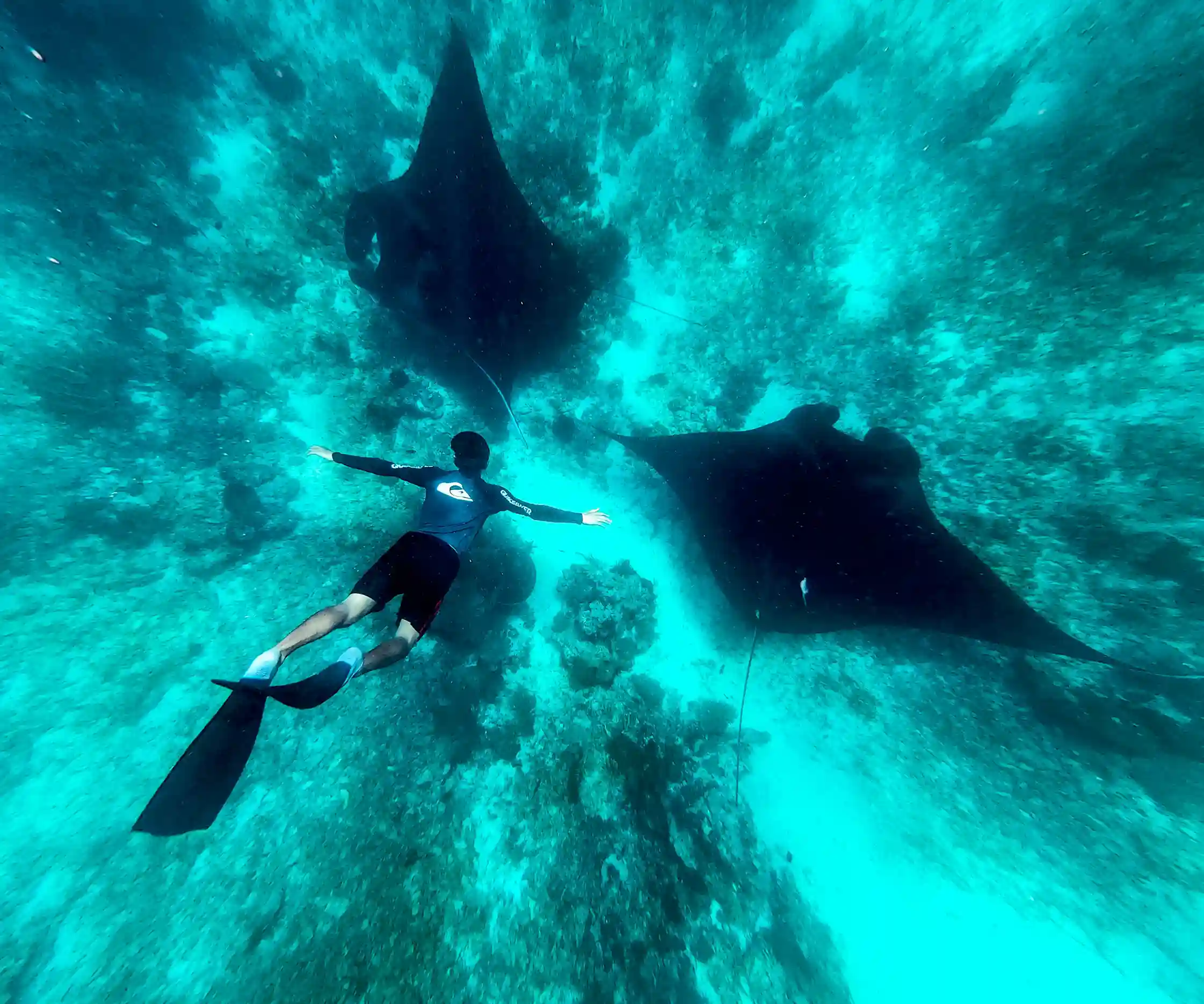
Snorkelling at Manta Point requires no certification and puts you on the surface where mantas often cruise; diving requires certification and lets you hover at the cleaning station itself, but Manta Point can run a current that suits divers with some experience. The right choice depends on your comfort in open water and whether you want proximity or ease.
Last updated: 29 August 2026.
What does a manta snorkel session actually involve?
Snorkelling at Manta Point means swimming on the surface with a mask, snorkel and fins while your guide watches for manta activity and positions the group accordingly. Reef mantas frequently feed or cruise close to the surface, especially during the wet-season plankton bloom (see our manta season guide), which makes snorkelling a genuinely strong way to encounter them – not a consolation option for non-divers. No certification is required, making this the more accessible format for families and first-timers. See our Manta Point snorkelling page for full detail.
What does a manta dive actually involve?
Diving at Manta Point typically means a guided descent to the cleaning station itself, where you hover at a fixed point while mantas glide over the reef to be serviced by cleaner wrasse. This gives a longer, closer, more stable view than surface snorkelling, but requires open-water certification and comfort managing buoyancy in a site that can run a noticeable current. See our Manta Point diving page for certification requirements and dive structure.
Does current make diving harder than snorkelling here?
Yes, generally. Manta Point’s current can shift during a single session as the tide changes, which divers need to manage through buoyancy control and reef-hooking technique at the cleaning station, while snorkellers on the surface can simply reposition by swimming or letting the guide reposition the boat. This is one reason operators often prefer divers to have some logged dives before a Manta Point trip, while snorkelling has no such prerequisite.
Which gives a better chance of a close encounter?
| Factor | Snorkelling | Diving |
|---|---|---|
| Certification needed | None | Open Water or higher |
| Typical vantage point | Surface, mantas often close below | Cleaning station depth, mantas pass overhead |
| Current management | Minimal – reposition by swimming/boat | Active buoyancy & positioning skill needed |
| Session length in the water | Flexible, surface-paced | Limited by air supply / dive computer |
| Best suited to | Families, first-timers, non-divers | Certified divers wanting a stable, close view |
Can a mixed group of snorkellers and divers do the same trip?
Yes – many day trips run both activities on the same boat, with snorkellers staying on the surface while divers descend to the cleaning station, all supervised by guides for each group. This is a common and practical solution for families or groups with mixed certification levels. See our manta tour formats guide for how mixed-activity trips are structured.
Which should a nervous first-timer choose?
If you have never snorkelled with large marine life before, snorkelling is the lower-pressure starting point – you can surface immediately at any time, and there is no equipment or buoyancy skill to manage beyond a mask and fins. Diving adds a genuine skill and comfort requirement on top of the manta encounter itself, so it suits guests already comfortable diving in current, not those trying diving for the first time specifically to see a manta.
What gear differs between the two options?
Snorkelling needs only a mask, snorkel and fins, usually supplied by the operator, plus a rash guard or wetsuit top for sun and mild warmth. Diving needs a full BCD, regulator, tank, weight system and exposure suit, along with your certification card and logbook – most Komodo dive operators supply this equipment as part of the trip, but confirm gear rental is included when booking rather than assuming.
How does trip length differ between snorkel and dive-focused days?
A snorkel-focused manta day typically has more flexibility in water time, since surface sessions are not limited by tank air supply and can be extended or shortened based on conditions and group energy. A dive-focused day usually plans around 1-2 tanks with fixed surface intervals between them, giving a more structured but shorter total time in the water at the site itself. Neither is objectively better – just different rhythms.
Can you do both snorkelling and diving on the same trip, different days?
Yes, particularly on multi-day trips – many guests snorkel at Manta Point on one day and dive at Manta Alley or a second Manta Point session on another, especially useful if a first attempt had marginal visibility and you want another go with different equipment. See our 3D2N private trip page for a format built around exactly this kind of flexibility. Divers wanting to compare dedicated dive operators around Labuan Bajo can also check a listing such as Komodo Diving Tour.
Put plainly: Manta Point scuba diving buys you time at the cleaning station and eye-level positioning, while snorkelling buys you access without a certificate and a wider view across the plateau. Neither is the serious option — they answer different questions about how you want to spend the same forty minutes.
Frequently asked questions
Do I need advanced certification to dive at Manta Point?
Open Water certification is typically sufficient, though operators may prefer some logged dive experience given the site’s current – confirm with your guide based on conditions on the day.
Can beginners try diving for the first time at Manta Point?
We do not recommend it as a first-ever dive site given the current; a calmer introductory dive site elsewhere is a better starting point before attempting Manta Point.
Is snorkelling “less good” than diving for seeing mantas?
No – many of the best manta encounters happen at the surface during feeding events, particularly in the wet-season window. Snorkelling and diving simply offer different vantage points, not a better-or-worse hierarchy.
Ask Komodo Luxury which suits your group
Sources
How to choose between snorkelling and diving at Manta Point
The choice between staying on the surface or going on scuba here is mostly about how you prefer to spend your time with the manta rays, not about which is “better”. Snorkellers drift across the plateau and along its edges, watching mantas rise to feed or pause at cleaning stations below. Divers sit lower in the water column, often on the sandy patches beside the reef features the animals use for cleaning.
Both approaches can bring mantas very close, because they often swim up to the surface to feed and repeatedly loop around bommies to be cleaned. Snorkelling suits those who like freedom of movement, warmer water near the surface and shorter, repeated sessions. Diving suits those who want more stable positioning in mild current and clearer views of cleaning behaviour at depth without needing to constantly look down from above.
Conditions shift through the year, and that influences the decision too. In the wet season, when plankton is dense and visibility shorter, snorkellers still see the silhouettes and near-surface feeding chains clearly, while divers may experience murkier mid-water. In the dry-season core, clearer water often favours divers watching cleaning stations, while snorkellers enjoy long sightlines as mantas cruise just beneath them.
Seasonal conditions and timing for diving Karang Makassar
Diving the reef plateau works throughout the year, but what you see and how it feels changes with the seasons. During roughly December to March, wet-season plankton blooms draw larger feeding aggregations; dives here often focus on mid-water hovering as manta trains move along the reef. Visibility may sit around 10–20 metres, with softer light and more particulate in the water column.
From roughly June to September, drier conditions and cooler upwelling bring clearer water, often 15–30 metres, especially in July and August. This is when many divers target cleaning interactions, as the more stable visibility and slightly brisker current make it easier to station on the side of a bommie and watch repeated passes. Surface water sits near its annual low of about 25–27 °C in this period, with thermoclines reaching around 22 °C, so a 5 mm suit is sensible for those who chill easily.
Shoulder months such as April–May and October–November often blend these patterns, with days of clear, blue water alternating with hazier, plankton-rich windows. For a first visit, many divers prefer these transition periods because they can experience both feeding and cleaning behaviour on different dives, without the extremes of either lower visibility or cooler water dominating the whole trip.
Operational details: operators, briefings, dive limits and tipping
Operators based in Labuan Bajo run both snorkel and dive itineraries to the plateau, typically combining it with other sites in Komodo National Park. Local dive leaders are used to mixed experience levels and will normally give detailed briefings covering currents, entry points, the location of main cleaning features and how to avoid standing on the reef. A clear explanation of manta behaviour and local regulations is a useful marker of a well-run trip.
On air, dive times are usually shaped by a balance between no-decompression limits, gas consumption and how long the boat schedule allows you to stay on station. The plateau itself is shallow, which often keeps nitrogen loading modest, but current and the need to stay together as a group still set practical limits. Expect the plan to emphasise slow movement and time in position rather than covering distance.
In Labuan Bajo you will find both accommodation aimed at divers along or near the seafront and simpler guesthouses further back from the harbour. Staying close to the main jetty reduces early-morning transfer time to the boats, but many visitors prioritise quiet streets and walk or take a short ride to their operator instead. Whatever you choose, confirm meeting points and departure times in advance, as these can be early.
Tipping practices for guides and boat crew are informal but appreciated. A modest cash tip handed discreetly to the lead guide at the end of the day, to be shared with the team, is common once you are satisfied with the safety briefing, manta etiquette in the water and the care taken with gear and surface support. There is no fixed amount; base it on local norms you observe, the number of dives or snorkel sessions, and how well the crew managed conditions and group comfort.
Frequently asked questions
Can beginners snorkel safely at Manta Point Komodo?
Yes, beginners can snorkel here safely when conditions are suitable and they stay close to a guide and boat. The area often has surface current, choppy waves and boat traffic, so weak swimmers should always use a lifejacket or flotation aid. Listening carefully to the briefing, staying with the main group and signalling early if tired are all important for a comfortable session.
Are medical facilities in Labuan Bajo adequate for dive-related issues from Manta Point trips?
Basic medical facilities are available in Labuan Bajo for minor dive-related issues, but resources are limited compared with major cities. There is no fully equipped hyperbaric chamber in town, so suspected decompression illness would require evacuation to better-equipped centres. Sensible dive profiles, conservative computer settings and honest disclosure of medical history to your operator reduce the likelihood of needing advanced care.
Is there a season that favours diving here?
Mantas can be seen year-round here, with reef mantas considered resident. Wet-season months from roughly December to March often give larger plankton-driven feeding groups but reduced visibility, while June to September tends to bring clearer water and strong cleaning-station activity. Shoulder months can offer a mix of both behaviours. Wind, tides and occasional plankton pulses still make individual days variable.
Can beginners dive Manta Point Komodo?
Beginners can dive here if they are properly certified, comfortable in open water and paired with attentive guides, but this is not always a suitable first-ever ocean site. Currents can be moderate to strong, and good buoyancy is needed to avoid the shallow reef and cleaning features. Many operators prefer beginners to have made a few easier check-out dives elsewhere before joining this itinerary.
Do experienced divers name a single best month?
There is no single “best” month, because resident reef mantas use the plateau in all seasons. Many divers favour June to September for clearer water and reliable cleaning-station activity, accepting cooler temperatures. Others choose December to March for dense plankton and higher chances of large feeding groups, accepting lower visibility. Personal priorities and schedule usually matter more than chasing a theoretical peak.
Manta Point Komodo renting dive gear versus bringing your own?
Both options work, and many visitors choose a mix. Renting locally avoids airline baggage limits and lets staff provide exposure protection suited to seasonal temperatures, but quality and fit can vary between operators. Bringing your own mask, computer and, if possible, regulator ensures familiarity and accurate tracking of your profiles, while relying on rental for bulkier items such as wetsuits and fins.
Can beginners safely snorkel with mantas Manta Point?
Beginners can snorkel safely with mantas provided they are briefed well, stay within a clearly marked area and use flotation if unsure of their swimming. Guides typically manage entries so guests drift with the boat, reducing the need for hard swimming. Respecting distance from the animals, avoiding kicking down towards them and signalling early if anxious help keep the experience calm and controlled.
Labuan Bajo seafront hotels close to dive centers for manta?
Several seafront properties in Labuan Bajo sit within easy walking or short transfer distance of the main harbour area where many operators are based. Staying by the water can simplify early-morning departures and gear drop-off. However, availability, noise levels from the road and nightlife, and your budget may all influence whether you choose a waterfront room or accommodation slightly inland.
Labuan Bajo dive resort vs city hotel for Komodo manta diving?
A dedicated dive-focused property can offer integrated logistics, on-site gear storage and very short walks to the boat, which many divers find convenient. City hotels provide broader dining options and more flexibility for non-diving companions, but may require a daily transfer to the departure point. The better choice depends on whether your priority is streamlined dive days or wider town facilities between trips.
Is Manta Point Komodo always a drift dive?
Currents are common here, so many dives are planned as drifts, but conditions are not identical every day or every tide. Sometimes guides will anchor the group in mild flow near a cleaning feature and let mantas circle, moving only short distances. On stronger days, the plan may shift to negative entries and controlled drifts with the boat following, making adherence to the briefing essential.
What does the dive briefing cover?
A thorough briefing usually covers current direction, entry and exit signals, depth limits, no-touch rules for mantas and the shape of the reef plateau. Guides explain where cleaning stations and sand patches lie, how the group will position itself and how to behave if animals approach closely. You should also hear contingency plans for separation, lost-buddy procedures and surface signalling devices.
How experienced are the guides who work this site?
Many local guides have extensive experience on the site, often logging numerous dives each season in a range of tidal and seasonal conditions. Their familiarity with current patterns, common manta routes and safe entry points is a key safety asset. As with any destination, experience levels vary between operators, so asking about guide certifications, recent site experience and group ratios is sensible before booking.
Keep reading
Diving & Snorkelling
Boat Traffic Rules at Manta Point
Boat traffic rules at Manta Point exist to stop overcrowding around feeding and cleaning mantas - guides coordinate entry timing…
Diving & Snorkelling
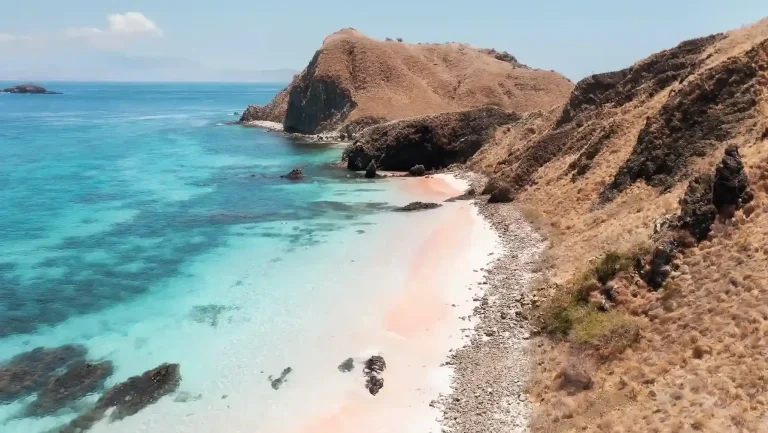
Manta Point vs Pink Beach for Snorkelers
Manta Point is an open-water manta-ray site; Pink Beach is a calm, shallow coral-sand bay with reef fish but no…
Diving & Snorkelling
Water Temperature & Visibility at Manta Point
Operator-reported ranges for Manta Point: wet season (Dec-Mar) water around 27-29°C with visibility roughly 10-20 m, sometimes dropping into single…