
Manta Point vs Manta Alley: Which Site to Choose
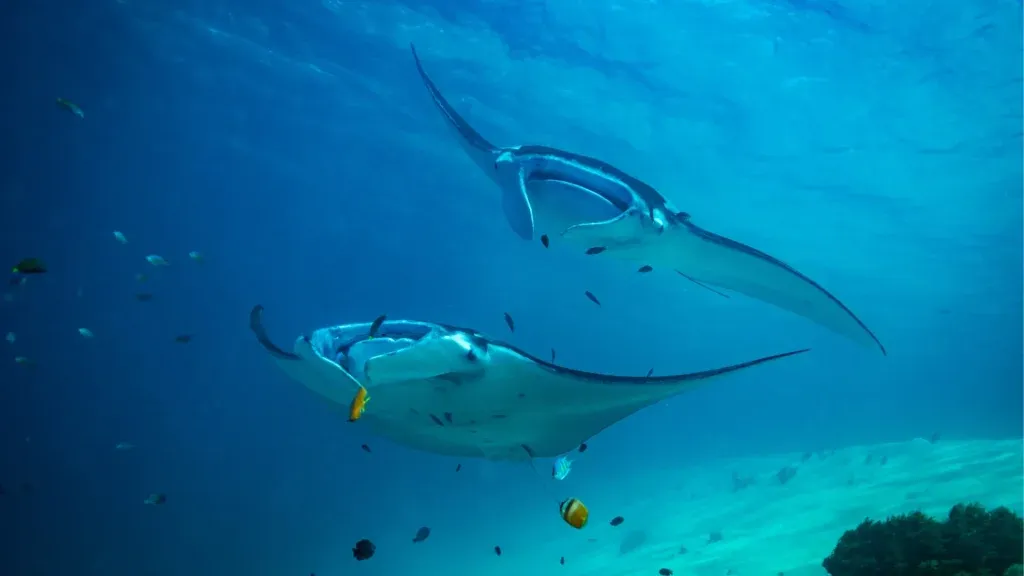
Manta Point (Karang Makassar) and Manta Alley are two separate manta sites in Komodo National Park. Manta Point sits in central Komodo, is shallower (8-18m) with gentler-to-moderate current, and is reachable on a standard Labuan Bajo day trip. Manta Alley sits in remote southern Komodo, generally needs a liveaboard, and runs moderate-to-strong current suited to more experienced divers. Last updated: 27 August 2026.
Are Manta Point and Manta Alley the Same Place?
No – they’re distinct sites roughly at opposite ends of the park’s manta activity. Manta Point (Karang Makassar) sits centrally, between Komodo Island and Papagarang. Manta Alley sits in Komodo’s remote south, closer to the open waters beyond the main island cluster. Both host manta cleaning stations, but their access, conditions, and typical visitor profile differ enough that conflating them leads to mismatched expectations.
How Do Access and Distance Compare?
Manta Point is reached from Labuan Bajo in roughly 1-1.5 hours by speedboat, making it the default stop on nearly every standard day trip and liveaboard route. Manta Alley’s southern position makes it a longer commitment – it’s typically visited as part of a liveaboard route rather than a same-day round trip from Labuan Bajo, since the extra distance and more exposed southern sea conditions make a rushed day trip impractical for most operators.
| Manta Point (Karang Makassar) | Manta Alley | |
|---|---|---|
| Location | Central Komodo | Southern Komodo |
| Typical access | Labuan Bajo day trip or liveaboard | Liveaboard, occasional long day trip |
| Depth | 8-18m, core zone 10-15m | Generally deeper profile, site-dependent |
| Current | Gentle to moderate; can strengthen at spring tide | Moderate to strong, tide-dependent |
| Suitability | Open Water divers and confident snorkellers | Intermediate to advanced divers |
| Manta season | Year-round residents, wet-season peak Dec-Mar | Same regional pattern; Dec-Mar peak |
| Boat-access window (sea state, not manta season) | Year-round | Roughly Nov-Apr; southern swell makes it rough in the dry-season months |
| Snorkelling | Well suited (shallow cleaning stations) | Less commonly offered to snorkellers |
How Do Current and Conditions Compare?
Manta Point’s current runs generally gentle to moderate, occasionally stronger around spring tides – manageable for divers with an Open Water certification and a proper drift briefing. Manta Alley’s currents run moderate to strong more consistently, a reflection of its more exposed position, and it’s generally treated by Komodo dive operators as a site for intermediate-to-advanced divers rather than a first-Komodo-dive option. If current comfort is a deciding factor, Manta Point is the more approachable of the two.
Which Site Has More Reliable Manta Sightings?
Both sites host reef manta populations, but Manta Point’s central position and year-round resident aggregation give it a reputation as the more consistently visited site across Komodo operator itineraries. What limits Manta Alley is not a different manta season – the December-March wet-season peak applies across the region – but sea access: southern Komodo is calm enough to reach reliably only during roughly November to April, so outside that boat-access window the site can be difficult or impractical to visit regardless of how many mantas are there.
Which Site Should Snorkellers Choose?
Manta Point is the clearer choice for snorkellers: a 2-5 m snorkel shelf sits directly over cleaning stations at 8-18 m, which puts mantas within sight of the surface, and calmer average current makes it more approachable without diving. Manta Alley is less commonly marketed to snorkellers, given its stronger currents and more complex topography – most Manta Alley visits are structured as dives rather than snorkel outings.
Which Site Should Divers with Limited Experience Choose?
Manta Point, generally. Its shallower profile and gentler average current make it accessible to Open Water-certified divers without requiring the additional experience Manta Alley’s conditions typically call for. Divers building toward more advanced Komodo sites often use Manta Point as a comfortable, current-managed first stop before attempting Manta Alley or other stronger-current sites later in a longer trip.
Can You Visit Both on the Same Trip?
Yes, but it requires a longer itinerary – typically a multi-day liveaboard covering both central and southern Komodo, since a single day trip from Labuan Bajo realistically only reaches one or the other given the distance and time involved. See our itinerary guide for how a longer route might combine both regions.
Which Site Sees More Boat Traffic?
Manta Point, being the central-park default and reachable by day trip, generally sees more boats on any given day – multiple dive and snorkel operators often work the same plateau within the same tide window. Manta Alley’s remoteness and liveaboard-only practical access mean fewer boats reach it on a typical day, which can translate to a quieter, less crowded encounter for divers who make the trip, though at the cost of the extra travel time and more demanding conditions required to get there.
How Does the Season Window Differ Between the Two Sites?
Manta Point holds reef mantas year-round with a described peak from December through March, driven by wet-season plankton blooms; visibility drops somewhat during this same window. Manta Alley shares that December-March manta peak, but its practical boat-access window runs roughly November through April according to several Komodo liveaboard operators, because southern sea conditions outside that period can make the site difficult or unsafe to reach. The November-April figure is a sea-state window for reaching Manta Alley, not a second manta season – the manta calendar on this site is December-March wet, April-November dry, everywhere it is used.
Which Site Suits Underwater Photography Better?
Manta Point’s shallower depth and generally gentler current give photographers more stable positioning time near a cleaning station, useful for wide-angle manta shots without fighting strong flow. Manta Alley’s stronger currents make photography more technically demanding, rewarding experienced underwater photographers comfortable shooting while managing a drift, but less forgiving for casual photographers still building their skills.
What Does a Typical Trip to Each Site Actually Involve?
A Manta Point visit fits inside a standard day trip alongside Padar Island and Pink Beach, or as one dive within a broader multi-day route – it doesn’t require any special trip structure. A Manta Alley visit is usually built into a dedicated southern-Komodo liveaboard segment, planned around a multi-day route rather than added as a quick extra stop, since reaching it and returning within safe daylight and weather windows takes real planning on the operator’s part.
Manta Point vs Manta Alley FAQ
Which site is better for a first-time Komodo diver?
Manta Point – its shallower depth and gentler-to-moderate current suit Open Water-certified divers more readily than Manta Alley’s typically stronger conditions.
Can beginners snorkel at Manta Alley?
It’s less commonly offered to snorkellers given the site’s stronger currents; Manta Point is the more snorkel-friendly option of the two.
Is Manta Alley worth visiting if I only have one day in Komodo?
Generally not practical for a single day trip from Labuan Bajo – its remote southern position is better suited to a multi-day liveaboard itinerary.
Do both sites have the same manta species?
Both are associated with reef manta rays (Mobula alfredi) as the common resident species, consistent with the broader Komodo manta population.
Which site has fewer boats and crowds?
Manta Alley generally, given its remote southern position limits access mostly to liveaboards; Manta Point sees more day-trip and liveaboard traffic as the central-park default.
Book a Manta Point-focused day through Komodo Luxury’s sailing trip, or for a longer route with the flexibility to reach further south, see Komodo liveaboard options. For most travellers weighing the two, the honest answer is that Manta Point covers the majority of what a Komodo manta trip promises – reliable year-round sightings, manageable conditions, easy access – while Manta Alley rewards the smaller group of divers with the time, certification, and interest to reach a quieter, more demanding southern site.
How the two manta sites actually feel different in the water
Diving over Karang Makassar’s broad plateau means long, low-angle encounters as groups of reef mantas sweep past along a relatively shallow corridor. You spend more time watching animals glide beside or slightly below you, often with snorkellers above the reef and several boats anchored or drifting nearby. The emphasis is on steady observation of repeated passes rather than short, dramatic fly-bys.
Manta Alley is more compact and three‑dimensional. Cleaning stations sit closer to steep structure, with mantas circling tightly above bommies and along the walls. The site sits further south, feels wilder, and usually has fewer boats in sight. Encounters can appear more concentrated but also more affected by thermoclines, surge and changeable surface conditions.
For divers comparing “best manta dive site” options, the contrast is between higher overall probability of some mantas at Karang Makassar across most trips versus a smaller, more weather‑sensitive southern site that can deliver very intense sessions when conditions and plankton lines align. Your tolerance for longer boat runs, cooler water and stronger current should guide the choice more than any ranking.
Season, visibility and practical difficulty at Karang Makassar
Across a typical year, underwater visibility at the reef plateau averages roughly 10–20 metres in the wet months when plankton is thickest and 15–30 metres in the core dry season, with July–August tending to be clearest. You can still have hazy days in the dry and clearer windows in the rains, but this pattern matches most logbooks from frequent visitors.
“High season” for many visitors is the June–September dry window, when seas from Labuan Bajo are usually calmer and mantas use the cleaning stations more predictably. December–March brings the largest feeding aggregations and more dramatic behaviour in the water column, balanced by shorter visibility and a higher chance of rain or choppy crossings. October–November and April–May bridge between these patterns, often giving mixed conditions in a single week.
The drift along Karang Makassar is generally classed as easy to moderate for certified divers. Depths typically sit around 8–18 metres on the main route, and most dives involve a controlled negative or neutral entry, a gentle to medium current, and a mid‑water safety stop in blue water or above the plateau. Stronger spring tides and wind‑driven surface chop raise the difficulty, so matching the site to experience and comfort with negative entries is important.
Planning training level, media and possible Alley–Plateau combinations
For beginners, the plateau works best once buoyancy and basic drift skills are already in place. Open Water divers with at least a few logged dives after certification can usually enjoy the site under close supervision, provided they are comfortable clearing a mask and holding position in moving water. Truly first‑time divers and try‑dives are better scheduled on more sheltered reefs before attempting a manta drift, even if they hope to visit the plateau later in the trip.
Combo itineraries that attempt both Karang Makassar and Manta Alley in a short window must account for distance and exposure. Reaching the southern site near Rinca means more time offshore, more fuel, and a higher chance that swell or wind will force a change of plan. Multi‑day trips are better suited to including both; day boats based in Labuan Bajo usually focus on either the northern plateau circuit or the southern sector rather than racing between them.
Underwater photography at the plateau rewards preparation more than camera specifications. Shooting RAW files gives significantly more scope to correct green or brown colour casts from plankton‑rich water, balance backscatter, and recover detail on the mantas’ dark backs. JPEG can work for casual snapshots in clear July–August water, but the compressed files limit how far you can push white balance and exposure after the dive, particularly on overcast days or in strong thermoclines.
Frequently asked questions
What is the difference between Manta Point Komodo and Manta Alley?
The plateau known as Manta Point lies in the central part of Komodo National Park, while Manta Alley sits further south near Rinca and more exposed to open sea. The southern site tends to be cooler, more current‑affected and logistically longer to reach. The central plateau has more regular access, slightly gentler profiles, and usually more overall visitor traffic.
Is Manta Point Komodo the same place as Karang Makassar?
Yes. In this context Manta Point and Karang Makassar refer to the same reef plateau manta site in Komodo National Park. Charts and guides use both names, and coordinates are usually given as a small band rather than a single GPS point. Local crews, park staff and booking systems recognise either label when you are planning a trip.
Is Manta Point Komodo worth visiting if I only have one day in Komodo National Park?
Yes, it is a sensible choice for a single‑day visit because access from Labuan Bajo is relatively direct and the reef mantas are resident year‑round. The trade‑off is that you will not see the more remote southern sectors. Many day itineraries combine the plateau with one or two nearby reefs to balance manta time with a broader impression of the park.
Should inexperienced divers do a checkout dive before attempting Manta Point Komodo drift site?
Yes, a checkout dive on an easier reef is strongly recommended before drifting the plateau. It allows the guide to verify weighting, buoyancy and air consumption and lets you rehearse negative or controlled entries. Skipping this step can turn a straightforward manta dive into a stressful experience, especially during stronger tides or choppy surface conditions.
Which of the two manta sites should you pick?
Neither is universally “better”; they offer different strengths. The central plateau gives more reliable access, warmer water and generally easier logistics, so most visitors see it first. The southern site feels more remote and can deliver intense encounters when conditions align, but demands more travel time, tolerance for colder water and comfort in livelier seas.
Is Manta Point Komodo better than Manta Alley?
It is “better” if you value convenience, a higher chance of reaching the site in mixed weather, and profiles suited to intermediate divers and snorkellers. The southern alternative may suit divers prioritising wilder topography and fewer boats, accepting cooler water and more variable conditions. Your schedule, experience and sea‑state tolerance matter more than any general ranking.
North vs south Komodo which has better mantas?
The central‑northern sector around Karang Makassar offers steadier, year‑round access to reef mantas and is where most visitors see them. The southern sector, including Manta Alley, can produce very strong encounters but is more affected by upwelling, swell and wind. If you only have a short stay, the central sites usually provide a more reliable introduction to Komodo’s mantas.
Are sunrise departures more reliable than midday ones?
Mid‑morning to early afternoon visits tend to be more predictable because light is better, wind patterns are clearer, and operators have time to adjust timing around tides. Sunrise runs can feel quieter but are more vulnerable to overnight weather changes and low light for spotting mantas from the boat. Behaviour varies; feeding and cleaning can occur throughout the day.
What separates a careful operator from a careless one?
Choose a company that briefs guests clearly on manta protection rules, currents and negative entries, and that limits group sizes in the water. Ask how they plan dives around tides, what minimum certification they accept for the site, and whether guides are familiar with Komodo National Park regulations. You can contact sales@komodoluxury.com or WhatsApp +62 811-3823-875 for current options.
Keep reading
Manta Guides
Whale Sharks, Turtles and Other Megafauna
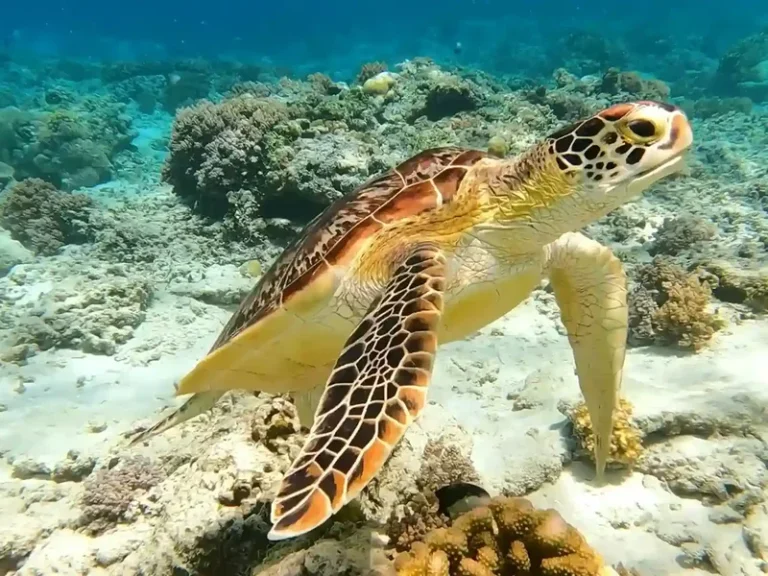
Beyond reef manta rays, Manta Point Komodo (Karang Makassar) hosts blacktip and whitetip reef sharks, eagle rays, green turtles, and…
Manta Guides
How to Identify Individual Reef Mantas
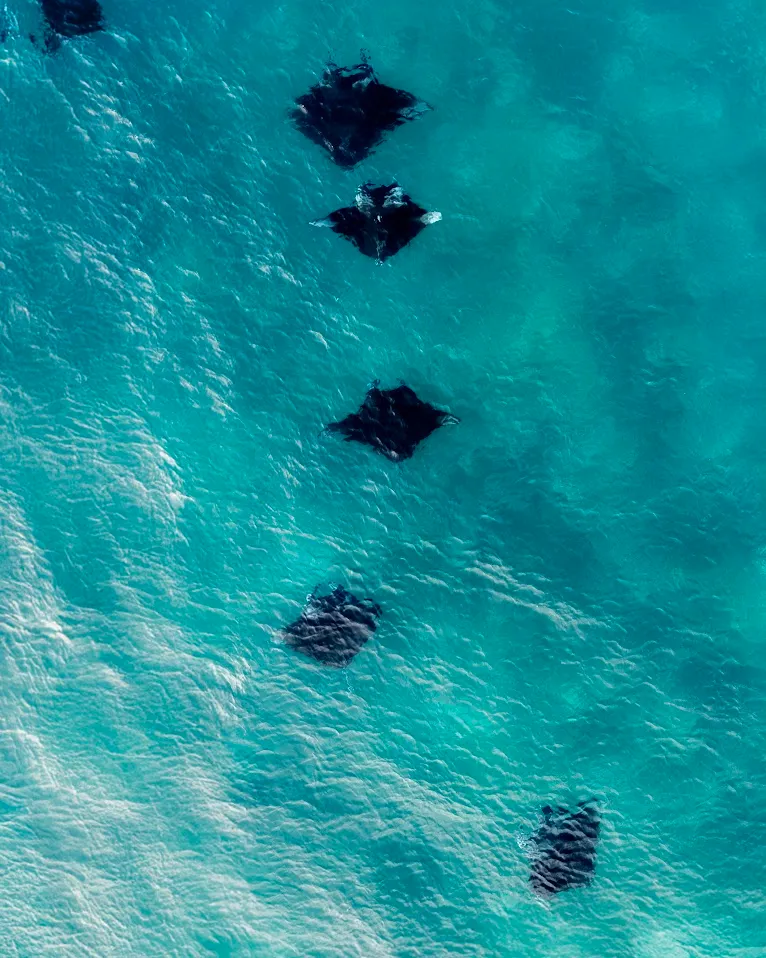
Researchers identify individual reef manta rays by the unique pattern of dark spots on their belly, especially the area between…
Manta Guides
Cleaning Station Behaviour at Manta Point
Manta Point is a cleaning station, not a feeding ground — reef mantas hover there to let small cleaner fish…