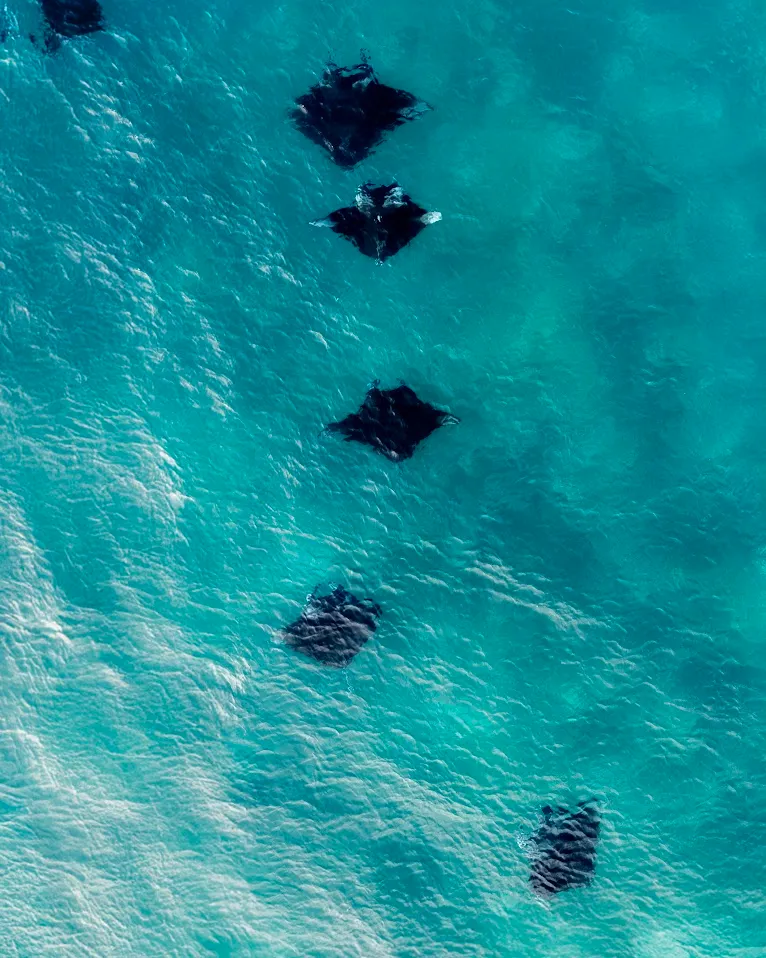
The manta rays at Manta Point Komodo are reef manta rays (Mobula alfredi), typically spanning roughly 3–4.5 meters as adults with a maximum reported size near 5.5 meters, an estimated lifespan around 40–45 years, and a diet of plankton filtered through gill plates while cruising or hovering at cleaning stations like Karang Makassar.
Which Manta Ray Species Lives at Manta Point?
Manta Point is home to the reef manta ray, Mobula alfredi (formerly classified as Manta alfredi) — not the larger oceanic manta ray (Mobula birostris), which tends to favor deeper offshore water rather than coastal cleaning stations. Species guides and conservation references (Manta Trust, IUCN-affiliated sources) place these two as the recognized manta species; Komodo’s coastal cleaning-station sites like Manta Point and Manta Alley are reef manta habitat specifically.
How Big Do Manta Point’s Mantas Get?
Adult reef mantas typically measure roughly 3–4.5 meters across (disc width), with a maximum reported size near 5.5 meters in rare individuals, according to species-profile sources including government fisheries and museum references. Size varies by individual and sex — females are generally larger than males, a pattern consistent across manta species.
How Long Do Reef Manta Rays Live?
Estimated lifespan for reef manta rays runs roughly 40 to 45 years, based on conservation and species-profile sources (Manta Trust, Save Our Seas Foundation, and similar). This is a long-lived, slow-reproducing species — females typically produce very few pups over their lifetime — which is the core biological reason etiquette rules like the no-touch and 3-meter distance rule (see our accessibility and visitor guide pages) matter so much for long-term population health.
What Do Mantas at Manta Point Actually Eat?
Reef mantas are filter feeders, straining zooplankton from the water through specialized gill plates as they swim or hover, often with their distinctive cephalic fins unrolled to funnel water into their mouths. This is exactly why plankton-rich, current-driven sites like Karang Makassar function as feeding grounds as well as cleaning stations — the same current that brings cleaner fish to the reef also concentrates the plankton mantas feed on.
What Happens at a Cleaning Station?
Mantas slow down and often hover in place at specific points on the reef where cleaner fish — wrasse and similar species — pick parasites and dead skin from their bodies, gills and mouths. This is a mutually beneficial relationship: the cleaner fish get an easy meal, and the manta gets pest removal it cannot perform itself. Karang Makassar’s reputation as “Manta Point” comes specifically from this repeated cleaning-station behavior rather than being a random sighting spot.
Are Manta Point’s Mantas Individually Identifiable?
Yes — each reef manta has a unique pattern of spots on its ventral (belly) side, similar to a human fingerprint, which researchers and photo-ID projects use to track individuals over time. Marine Megafauna Foundation reported identifying 1,085 individual reef manta rays from 3,941 sightings across Komodo National Park between 2013 and 2018, supporting a genuinely high encounter frequency across the park, though that figure covers the whole park’s sites rather than Manta Point alone.
Manta Ray Facts at a Glance
| Fact | Figure | Source type |
|---|---|---|
| Species at Manta Point | Reef manta ray (Mobula alfredi) | Species/conservation guides |
| Adult wingspan (disc width) | ~3-4.5 m typical; max ~5.5 m | Fisheries/museum species profiles |
| Estimated lifespan | ~40-45 years | Conservation/species-profile sources |
| Diet | Zooplankton, filter-fed through gill plates | Marine biology references |
| Individual ID method | Unique ventral spot pattern | Photo-ID research (Marine Megafauna Foundation) |
| Komodo park-wide ID count (2013-2018) | 1,085 individuals from 3,941 sightings | Marine Megafauna Foundation |
We have deliberately left out any Manta-Point-specific population count — no reliable, published site-specific number exists for how many individual mantas use Karang Makassar year-round, and we would rather say that plainly than invent one.
Do Manta Rays Recognize Individual Humans or Boats?
There isn’t reliable published evidence that reef mantas recognize individual humans, but researchers have observed mantas showing consistent site fidelity and predictable return patterns to specific cleaning stations like Karang Makassar over years of photo-ID tracking, which is a different (and better-documented) phenomenon than individual human recognition.
Summary
Reef mantas, not oceanic mantas, are what you’ll see at Manta Point.
Summary
Manta Trust and the IUCN publish more detailed species profiles than this page attempts to cover.
A Note on Conservation Status
Reef manta rays are classified as vulnerable by conservation assessments due to slow reproduction and pressure from targeted fishing in parts of their range elsewhere in the world; Komodo National Park’s protected status is part of why this population has a more stable outlook than unprotected sites.
Are Manta Rays Dangerous?
No. Manta rays have no stinger, no teeth capable of harming a human, and no recorded pattern of aggression toward swimmers — they are filter feeders with no biological reason to view a snorkeler or diver as prey or threat. The etiquette rules covered on our visitor guide exist to protect the mantas from stress and disruption, not to protect visitors from the animals.
Reef Manta vs Oceanic Manta: Quick Comparison
| Trait | Reef manta (Mobula alfredi) | Oceanic manta (Mobula birostris) |
|---|---|---|
| Typical habitat | Coastal reefs, cleaning stations | Open ocean, offshore aggregation sites |
| Adult size | ~3-4.5 m typical, max ~5.5 m | Generally larger: typically 4-5 m, reported up to about 7 m |
| Found at Manta Point? | Yes — this is the resident species | Not typically; oceanic mantas favor deeper offshore water |
| Migration pattern | More site-resident, returns to cleaning stations | More wide-ranging, less predictable at a fixed site |
This distinction matters practically: if you read a claim about “manta rays up to 7 meters” at Manta Point specifically, treat it with skepticism — that size range describes the oceanic species, not the reef mantas that actually inhabit this site.
Reef manta ray size is the single fact most often misreported for this site. The disc-width and maximum figures in the table above describe Mobula alfredi specifically, and should not be swapped for the oceanic manta’s much larger span, which is where most inflated numbers come from.
Frequently Asked Questions
What species of manta ray is at Manta Point Komodo?
The reef manta ray, Mobula alfredi, not the larger oceanic manta ray. Reef mantas are the species associated with coastal cleaning stations like Manta Point.
How big is an adult manta ray at Manta Point?
Typically around 3-4.5 meters across as adults, with a maximum reported size near 5.5 meters in rare individuals, based on species-profile and fisheries sources.
How long do manta rays live?
Reef manta rays are estimated to live roughly 40-45 years, making them a long-lived, slow-reproducing species.
What do manta rays eat at Manta Point?
Zooplankton, filtered from the water through specialized gill plates as the manta swims or hovers, particularly in plankton-rich current lines like Karang Makassar.
Can individual manta rays be identified?
Yes, each reef manta has a unique belly spot pattern used for photo-ID tracking; Marine Megafauna Foundation has identified over 1,000 individuals across Komodo National Park.
Ready to plan the trip? For help matching Komodo manta-ray facts with your trip plan, email +62 811-3823-875 or sales@komodoluxury.com and ask about the sites you want to visit.
Sources
Manta ray biology facts for younger readers
Manta rays at Manta Point are large fish, not mammals, and they breathe using gills just like other rays and sharks. Instead of teeth for biting big prey, they have tiny teeth and wide mouths that work like filters, catching small drifting animals from the water. The two head fins that look like “horns” help guide food into the mouth, then fold flat when not in use.
These rays have no dangerous spine in their tail, so they cannot sting you. Their skin feels rough if touched, which is one reason contact is not allowed: the protective slime layer can be damaged and increase infection risk. The eyes sit on the sides of the head and see well, while small openings behind the eyes help move water over the gills when they rest or move slowly.
Inside the body, manta rays have a cartilaginous skeleton, similar to sharks, which keeps them lighter in the water than bony fishes of the same size. They give birth to live young after the egg develops inside the mother, and the pup is already able to swim from its first moments. At Manta Point, young individuals sometimes follow older ones, possibly learning routes and good feeding spots.
Growth, lifespan and species in the Komodo population
Reef mantas born in the wider Komodo region probably measure around 1.3–1.5 metres across at birth and then grow steadily over many years. Juveniles seen at Karang Makassar often show slightly paler markings and proportionally longer tails, while very large adults have deeper bodies and broader pectoral fins. Growth is slow compared with many reef fishes, which is one reason populations recover slowly from any losses.
Scientific work on similar populations suggests these rays mature only after several years, with females taking longer to reach breeding size. Once mature, females likely produce few pups in each reproductive cycle. Combined with long life expectancy, this “slow and steady” approach means that protecting older breeding individuals around Komodo National Park is particularly important for keeping the local group healthy.
Two manta ray species appear in the Komodo area. The most commonly encountered is the reef manta, which spends much of its time around coastal reefs, cleaning stations and productive current edges such as Manta Point and Manta Alley. The larger oceanic manta visits less frequently; when it does, it tends to stay slightly deeper or on the edges of the main current lines, often passing through rather than circling for long periods.
Frequently asked questions
Keep reading
Manta Guides
Whale Sharks, Turtles and Other Megafauna
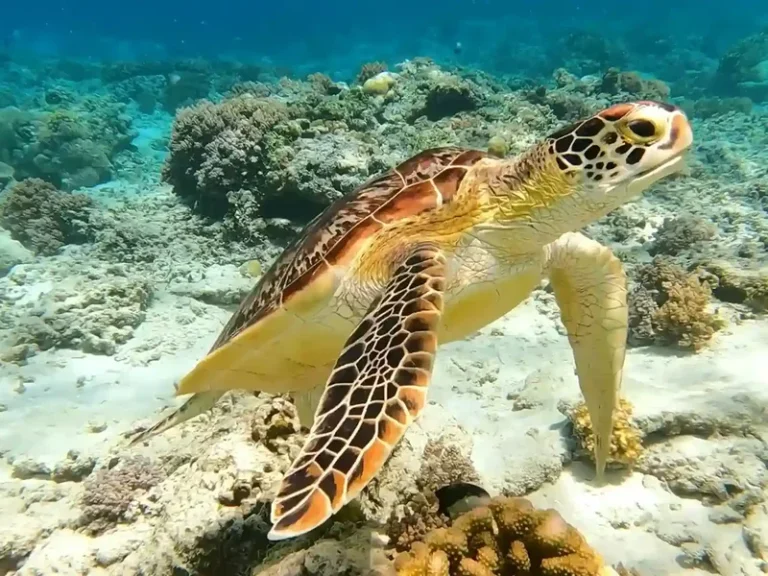
Beyond reef manta rays, Manta Point Komodo (Karang Makassar) hosts blacktip and whitetip reef sharks, eagle rays, green turtles, and…
Manta Guides
How to Identify Individual Reef Mantas
Researchers identify individual reef manta rays by the unique pattern of dark spots on their belly, especially the area between…
Manta Guides
Cleaning Station Behaviour at Manta Point
Manta Point is a cleaning station, not a feeding ground — reef mantas hover there to let small cleaner fish…