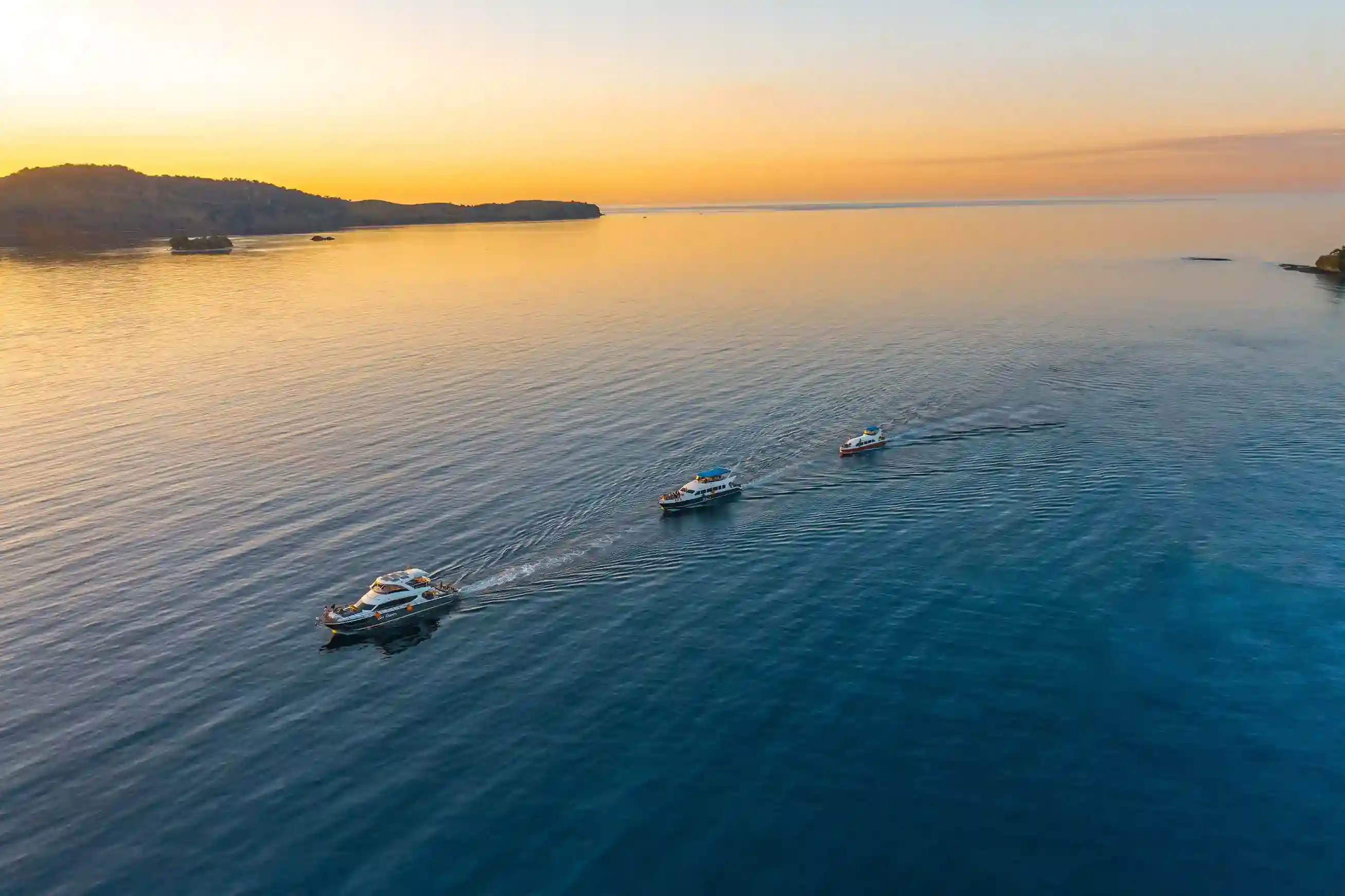
Boat traffic rules at Manta Point exist to stop overcrowding around feeding and cleaning mantas – guides coordinate entry timing between boats, keep engines idling or off near active manta activity, and limit how many boats work the same patch of water at once. This protects both the animals and the quality of your encounter.
Last updated: 26 August 2026.
Why do manta sites need boat traffic management at all?
Manta Point can attract several boats at once, especially during peak season or midday hours, and boat propellers, engine noise and crowding in the water can all disturb feeding or cleaning mantas – which tend to move away from disturbed areas rather than tolerate it. Coordinated boat behaviour is both a conservation measure and a practical one: fewer disturbed mantas means a better encounter for everyone in the water, not just the first boat to arrive.
What do guides and captains actually do to manage this?
In practice, experienced guides communicate with other boats in the area (often by radio or direct signalling) about which group is entering the water and when, avoid running engines directly over an active manta encounter, and space out entry points rather than clustering multiple snorkel or dive groups on top of the same manta. Early departures from Labuan Bajo partly exist to beat this congestion – arriving before other boats means calmer water and less competition for space.
What rules apply to how close a boat can get to a manta?
Beyond the in-water etiquette of not touching or chasing mantas (see our Manta Point Komodo hub for the core etiquette rules), boats themselves are expected to approach at reduced speed, avoid idling directly over feeding mantas, and give way if another boat’s group is already in the water with an active sighting. This is largely enforced through operator norms and ranger guidance rather than a single published numeric distance rule specific to boats – if you know of an official published minimum-distance regulation for vessels at Manta Point, we welcome a link to update this page with the exact figure and source.
How many boats typically work Manta Point at once?
This varies significantly by day, season and time – early mornings in shoulder season might see just one or two boats, while a peak-season midday can see considerably more. We do not publish a fixed number here because we do not have a verified, dated source for an official cap specific to Manta Point boat traffic; if the park authority publishes one, we will cite it here with a source and date. What can be said without a published figure is that timing your visit early and choosing an operator who avoids the crowded midday window meaningfully reduces how many other boats you will be sharing the site with.
Does the SiOra system indirectly manage boat traffic?
Yes, indirectly – since April 2026 every visitor’s entry is tied to a booked date and site through SiOra (see our SiOra guide), which gives the park authority visibility into daily visitor numbers per site that a walk-up payment system did not provide. Whether this translates into an explicit boat-count cap at Manta Point specifically is not something we have a confirmed source for – we treat this as one of the honest gaps in publicly available information rather than guessing at a number.
What can you do as a guest to reduce your impact on boat congestion?
Choose an early departure time where possible, book with an operator who actively coordinates with other boats rather than competing for the same water, and support your guide’s decision to wait or reposition if the site is already crowded when you arrive, rather than pushing to enter immediately. A slightly delayed but less crowded encounter is usually a better one for both you and the mantas.
How does this connect to broader conservation goals at the site?
Boat traffic management is one part of a wider set of manta-protection practices at Manta Point, alongside in-water rules against touching or chasing the animals and guide-led group size limits. None of these individually guarantee an undisturbed encounter, but together they reduce the cumulative pressure on a site that sees regular visitor traffic through much of the year. Choosing an operator who takes all of these seriously – not just the ones that are easy to enforce – is a meaningful part of visiting responsibly.
Does time of year change how crowded the site gets?
Yes – the wet-season peak window (see our manta season guide) tends to bring more visitor traffic overall, partly because of school holidays and partly because word of the feeding aggregations draws more boats. Shoulder-season months can offer a quieter site even on days with decent manta activity, which is worth weighing against the wet season’s higher average sighting numbers.
Frequently asked questions
Is there an official maximum number of boats allowed at Manta Point at once?
We do not have a verified, dated source confirming a specific published cap. If you have one, we would welcome it to update this page – until then, we describe the operator-level coordination practices that manage congestion in practice.
What should I do if my boat arrives and the site already looks crowded?
Trust your guide’s judgement – a good guide will reposition, wait, or choose an alternate entry point rather than adding to an already-crowded encounter.
Do boat traffic rules differ between Manta Point and Manta Alley?
The same general principles (coordination, reduced speed, avoiding disturbance) apply at both sites; Manta Alley’s narrower channel and stronger current can make boat positioning more technically demanding regardless of traffic volume.
Ask Komodo Luxury how they avoid the crowds
Sources
Boat-related hazards and how operators reduce them
Boat movement around Manta Point carries three main risks: propeller strikes on animals, collision or prop wash affecting snorkellers and divers, and noise or exhaust disrupting feeding or cleaning behaviour. These risks peak when several vessels arrive together, surface conditions are choppy, or currents push people down-current of waiting boats. Responsible operators plan drift lines carefully so guests surface well away from propellers and use lookouts to track surface bubbles and marker buoys.
Most licensed captains reduce hazards by slowing to displacement speed long before reaching the manta area, switching to neutral while people are in the water, and avoiding sudden course changes where snorkellers could be hidden by small waves. Briefings often explain where not to swim, including the zone behind and under the hull. Guests who follow their guide’s surface marker and avoid independent wandering lower the chance of any conflict with traffic.
For the rays, the main concern is fast or repeated repositioning over the shallow plateau. Operators who accept more drift and use fewer engine revs during approaches expose mantas to less disturbance. Choosing smaller groups and avoiding on-demand pick-ups every few minutes also keeps the number of close passes by any one vessel lower across a typical session.
Entry techniques, approach distances and conduct in the water
Water entry style has a direct effect on how close mantas tolerate human presence. Guides usually ask for a calm seated roll or a controlled giant stride rather than a running jump, and for snorkellers to keep fins below the surface to avoid splashing. Entering slightly up-current of the expected ray path allows a slow drift towards the animals instead of active kicking, which mantas often interpret as pursuit.
Interaction rules focus on distance and position in the water column. As a working guideline, many crews brief guests to hold at least three metres from feeding or cleaning animals, never crossing directly above a ray, and never swimming down onto one from the surface. If a manta chooses to pass closer, remaining still with arms tucked and avoiding sudden direction changes allows it to control the encounter and then depart.
Snorkellers usually receive stricter advice than divers because they share the upper few metres where rays commute between cleaning stations and surface feeding lines. Staying horizontal at the surface and off the coral rubble protects the site as well as the animals. Flash photography is discouraged or banned by most boats, and torches are unnecessary in the typical daytime conditions at Karang Makassar.
The prohibition on touching is absolute. Contact can remove the protective mucus layer, disturb cleaning fish, and make mantas avoid the plateau during busy periods. Guides will normally end an interaction or recall a guest to the boat if they repeatedly reach out, chase, or attempt to intercept a ray’s path. These standards are reinforced partly by law and partly by peer pressure within the local guiding community.
Access logistics, boat comfort and environmental variability
Travel from Jakarta usually follows a flight to Labuan Bajo, then a boat onward to Komodo National Park. Several daily services connect Jakarta and Labuan Bajo, with a typical air time of around 2.5 hours, plus transfer to the harbour. From there, fast boats cover the distance to Karang Makassar in roughly 1–1.5 hours, whereas traditional wooden vessels take longer but can be quieter and more spacious on deck.
Trip fees are set by each operator and vary with boat type, group size, and whether Manta Point is combined with islands such as Padar or Komodo. Park entry and ranger charges are standardised by regulation and usually handled collectively for the group. Anyone needing an exact budget has to ask a provider directly; this site does not track or publish commercial pricing.
Comfort on board matters, particularly for families or visitors sensitive to heat. Most day boats working from Labuan Bajo have at least a partial canopy and a covered cabin, but the amount of shade, seating style, and ladder design differs widely. Travellers who require strong shade, back support, or very stable boarding ladders are best served by confirming these details before booking, as they are not mandated by park rules.
Environmental variability, including El Niño years, can influence conditions indirectly. Warmer, more stratified surface water may alter plankton availability, shift productive layers deeper, or affect the timing of local upwelling that helps drive manta feeding aggregations. On some seasons this can mean fewer surface-feeding events at the plateau on otherwise similar tides, while cleaning-station visits continue. Operators respond by adjusting timing, exploring nearby routes such as Manta Alley when weather allows, and placing more weight on recent local observations than on fixed seasonal expectations.
Frequently asked questions
Can I see manta rays at Manta Point Komodo from the boat?
You sometimes can see mantas from the boat, especially when they are feeding near the surface or cruising just below. Views from the deck are less predictable because light, chop, and viewing angle all matter. Snorkelling or diving greatly increases the quality and duration of encounters, but remaining on board is still worthwhile for occasional surface passes and the general view of the plateau.
What are the rules for interacting with manta rays at Manta Point Komodo?
The core rules are no touching, no chasing, no riding, and keeping a respectful distance while remaining off the cleaning stations. Guests should stay calm, horizontal, and to the side of the manta’s path rather than directly in front or above. Guides may add tighter limits for currents or visibility. Indonesia protects manta rays nationally, so harassment can carry legal as well as ethical consequences.
Are drones allowed during boat trips to Manta Point Komodo?
Drones are restricted in Komodo National Park and generally require formal permission from the authorities, which casual visitors typically do not have. Launching near wildlife or above other boats can disturb animals and people and may conflict with park or aviation regulations. If aerial filming is essential, it must be discussed with the operator in advance and cleared with park management, not decided on the day.
What are the official distance rules for snorkelers around mantas at Manta Point Komodo?
Snorkellers are commonly briefed to stay several metres away from mantas and never to block their direction of travel, pass overhead, or dive down onto them. Indonesia does not publish a manta-specific national distance figure for snorkellers, so operators use conservative working limits that reflect local practice and safety. If a ray chooses to pass closer, guests should remain still and allow it full freedom of movement.
Labuan Bajo to Manta Point Komodo eco friendly boat options?
More operators out of Labuan Bajo now emphasise lower-impact practices, such as efficient hulls, careful fuel management, and adherence to slow-speed approaches around manta habitat. A few use newer engines or hybrid arrangements, but there is no single standard or label to rely on. Asking directly about fuel type, group size, and manta approach procedures is the most practical way to assess environmental performance.
Can you stay on the boat and just watch mantas at Komodo?
Yes, you can remain on the boat and watch from the deck while others enter the water. This can suit non-swimmers, children, or anyone uncomfortable with currents. The trade-off is that encounters are more distant and depend heavily on surface behaviour. Communicating your preference early helps the crew suggest a viewing spot on board and plan safety cover appropriately.
How do you get back aboard afterwards?
Most boats visiting Manta Point carry a ladder or staircase to re-board from the water, but design and ease of use vary widely. Some have wide, hand-railed stairs, while smaller vessels may use narrow, steeper ladders. Guests with reduced mobility should confirm the ladder style, number of steps below the waterline, and availability of crew assistance with their chosen operator before committing.
Is there enough shade for children and older guests?
Almost all day boats offer some shaded area, usually under a main canopy or in an enclosed cabin, which helps protect children and older guests from sun exposure. The amount of shade, ventilation, and seating comfort differs greatly between vessels. Families should ask specifically about covered seating, access to drinking water, and quieter spaces before booking, particularly during the hotter, calmer months.
Can I rent my own boat to Manta Point Komodo without tour?
Private charters are possible, but the vessel and crew still need to be licensed for Komodo National Park, and you must respect all park and manta interaction rules. Bareboat rentals without a qualified captain are not realistic for most visitors due to navigation, permits, and strong currents. Even on a charter, a local guide remains strongly advisable for safety and site etiquette.
How do you check that an operator is licensed?
Licensed operators should be able to show valid park permits, boat registration, and, for the captain, appropriate Indonesian maritime certifications. You can ask to see these documents, check that the vessel name matches, and confirm that park fees are handled through official channels such as the SiOra system. Reputable companies are transparent about paperwork and safety equipment, including lifejackets and radios.
What are the warning signs of an unlicensed boat?
Warning signs include reluctance to discuss or show permits, vague explanations about park fees, inadequate safety gear, and a skipper who seems unfamiliar with basic manta etiquette. Very low prices compared with several other quotes can also indicate corners being cut, although cost alone is not proof. If documentation cannot be produced or the operator discourages questions, it is safer to decline and choose another provider.
How much to tip boat crew at Manta Point Komodo?
Tipping is optional and not formally regulated, but many visitors choose to offer a gratuity to guides and crew when they feel service and safety briefings were strong. Because incomes and expectations vary, the best approach is to give an amount that feels fair for you rather than follow a fixed percentage. Handing it directly to the guide or in a shared envelope avoids confusion.
Keep reading
Diving & Snorkelling
Manta Point vs Pink Beach for Snorkelers
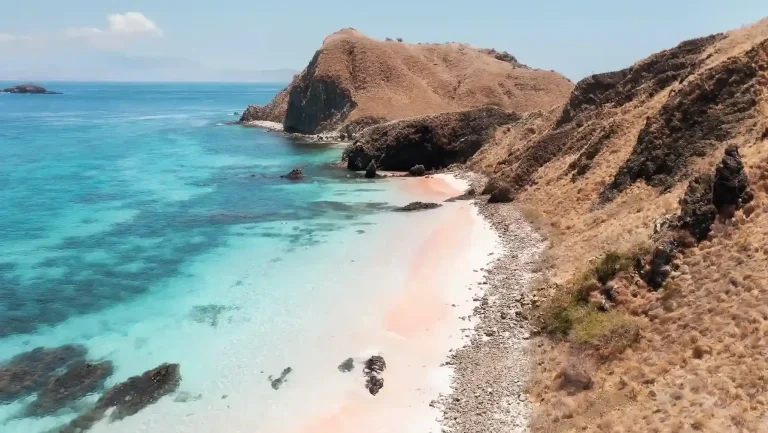
Manta Point is an open-water manta-ray site; Pink Beach is a calm, shallow coral-sand bay with reef fish but no…
Diving & Snorkelling
Water Temperature & Visibility at Manta Point
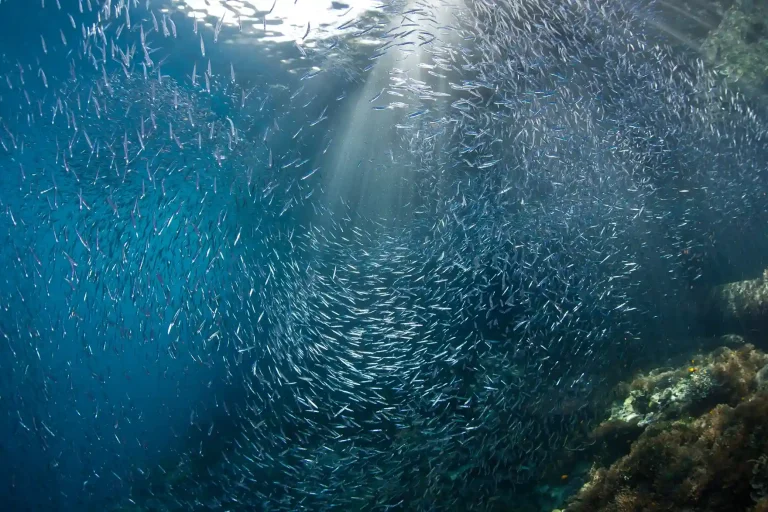
Operator-reported ranges for Manta Point: wet season (Dec-Mar) water around 27-29°C with visibility roughly 10-20 m, sometimes dropping into single…
Diving & Snorkelling
Manta Point vs Batu Bolong for Divers
Short answer: Manta Point (Karang Makassar) is the easier, more beginner-friendly site — a shallow drift with mild-to-moderate current, suitable…