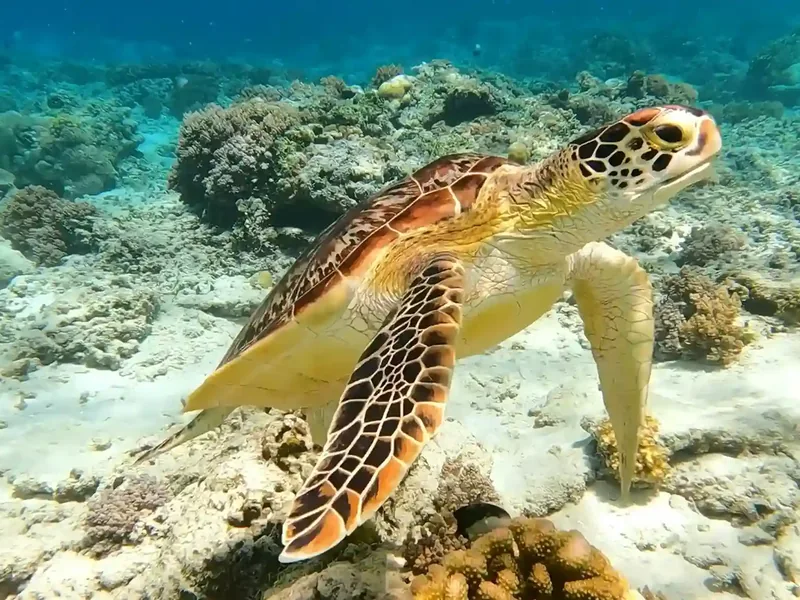
Beyond reef manta rays, Manta Point Komodo (Karang Makassar) hosts blacktip and whitetip reef sharks, eagle rays, green turtles, and bottom-dwelling bamboo and leopard sharks. Whale sharks are occasionally seen in Komodo waters, mostly April-June, but they’re uncommon and opportunistic here – not a routine sighting the way mantas are. Checked August 2026.
What Megafauna Is Actually Documented at Manta Point?
Dive-site profiles and species-sighting tables for Karang Makassar consistently document blacktip reef sharks and whitetip reef sharks as common at the site, alongside eagle rays cruising the open rubble flats and green turtles reported as frequent sightings. Bottom-dwelling species – bamboo sharks and leopard sharks – rest on the sandy, rubble-covered plateau and are specifically noted by several Komodo dive guides as reliably found here, since the terrain suits their resting behaviour better than a dense coral reef would.
| Species | Frequency at Manta Point |
|---|---|
| Reef manta ray | Common, year-round resident |
| Oceanic manta ray | Occasional, not routine |
| Blacktip reef shark | Common |
| Whitetip reef shark | Common |
| Green turtle | Frequent |
| Eagle ray | Documented, open rubble flats |
| Bamboo shark / leopard shark | Documented, resting on sand/rubble bottom |
| Whale shark | Uncommon, opportunistic (mostly Apr-Jun) |
Are Whale Sharks Really Seen at Manta Point?
Occasionally, but don’t plan a trip around it. Komodo-wide sources describe whale shark encounters as “not common” and “less common than seeing mantas,” with the best (still modest) chance falling roughly April through June, and occasional sightings in November-December. These are opportunistic encounters tied to seasonal plankton conditions across Komodo’s waters generally, not a predictable feature of a Manta Point visit specifically. If a whale shark sighting matters enough to shape your trip planning, treat it as a rare bonus rather than a reason to choose a particular date.
What About Dolphins or Sunfish (Mola Mola)?
We could not find documentation specifically confirming dolphins or mola mola at Karang Makassar / Manta Point in the species tables and dive-site profiles we checked. Both are known more broadly from Komodo’s wider waters, but claiming them as a Manta Point-specific sighting would go beyond what’s actually documented for this exact site – so we won’t. If you’re specifically hoping to see either, ask your operator whether their broader Komodo route (rather than Manta Point alone) has reported recent sightings.
Why Does This Site Support So Much Non-Manta Marine Life?
Karang Makassar’s open, rubble-and-sand terrain with scattered coral bommies creates habitat variety that a dense coral wall doesn’t: open sand suits resting bottom-dwellers like bamboo and leopard sharks, while the current-swept channel that draws mantas in also concentrates the small fish and plankton that support reef sharks and turtles feeding nearby. The same conditions that make this a manta site also happen to make it a broader megafauna site, rather than the mantas being an isolated attraction on an otherwise quiet reef.
Will You See This Wildlife Snorkelling or Only Diving?
Snorkellers at the surface can spot green turtles and, on shallower passes, reef sharks and eagle rays, though divers spending more time at depth near the plateau generally see a wider range of the bottom-dwelling species like bamboo and leopard sharks, which tend to rest closer to the seabed than a snorkeller typically observes from the surface. Neither approach guarantees seeing every species on this page during a single visit – what you encounter depends on the day, the tide, and some genuine luck.
Should You Adjust Your Expectations Based on This List?
Come for the mantas – they’re the reliable, year-round draw this site is genuinely known for – and treat everything else on this page as a realistic bonus rather than a promise. Operators who claim guaranteed whale shark or dolphin sightings at Manta Point specifically are overstating what the documented record actually supports; a responsible operator will tell you honestly that mantas, reef sharks, and turtles are the dependable sightings, with anything larger being a stroke of luck on the day.
Does Megafauna Sighting Frequency Change by Season?
Reef sharks and turtles at Manta Point are documented as consistent, year-round residents rather than seasonal visitors, unlike the whale shark’s narrower April-June opportunistic window. Manta aggregation size does shift seasonally (larger groups December-March, per the site’s established pattern), but this doesn’t appear to correlate strongly with reef shark or turtle sighting frequency based on the site descriptions we reviewed – those species seem to be present regardless of the manta season’s peaks and troughs.
How Should You Behave Around Sharks and Turtles at This Site?
The same no-touch, no-chase etiquette that applies to mantas applies here: reef sharks at Manta Point are generally non-aggressive toward divers and snorkellers who keep a respectful distance, and green turtles should never be grabbed or ridden, a practice that can injure the animal and is considered poor etiquette across responsible dive operations globally. Bottom-resting bamboo and leopard sharks in particular should be observed without disturbance, since they’re typically resting rather than actively swimming and can be easily startled by a diver approaching too closely or touching the sand near them.
How Does Manta Point Compare to Other Komodo Sites for Megafauna Variety?
Some other Komodo dive sites – Castle Rock, Crystal Rock, and Cannibal Rock among them – are specifically known for denser and more varied megafauna encounters, including larger schools of reef sharks and occasional pelagic sightings, generally in exchange for stronger currents and greater depth than Manta Point offers. Manta Point’s appeal is less about maximum megafauna density and more about the reliable combination of mantas plus a solid supporting cast of reef sharks and turtles in comparatively gentle, accessible conditions – a different trade-off than the park’s more demanding dive sites.
Should Photographers Prioritise Megafauna Beyond Mantas Here?
If you’re building a photography-focused dive plan, treat mantas as the primary subject at this specific site and any reef shark, turtle, or eagle ray encounter as a valuable secondary shot rather than the main goal. Divers wanting dedicated shark or pelagic photography are generally better served planning a stop at one of Komodo’s stronger-current, shark-dense sites as part of a broader multi-day itinerary rather than expecting Manta Point itself to deliver that kind of density.
Megafauna FAQ
Are whale sharks guaranteed at Manta Point?
No – whale sharks are uncommon and opportunistic in Komodo waters generally, with the best (still modest) chance roughly April-June; they are not a routine part of a Manta Point visit.
What sharks might I see at Manta Point?
Blacktip and whitetip reef sharks are documented as common, along with bottom-dwelling bamboo and leopard sharks resting on the sand and rubble.
Will I see turtles at Manta Point?
Green turtles are documented as a frequent sighting at this site, alongside the reef sharks and mantas.
Are dolphins commonly seen here?
We have not found documentation specifically confirming dolphins at Manta Point/Karang Makassar; they’re known more broadly from Komodo waters but aren’t a documented sighting for this specific site.
Is it safe to swim near reef sharks at this site?
Yes – blacktip and whitetip reef sharks at Manta Point are generally non-aggressive toward divers and snorkellers who maintain a respectful distance and don’t provoke them.
Book your Manta Point visit through Komodo Luxury’s sailing trip, and see our diving and snorkelling guides for how to maximise your time at the cleaning stations where most of this marine life congregates.
Sources
Sharks and Rays Beyond the Mantas
Sharks do occur around Karang Makassar, but they are not the focus of most trips and sightings are intermittent. Divers most often report white-tip reef and black-tip reef sharks moving along the edges of the plateau or cruising the slightly deeper sand areas, especially where the current accelerates. These species are generally shy, keeping distance from snorkellers and remaining calm as long as they are not chased or blocked.
Very early or late dives, when boat traffic is lower, slightly increase the chance of encountering sharks on the move between hunting and resting areas. In stronger currents, sharks tend to stay deeper on the drop-offs, so divers working the deeper edge of the 8–18 metre plateau will simply see more than snorkellers drifting over the shallows. Brief passes are more common than long, close encounters, and there is no guarantee even on otherwise busy wildlife days.
Beyond manta rays, other large rays such as eagle rays and cowtail stingrays occasionally cross the site, usually over the sand channels. These animals also use the current for transport and can appear suddenly from up-current, so maintaining good situational awareness while watching mantas helps you notice them. They respond well to slow movements and a side-on approach, giving photographers a few extra seconds before they veer away.
Sea Turtles, Whale Sharks and Park Interaction Rules
Green turtles and hawksbill turtles are regular background wildlife on the Karang Makassar plateau, especially along coral patches and rubble zones where they graze or rest. Snorkellers often see them surfacing between boats, then descending to feed among hard corals. Divers may find individuals tucked under ledges or lying on sandy pockets during surface-interval dives in the area’s more sheltered corners.
Whale sharks are occasionally reported within Komodo National Park, and very rarely along the same current lines that feed the manta cleaning and feeding zones. At Manta Point, such encounters are exceptional rather than seasonal; they tend to be single animals passing through rather than repeatable events. Treat any mention of whale sharks in marketing for this specific site with caution, and base trip plans on mantas and turtles instead.
Interaction rules in the park apply equally to manta rays, turtles, sharks and any whale sharks that may appear. Maintain a respectful distance, avoid blocking the animal’s path, and keep noise and splashing low. Do not grab shells, fins or tails, and never attempt to touch skin or ride large animals, even if they approach closely. Flash photography should be avoided at close range, particularly with mantas and whale sharks, which can be sensitive to sudden light.
Feeding wildlife is prohibited throughout Komodo National Park and is especially important with large filter feeders. Handing out fish or shrimp to attract whale sharks, or using bait to bring in sharks, alters their natural behaviour and can create long-term risks both for the animals and for people. Responsible guides brief groups before entering the water; follow these instructions even if other visitors nearby behave less carefully.
Frequently asked questions
Are there any sharks near Manta Point Komodo?
Yes, reef-associated sharks are occasionally seen near Manta Point, mainly white-tip and black-tip reef sharks along the deeper edges. Sightings are irregular and usually brief passes rather than close, extended encounters. Divers who spend time near the drop-offs in moderate current tend to see them more often than snorkellers, but you should not plan a trip here with sharks as the primary goal.
Keep reading
Manta Guides
How to Identify Individual Reef Mantas
Researchers identify individual reef manta rays by the unique pattern of dark spots on their belly, especially the area between…
Manta Guides
Cleaning Station Behaviour at Manta Point
Manta Point is a cleaning station, not a feeding ground — reef mantas hover there to let small cleaner fish…
Manta Guides
Plankton, Tides and Why Mantas Show Up
Short answer: Manta rays gather at Manta Point (Karang Makassar) because it sits in a narrow tidal channel where currents…