A Komodo charter fills its days with more than the Manta Point stop itself: sunrise Padar Island climbs, Komodo dragon treks, snorkelling at multiple reef sites, kayaking or paddleboarding off quiet beaches, and unhurried deck time between islands. What you get depends on trip length and boat type – a one-day trip fits two or three activities; a multi-day charter spreads them across a fuller, more relaxed itinerary. Last updated: 27 August 2026.
What Activities Happen Beyond Manta Point on a Komodo Charter?
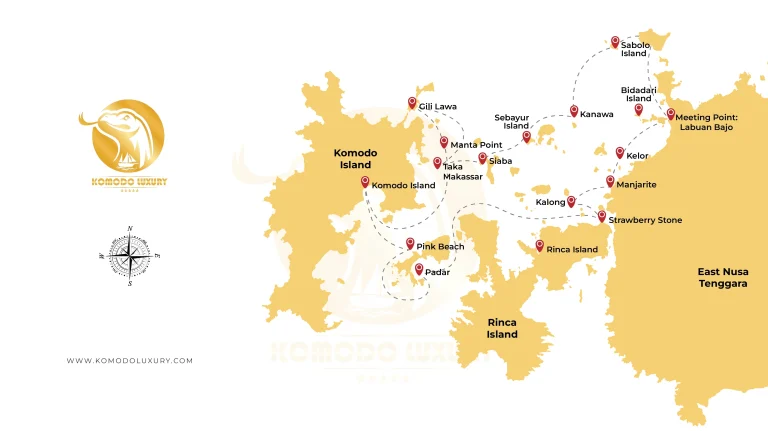
Manta Point is usually one stop among several on a Komodo itinerary, not the whole day. Padar Island’s short, steep climb to its viewpoint – one of the most photographed spots in the park – is a near-universal inclusion, best done early morning before the heat sets in. Pink Beach offers a swim and snorkel stop with its distinctive coral-fragment sand. Komodo Island itself adds a ranger-led walking trek to see wild Komodo dragons, while Rinca Island offers a quieter, often less crowded version of the same dragon-viewing experience on multi-day routes.
What Water Activities Are Typically Available Onboard?
Beyond the scheduled snorkel and dive stops, many Komodo charter boats carry kayaks or stand-up paddleboards that guests can use during anchor time at calmer bays – a good option for stretching your legs (or arms) without a formal excursion. Fishing is occasionally offered on some boats depending on the operator and season, though it isn’t a standard universal inclusion. Confirm with your specific operator what onboard equipment is actually carried, since this varies boat to boat rather than being a fixed park-wide standard.
What Happens During Transit Time Between Islands?
A meaningful part of any Komodo charter – especially multi-day ones – is simply time on deck between stops: reading, napping, watching for dolphins or flying fish, or just taking in the view as the boat threads between islands. This isn’t dead time to fill with forced activities; it’s part of what makes a boat-based trip different from a land-based tour with constant scheduled stops. Sunset, in particular, is treated as its own low-key activity on multi-day charters – many boats time the day’s final anchor to catch it from the deck.
What Onboard Activities Suit Families With Children?
Shallow-water snorkelling at gentler sites (rather than Manta Point’s current-swept plateau), beach time at Pink Beach or similar calm spots, and simple onboard games or deck activities suit families better than current-dependent sites. Confirm with your operator which specific stops on a multi-day itinerary are calmer and more suitable for young or less confident swimmers, since not every stop on a standard route is equally beginner-friendly.
What Activities Suit Divers Specifically?
Beyond Manta Point itself, a diving-focused charter typically adds one or more reef sites per day – Batu Bolong for a coral wall, or stronger-current sites like Castle Rock and Crystal Rock for more experienced divers on longer itineraries. See our dedicated dive trip page for how a diving-focused day is structured differently from a general sightseeing charter.
What Photography Opportunities Does a Charter Offer?
Padar Island’s viewpoint, the pink-sand contrast at Pink Beach, underwater manta and reef shots, and golden-hour deck photography as the boat moves between anchorages are the recurring photography draws across most Komodo itineraries. Photographers prioritising clear underwater shots often lean toward dry-season (April-November) departures for better visibility; see our season guide for the trade-offs against wet-season manta aggregation numbers.
How Do Activities Differ Between a Speedboat Day Trip and a Liveaboard?
A speedboat day trip packs two or three activities into a single long day with faster transit between stops, prioritising efficiency. A liveaboard spreads the same range of activities – and usually more of them – across two or more unhurried days, with slower transit but more time at each stop and the addition of overnight anchorages and evening deck time that a single-day trip simply doesn’t include. Which one suits you depends more on how much total time you have than on which activities you specifically want to do, since most activities are available on either format to varying degrees.
What Evening and Night Activities Happen on a Multi-Day Charter?
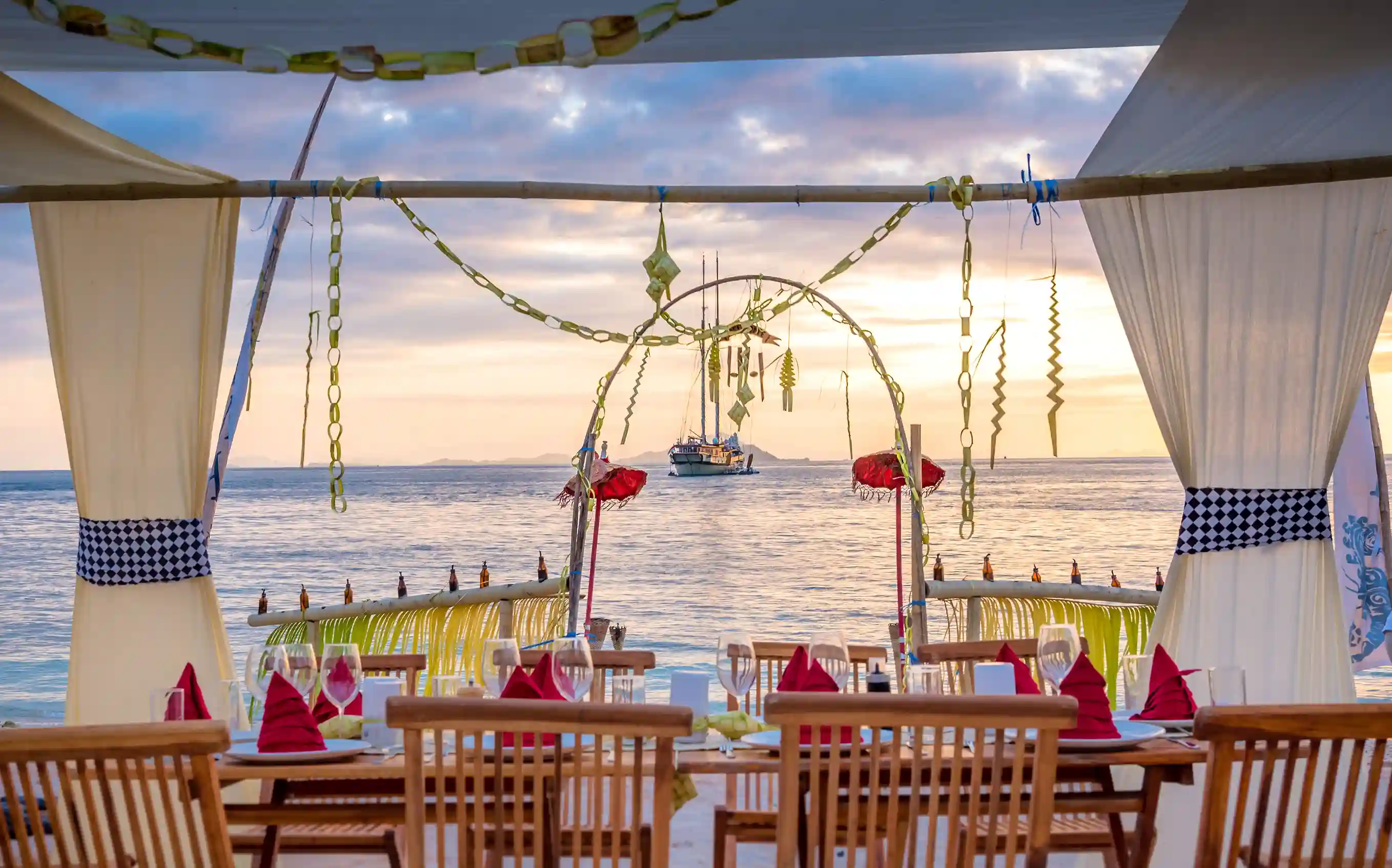
Once anchored for the night, most multi-day charters settle into a quieter rhythm: dinner on deck, conversation, and – away from town light pollution – genuinely good stargazing on clear nights. Some boats offer a brief night-snorkel option at calmer anchorages for guests interested in seeing the reef’s nocturnal activity, though this depends on the specific boat and isn’t a standard universal inclusion. It’s worth asking your operator directly if night activities matter to your trip, since offerings vary considerably between budget open-trip boats and higher-tier private charters.
Are There Any Cultural or Local-Community Activities Included?
Some itineraries include a brief stop at a local fishing village within the park’s buffer zone, offering a glimpse of daily life alongside the natural sightseeing stops. This isn’t a fixed inclusion across all operators, and given the park’s conservation focus, such stops are typically brief and respectful rather than a tourism-driven “village visit” format. If this kind of stop interests you, ask your operator whether it’s part of their standard route.
How Much Downtime Should You Expect on a Multi-Day Charter?
Even an activity-dense itinerary leaves real gaps for downtime – transit between islands can run one to several hours depending on distance, and this time is genuinely unstructured rather than filled with forced onboard programming. Travellers who prefer a packed schedule with minimal idle time may find a shorter, more concentrated day-trip format suits them better than a multi-day charter; travellers who enjoy slower travel often name this downtime as one of the more memorable parts of a Komodo liveaboard.
Onboard Activities FAQ
Are kayaks or paddleboards included on every Komodo boat?
No – availability varies by operator and boat; confirm what onboard equipment is carried before booking if this matters to your trip.
Is Komodo dragon trekking included in every itinerary?
Most standard itineraries include a Komodo or Rinca Island stop for dragon trekking, but always confirm your specific route, since some shorter or highly customised itineraries may substitute other stops.
What activities are best for non-swimmers on a charter?
Padar Island’s viewpoint climb, Komodo dragon trekking, and simply staying aboard during water stops (with shade and seating) are all activities that don’t require swimming.
Can I request a specific activity mix for a private charter?
Yes – private charters generally allow more customisation of which stops and activities are prioritised compared with a fixed-route open trip; discuss preferences directly with your operator when booking.
Is night snorkelling offered on Komodo charters?
Some boats offer it at calmer anchorages, but it isn’t a standard universal inclusion – ask your operator directly if this is part of their route.
How much free time is there on a multi-day charter?
Meaningful transit and deck time is normal – often one to several hours between stops – and is generally unstructured rather than filled with scheduled activities.
Build your own activity mix on a Komodo sailing trip, or see the full tour package range for itineraries that already combine these activities across different trip lengths. Divers should also check our itinerary guide for how activities are typically sequenced across a 1, 2, or 3-day trip.
Surface-interval routines and comfort between manta encounters
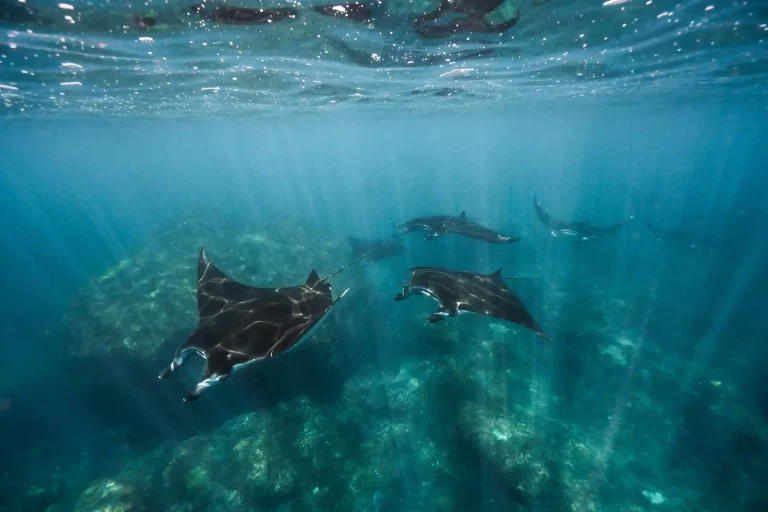
Surface intervals around Karang Makassar are usually structured rather than idle waiting. Crews tend to move the boat slightly off the main cleaning lanes so divers and snorkellers can debrief, log sightings and review identification photos of individual manta rays. Guides commonly use this time to explain current patterns, manta behaviour and how the next entry will be sequenced to avoid crowding.
Drying off properly during the break matters because windchill can be noticeable, especially on days with stronger southerly breezes. Most boats offer shaded seating, warm drinks and light snacks so guests can rehydrate and keep energy levels steady before re-entering cooler water. Many itineraries also combine Karang Makassar with a nearby reef or drift, so one interval may be spent repositioning to the next site.
Families or mixed-ability groups often use the interval to rotate participants: some stay on deck while others enter, so no one feels pressured to stay in the water when tired or cold. Communicating clearly with the dive leader about how you felt on the first session usually results in a more relaxed pace and better matching of buddy teams or snorkel groups for the following drift.
Safety equipment, medical support and July conditions around Karang Makassar
Boats operating in Komodo National Park are expected to carry oxygen, basic first aid supplies and surface signalling devices such as SMBs and whistles. On dive-focused charters, oxygen kits often include demand valves and non-rebreather masks, with crew trained to recognise decompression illness, barotrauma and near-drowning scenarios. It is reasonable to ask where oxygen is stored and who onboard holds current first aid and CPR training.
First aid boxes typically cover common problems: minor cuts from reef, scrapes from ladders, stings and seasickness. Those with specific medical needs should bring personal medication in waterproof packaging, as there is no pharmacy access once underway. Recompression facilities are not within immediate reach of Karang Makassar, so conservative profiles and clear briefings take priority over squeezing in extra dives.
July sits within the dry-season core in Komodo National Park, which usually means clearer water and slightly cooler temperatures than the wet months. Visibility around Karang Makassar often ranges from about 15 to 30 metres, giving broader views of cleaning-station passes but sometimes fewer dense plankton patches. Reef mantas remain present year-round, yet behaviour may lean more towards cleaning circuits than prolonged surface feeding.
Cooler upwelling in July brings the surface down to roughly 25–27 °C and can put thermoclines near 22 °C beneath the plateau, particularly when south-facing channels feed the site. Divers who are comfortable in 27–29 °C may find they chill faster during repeated sessions, so a 3 mm full wetsuit is usually the minimum and 5 mm suits cold-sensitive guests. Planning warm layers for the breeze on deck helps make transit and surface-interval time more comfortable.
Frequently asked questions
Do tour operators usually include lunch on Manta Point Komodo excursions?
Most organised excursions from Labuan Bajo provide lunch as part of a full-day itinerary that includes Karang Makassar. The format varies between simple boxed meals and freshly prepared dishes served onboard. Shorter speedboat trips may offer lighter options only, so checking in advance helps if you have dietary requirements or prefer a substantial meal between snorkel or dive sessions.
How long do boats typically allow you to stay in the water at Manta Point?
Typical sessions in the water range from about 45 minutes to an hour for divers, and 20–40 minutes for guided snorkel sets. Time is limited by currents, water temperature and overall schedule rather than strict rules about mantas. Operators may shorten or stagger sessions if conditions strengthen, if guests look cold or tired, or if boat traffic becomes dense.
Can I rent an underwater camera or GoPro for Manta Point Komodo excursions?
Some Labuan Bajo operators rent action cameras or compact housings that can be used at Karang Makassar. Availability is not universal, and the number of units onboard may be small, so advance reservation is sensible if you do not have your own equipment. Always secure cameras with lanyards and avoid intrusive positioning that might disturb cleaning behaviour.
What happens if a tourist violates manta interaction guidelines at Manta Point Komodo?
Guides usually intervene immediately if someone chases, touches or rides a manta, and that guest may be removed from the water for the rest of the session. Repeated or deliberate violations can lead to being excluded from later snorkels or dives on the same trip. Indonesia protects manta rays, so serious harassment can also be reported to park authorities or rangers.
Manta Point Komodo non diving partner activities in Labuan Bajo?
Non-diving partners staying in Labuan Bajo can join snorkelling versions of Manta Point trips, or opt for land-based outings such as viewpoints, short walks and local food markets. Many simply enjoy slower harbour cruises while others are underwater. The trade-off is that manta-specific experiences still require boat time, so completely land-only options will not replicate interactions at Karang Makassar.
Is nitrox available for dives at Manta Point Komodo?
Nitrox is offered by some dive-focused boats operating from Labuan Bajo and can be used on dives at Karang Makassar. Availability depends on the specific operator, cylinder logistics and whether you hold an appropriate certification. When provided, it is typically arranged in town before departure rather than blended on the boat, so last-minute requests may not be possible.
What nitrox mix is best for Manta Point Komodo?
Many divers favour mixes around 30–32% for plateau dives that stay comfortably shallower than 30 metres and involve long drifts. The optimal blend depends on your planned maximum depth, repetitive-dive schedule and personal conservatism. Discussing your itinerary with the dive leader allows adjustment of both nitrox mix and bottom times so you remain within safe oxygen exposure limits.
Are there beginner friendly parts of Manta Point Komodo?
Guides often choose the shallower sections of the Karang Makassar plateau for less experienced guests, especially on slack or moderate currents. These zones allow you to stay close to the guide line or reef rubble while mantas pass along the cleaning lanes. However, the area is still current-affected, so true beginners should expect careful screening, thorough briefings and possibly guided holding points rather than free roaming.
Keep reading
Komodo Travel
SiOra: Booking Your Komodo Park Permit
SiOra is Komodo National Park's official online booking system, required for every visitor's entrance ticket since April 2026 - including…
Komodo Travel
What Changes at Manta Point in 2027
As of this page's last review (August 2026), no officially confirmed new regulatory change specifically for 2027 has been published…
Komodo Travel
Komodo Visitor Quota and What It Means in 2027
Komodo National Park caps visitors at 1,000 per day across the whole park, split into three scheduled sessions — this…