
Komodo Liveaboard Routes with Manta Point
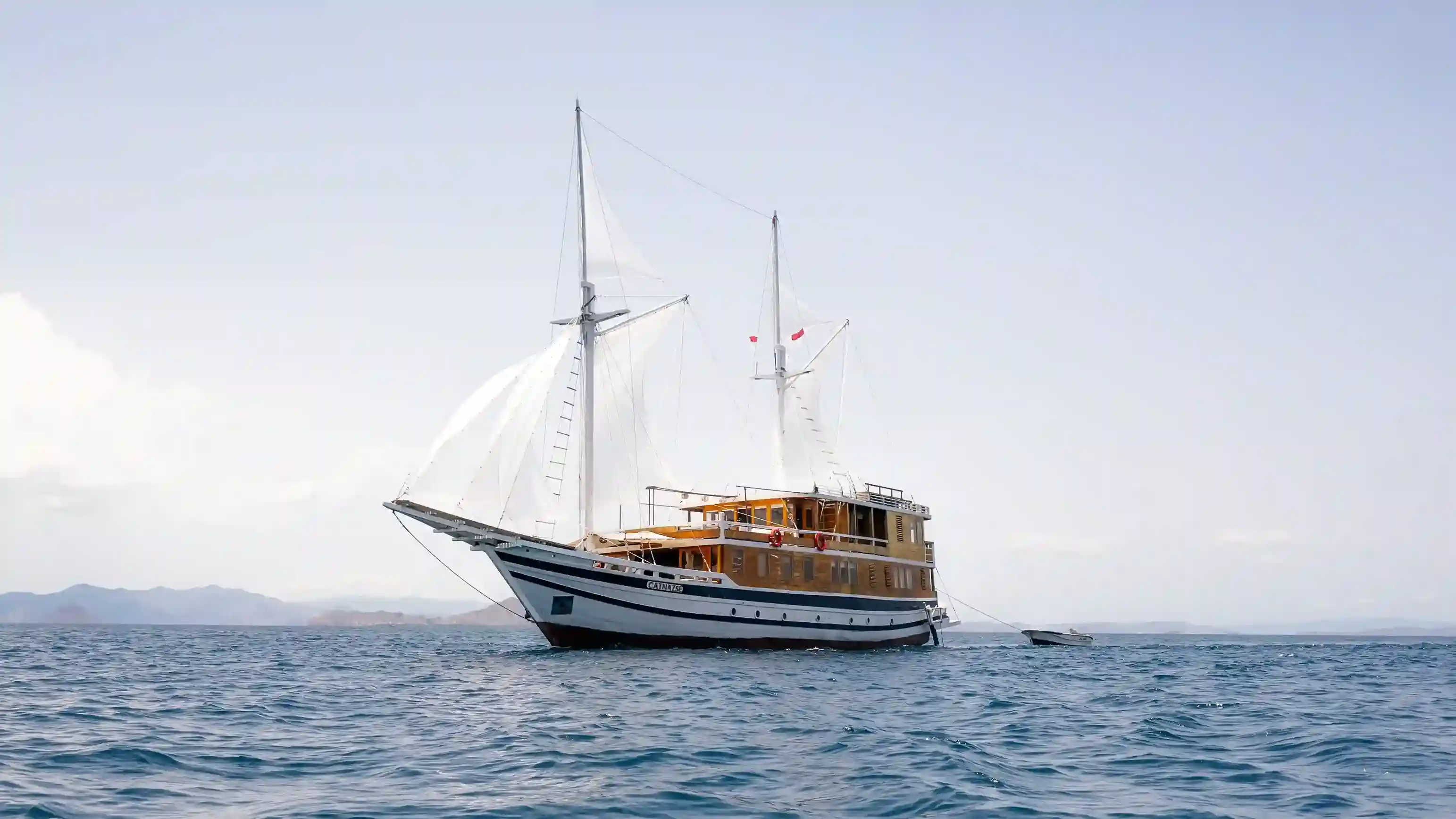
Komodo liveaboard itineraries typically route through Manta Point in the first or second day, then continue to Manta Alley, Batu Bolong and Rinca as the trip progresses, letting you sleep aboard between sites rather than returning to Labuan Bajo each night. Here is how a manta-inclusive liveaboard route is usually structured.
Last updated: 29 August 2026.
Why choose a liveaboard over a day-trip-based itinerary?
A liveaboard removes the daily return-to-harbour cycle, giving you more usable hours at each site and access to areas further from Labuan Bajo – including Manta Alley and more remote reef sites – without the transit eating into your day. For manta-focused travellers, this usually means more attempts at both Manta Point and Manta Alley across a single trip. See Komodo Luxury liveaboard for available vessels and durations.
Where does Manta Point typically sit in a liveaboard route?
Most itineraries departing from Labuan Bajo place Manta Point early – often day one or two – since it sits in the park’s northern channels closer to the harbour, making it a natural first stop before the boat continues south toward Rinca, Manta Alley and Batu Bolong. Return-leg itineraries sometimes revisit Manta Point on the final day if conditions on the first visit were marginal, which is one practical advantage of a multi-day route over a single day trip.
Sample liveaboard route structure
| Day | Typical stop |
|---|---|
| Day 1 | Depart Labuan Bajo, Manta Point (snorkel or dive) |
| Day 2 | Padar Island viewpoint, Pink Beach |
| Day 3 | Rinca Island dragon trek, Manta Alley |
| Day 4+ | Batu Bolong, additional reef dive sites, return to Labuan Bajo |
Exact sequencing varies by operator and by tide/weather on the day – this table is a common pattern, not a fixed script. See our Manta Point guide for site-specific detail on each stop.
How many liveaboard days do you need to comfortably include both manta sites?
3 days is typically enough to include both Manta Point and Manta Alley alongside Padar, Pink Beach and the Rinca dragon trek, though longer 4-7 day itineraries allow a more relaxed pace and additional reef dive sites without dropping anything from the core route. Divers wanting a dedicated multi-tank manta itinerary rather than a mixed sightseeing route should mention this when booking so the operator can prioritize dive time at both sites.
What is included on a liveaboard, and what is separate?
Liveaboard packages generally include the vessel, cabin, meals, crew and a guide for each site visited. The Komodo National Park entrance fee (IDR 250,000 flat for foreign visitors under PP 36/2024, plus a shared ranger fee) and the SiOra advance booking are separate requirements that apply regardless of vessel type – see our SiOra guide and our fee breakdown for details.
Cabin types and comfort levels on Komodo liveaboards
Liveaboard vessels range from simple shared-cabin boats aimed at budget-conscious divers to fully private phinisi and yacht charters with ensuite cabins and air conditioning. The manta-site route itself does not change much between vessel classes – Manta Point and Manta Alley are on the map regardless – but your comfort between sites, meal quality and cabin privacy will. See Komodo Signature and Komodo Prestige fleet classes for the comfort-level range available.
How does weather affect a multi-day liveaboard route?
A liveaboard’s biggest practical advantage over a single day trip is weather flexibility – if Manta Point’s conditions are poor on day one, the captain can revisit later in the trip rather than losing the opportunity entirely, and if Manta Alley’s stronger currents make a planned dive day unsafe, the itinerary can be reordered to prioritize calmer sites first. This flexibility is one reason serious divers and manta-focused travellers often prefer a 4+ day liveaboard over a rigid single-day itinerary.
Do liveaboards visit Manta Point more than once per trip?
Some do, particularly on longer 5-7 day routes or when the first visit’s conditions were marginal – a second attempt is one of the practical benefits of a multi-day trip discussed above. If a repeat visit matters to you, mention it when booking so the operator can build slack into the schedule rather than treating each site as a single fixed stop.
What kind of traveller should choose a liveaboard specifically for manta encounters?
Certified divers wanting a genuine chance at both Manta Point and Manta Alley without the time pressure of a single day trip are the strongest fit for this format. Snorkellers can absolutely join too, but should confirm the operator runs both snorkel and dive groups from the same vessel, since some liveaboards are built primarily around dive schedules rather than mixed activity days.
How far in advance should a liveaboard be booked?
Popular vessels and peak-season dates (see our manta season guide) can book out weeks ahead, particularly for smaller, higher-comfort boats with limited cabins. We suggest 6-8 weeks of lead time for peak season, and at least 3-4 weeks for shoulder-season dates, plus your SiOra park ticket booked once dates are confirmed. Shoulder-season shoppers comparing operators sometimes also check a general listing such as Komodo Liveaboard Luxury alongside direct quotes.
Frequently asked questions
Do all Komodo liveaboards stop at Manta Point?
Most do, since it is one of the park’s signature sites, but always confirm your specific itinerary explicitly lists Manta Point (and Manta Alley, if you want both) rather than assuming.
Is a liveaboard better than a private day-boat charter for seeing mantas?
A liveaboard generally gives more total time and more site attempts across a trip; a private day-boat charter (see our 3D2N private trip page) is better if you prefer sleeping on land each night.
Can a liveaboard itinerary be customized around mantas specifically?
Yes – tell the Komodo Luxury desk you want the itinerary weighted toward Manta Point and Manta Alley, and they will prioritize those stops and allow extra time at each rather than a generic mixed-sightseeing route.
Ask about a manta-focused liveaboard
Route patterns that give Manta Point the best chance
The most manta-focused liveaboard routes usually follow a north–central–south arc, with Karang Makassar forming the central link. Boats may start with easier northern reefs to check buoyancy and currents, then move to Manta Point once divers are comfortable and tidal timing looks right. Trips that also include Manta Alley tend to allow more flexibility to move between feeding and cleaning conditions.
For travellers prioritising manta encounters over ticking every named site, routes with fewer very long transits often work better. Shorter hops between central sites let the crew watch plankton lines, current tables, and surface behaviour, then adjust the schedule to slip in an extra snorkel or dive when conditions align, instead of being locked into one-way daily crossings.
Short itineraries, phinisi routes, and in‑water notes
A compact 4-day/3-night schedule typically embarks in Labuan Bajo, checks out on an easy afternoon reef, then aims for an early-morning pass at Manta Point on day two or three when currents are manageable. With only a few days on board, there is usually time for one or two dives or snorkels at Karang Makassar, bracketed by nearby reefs so that fuel and daylight are used efficiently.
Traditional phinisi liveaboards follow the same geographic logic but move more slowly than fast steel vessels. That often encourages a denser central-park itinerary: multiple dives on the central plateaus and channels, with Manta Point revisited across tides to compare feeding drifts and more static cleaning behaviour. Some phinisi schedules add dusk or dawn sails, keeping the brightest midday sun for manta spotting.
A sample dive log from a well-timed visit might show an initial slack-tide entry for a relaxed drift, with notes on staying slightly off the main cleaning ridges to avoid disturbing the rays. Later dives often record stronger current, better plankton density, but reduced bottom time on the plateau and a greater need for negative entries, clear buddy separation, and close attention to the guide’s instructions about “do not cross” sand channels.
Discounts for booking early on multi-day trips exist, but structures vary by operator, cabin category, and season, and they change frequently enough that no general rule stays reliable. The practical way to compare options is to decide how many manta-focused days you want, then ask directly which departures are planned to include both Karang Makassar and, if conditions allow, Manta Alley on the same voyage.
Frequently asked questions
Do liveaboards stop at Manta Point Komodo too?
Yes, most liveaboards that operate in the central area of Komodo National Park plan at least one visit to Manta Point. The exact timing depends on tides, wind, and what has already been seen elsewhere on the route. Trips focused on macro or far-northern reefs might pass by with fewer manta chances, so it is important to confirm the planned route in advance.
How many dives at Manta Point on typical liveaboard itinerary?
Many itineraries aim for one to three in-water sessions at Manta Point, counting both dives and snorkelling. The final number depends on how currents behave, overall trip goals, and whether the group also wants to attempt Manta Alley. If other sites need specific tidal windows, the cruise director may trade a repeat manta drift for a different high-value dive nearby.
Keep reading
Island Travel
Manta Point Komodo vs Nusa Penida
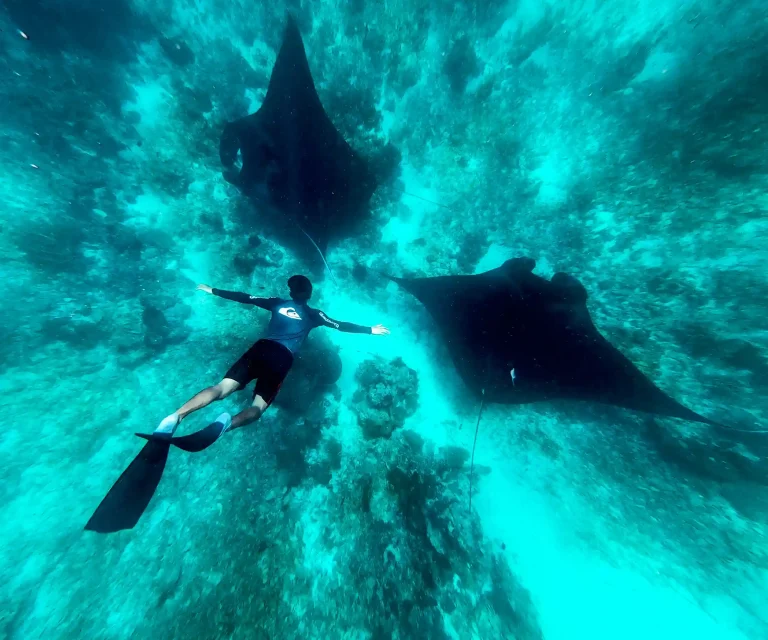
Manta Point Komodo (Karang Makassar) and Manta Point Nusa Penida in Bali are different sites in different provinces. Nusa Penida…

Island Travel
Adding Rinca or Komodo Island to a Manta Day
Rinca Island is the more common Komodo-dragon pairing with a Manta Point day, since it typically sits closer to Labuan…
Island Travel
Kanawa, Kelor & Sebayur Stopovers
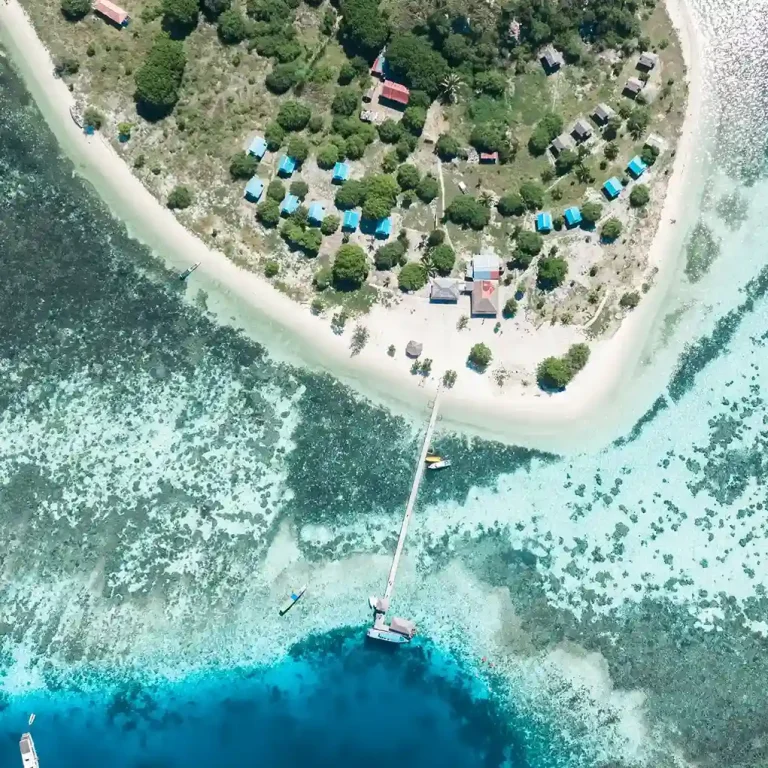
Kanawa, Kelor, and Sebayur are small islands between Labuan Bajo and Manta Point commonly used as stopovers or alternate snorkel…