Manta Point Komodo (Karang Makassar) and Manta Point Nusa Penida in Bali are different sites in different provinces. Nusa Penida is a quick half-day trip from Sanur or Nusa Lembongan with heavier boat traffic; Komodo’s Manta Point requires flying to Labuan Bajo first but offers calmer, shallower conditions and less crowding. Checked August 2026.
Are These the Same Manta Point?
No – they share a name but nothing else geographically. Manta Point Komodo (Karang Makassar) sits in Komodo National Park, East Nusa Tenggara, reached via Labuan Bajo. Manta Point Nusa Penida sits off the southwest coast of Nusa Penida island, reached from mainland Bali (Sanur) or Nusa Lembongan. Travellers researching “manta point” while planning an Indonesia trip should check which province and which access route a given result actually describes, since the name alone doesn’t distinguish them.
How Does Access Compare?
Nusa Penida’s Manta Point is the more convenient option for anyone already in Bali: a speedboat from Sanur takes roughly 45-60 minutes, or 35-45 minutes from Nusa Lembongan/Toyapakeh, making it a realistic half-day or full-day trip without flying anywhere. Komodo’s Manta Point requires a flight to Labuan Bajo, Flores (about 1 hour 5-10 minutes from Bali) before any boat transfer begins – a bigger time and logistics commitment, but one that comes with a full Komodo National Park itinerary attached rather than a single-site day trip.
| Manta Point Komodo | Manta Point Nusa Penida | |
|---|---|---|
| Access | Fly to Labuan Bajo, then ~1-1.5 hrs by speedboat | Speedboat from Sanur (45-60min) or Lembongan (35-45min) |
| Typical trip format | Full-day Komodo itinerary or multi-day liveaboard | Half-day or day trip from Bali |
| Depth profile | 8-18m, shallow cleaning-station plateau | Generally shallow, snorkel/dive friendly |
| Water conditions | Gentle-to-moderate current, calmer underwater | More surface swell/chop; cliff-exposed setting |
| Crowd levels | Moderate; shared with other Komodo boats | High, especially July-September peak |
| Manta reliability | Year-round, peak Dec-Mar | Reported strong (reliable) year-round by local operators |
How Do Sea Conditions Compare?
Nusa Penida’s Manta Point sits under exposed cliffs on the island’s southwest coast, meaning boats and swimmers regularly deal with surface swell and chop even when the underwater experience itself is calm and shallow. Komodo’s Manta Point, sitting inside a more sheltered central-park channel, tends toward gentler surface conditions, with its main challenge being current rather than surface swell – the two sites present genuinely different physical experiences even though both are described as beginner-accessible.
Which Site Has More Crowds?
Nusa Penida’s Manta Point is one of Bali’s most visited manta sites, with July-September described by local operators as peak season bringing notably more boats and snorkellers. Komodo’s Manta Point sees meaningful boat traffic too, especially in peak manta season, but the more involved access (flight plus boat, versus a direct Bali speedboat) tends to naturally limit total visitor volume compared with a site reachable in under an hour from a major tourism hub like Sanur.
Which Site Has More Reliable Manta Sightings?
Both sites report strong, near-year-round manta presence according to local operator sources – Nusa Penida’s guides describe consistently high sighting rates across the calendar, while Komodo’s Karang Makassar is described as a resident, year-round aggregation site with a December-March peak. Neither site publishes an independently verified sighting-rate statistic we can cite with confidence, so treat both as “generally reliable” rather than comparing exact percentages between them.
Which Site Should You Choose If You’re Already in Bali?
If your itinerary is Bali-only or Bali-focused with limited time, Nusa Penida’s Manta Point is the practical choice – no flight required, and it fits into a single day. If you’re planning a longer Indonesia trip that already includes Komodo National Park (for the dragons, Padar Island, or a liveaboard), seeing mantas at Karang Makassar as part of that broader itinerary makes more sense than adding a separate Bali-based trip. Choosing based on your overall itinerary, not just “which manta site is better,” generally leads to the more satisfying decision.
Which Site Suits Divers vs Snorkellers Better?
Komodo’s Manta Point works well for both divers and snorkellers thanks to its shallow, gentler-current cleaning stations. Nusa Penida’s Manta Point is also snorkel- and dive-friendly underwater, but the surface swell common at the site can make boat entry and exit more physically demanding for snorkellers than Komodo’s calmer channel setting – a factor worth weighing if you or your group are less confident in choppier surface conditions.
How Do Overall Trip Costs Compare?
A Nusa Penida day trip is typically the lower total-cost option for anyone already in Bali, since it needs no flight and no overnight stay beyond your existing Bali accommodation. A Komodo Manta Point trip adds the cost of a flight to Labuan Bajo and at least one hotel night in a different town, on top of the boat trip itself – a genuinely bigger travel investment. What that extra cost buys is a fuller experience: Komodo dragons, Padar Island, Pink Beach, and a national park setting rather than a single-site excursion. Check current package pricing on Komodo Luxury’s sailing trip page for the Komodo side of that comparison rather than relying on a fixed number here, since rates vary by season and boat.
Which Site Is Better for Underwater Photography?
Komodo’s calmer, more sheltered channel setting generally gives photographers steadier conditions and a shallower working depth at the cleaning stations. Nusa Penida’s exposed, swell-prone setting can make holding a stable shot more challenging on rougher days, though its site is still workable for photography on calmer conditions. Neither site guarantees ideal photography conditions on any given day – both depend heavily on the day’s specific weather and tide state.
Which Site Suits Families With Children Better?
Komodo’s calmer surface conditions inside its sheltered channel are generally easier on families and less confident swimmers than Nusa Penida’s more exposed, swell-affected boat rides. However, Komodo’s added flight and longer overall trip length is a bigger undertaking for families with young children than a Bali-based half-day excursion. Families staying in Bali who want a lower-commitment manta experience often choose Nusa Penida for that reason alone, independent of which site’s underwater conditions are technically calmer.
Is One Site More “Authentic” or Worth Prioritising Over the Other?
Neither site is objectively better – they serve different trip structures. Nusa Penida suits a Bali-based traveller wanting an efficient half-day manta encounter without restructuring their itinerary. Komodo’s Manta Point suits travellers already planning a national park visit, for whom the manta encounter is one part of a richer, multi-day Komodo experience. Choosing based on which fits your actual trip plan, rather than which site “wins” a manta-quality debate, is the more useful way to decide.
Manta Point Komodo vs Nusa Penida FAQ
Is Manta Point Nusa Penida the same as Manta Point Komodo?
No – they are different sites in different provinces (Bali vs East Nusa Tenggara) with different access routes, though both host reef manta cleaning stations.
Which is easier to reach from Bali?
Nusa Penida’s Manta Point is directly reachable by speedboat from Bali; Komodo’s Manta Point requires a flight to Labuan Bajo first.
Which site is calmer for snorkelling?
Komodo’s Manta Point generally has calmer surface conditions inside its sheltered channel; Nusa Penida’s site is more exposed to swell given its cliff-backed position.
Which site is less crowded?
Komodo’s Manta Point tends to see fewer total visitors than Nusa Penida’s, largely because the added flight makes it a bigger commitment than a Bali day trip.
Can I visit both on one Indonesia trip?
Yes – combining a Bali stay with a Komodo extension is a common itinerary; see Komodo Luxury’s Komodo tour from Bali option for how that connection works.
If your trip includes Komodo National Park, see Komodo Luxury’s sailing trip for Manta Point options, or Komodo tour from Bali if you’re starting your trip in Bali and want to add Komodo on. For the full Komodo-side site guide, see our Manta Point Komodo overview.
Comparing how manta encounters feel in Komodo and Nusa Penida
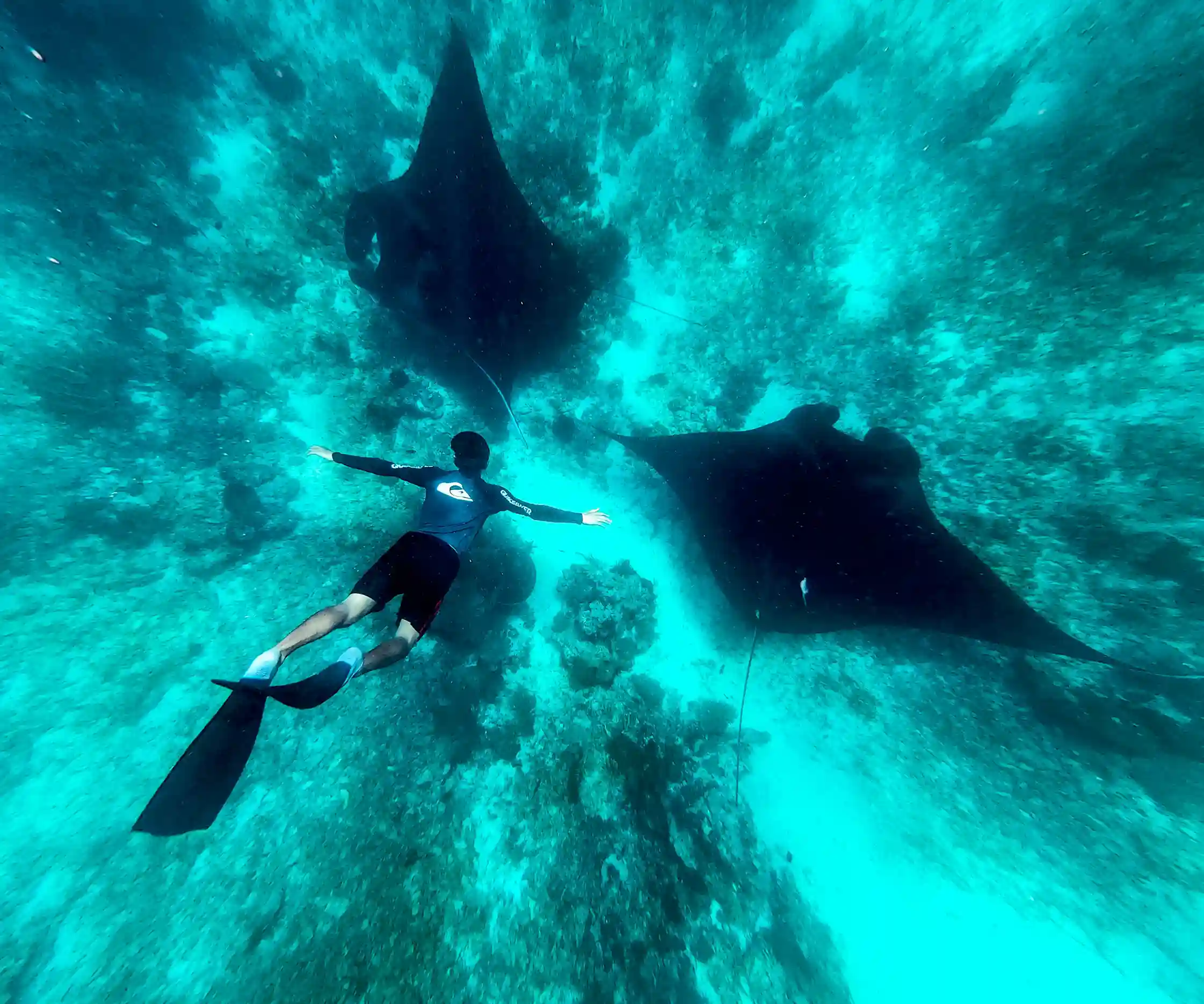
Karang Makassar in Komodo National Park is a broad, shallow reef plateau where manta rays cruise long, predictable circuits along the current. You spend more time drifting beside them as they feed or queue for cleaning. Around Nusa Penida, manta sites tend to be steeper reef or bay edges, with rays looping in and out of a more confined zone, so encounters can feel more “on and off”, with shorter passes but sometimes at closer range.
Water movement also differs. Komodo’s central channel has firm but usually steady currents along the plateau, which are managed with negative entries and controlled drifts. Good briefings and timing are crucial. At Nusa Penida, surges and swell can be more noticeable, especially in shallow cleaning areas, and surface chop can be uncomfortable for weaker swimmers even when underwater conditions are manageable.
Temperature is another contrast. Karang Makassar sits in the transition between warmer northern and cooler southern Komodo. Most of the year you can expect mid to high‑20s Celsius, with cooler upwelling possible in the dry season. Nusa Penida is more consistently impacted by thermoclines, and localised drops in temperature can be abrupt, particularly at depth. Divers switching between locations should not assume one exposure setup will feel identical in both.
Choosing between Komodo and Nusa Penida for snorkelling and diving
For snorkellers, the key differences are surface conditions, current and entry style. At Karang Makassar, many operators time sessions to use the lee side of the reef where snorkellers can drift in manageable current with in-water guides, then be collected by the boat. Swell is often moderate, and visibility in peak feeding season is lower but filled with plankton and fish. Around Nusa Penida, mantas may be just as shallow, but surface chop and surge can be stronger and more tiring for less confident swimmers.
Divers assessing the two regions weigh predictability of the manta route against overall dive profile. In Komodo, a typical dive along the plateau follows a clear manta highway over coral and rubble at 8‑18 metres, with cleaning stations on slight rises. The whole dive is generally structured around the rays, and you may remain on the same broad feature for the full hour. At Nusa Penida, manta dives are often shorter loops or back‑and‑forth routes near a specific corner or bay, with more focus on rock features than a continuous plateau.
Another difference lies in what surrounds the manta encounter. In Komodo, many day trips combine Karang Makassar with a contrasting dive on a high‑energy reef or a sheltered coral slope nearby, and often include above‑water time on a Komodo or Rinca trekking site on separate days. Nusa Penida itineraries are more compact: manta-focused dives often pair with sites such as crystal-clear slopes or walls, plus possible sunfish dives in season. The broader trip decision is often about whether you want a pure diving extension to Bali, or a dedicated voyage to a separate national park.
Exposure protection, jellyfish, crowds and hidden costs in Komodo
Choice of exposure protection at Karang Makassar is not only about absolute temperature but also about repeated entries and time on the surface. A 3 mm full wetsuit suits most visitors year-round, giving both warmth and some sting protection. Shorty suits are attractive in the wet season when the water can feel warm, but they leave calves and forearms exposed during plankton blooms, when small jellyfish and hydroid-like stingers are more common in the top few metres.
Snorkellers who feel the cold quickly or who are sensitive to stings often prefer a thin full suit or a dedicated stinger suit over a shorty, especially from December to March when plankton is thickest. Divers spending multiple days in the park, or planning additional southern sites such as Manta Alley or cooler upwelling areas, frequently add a hooded vest or move to 5 mm to avoid getting chilled by repeated thermoclines. Adequate exposure protection reduces the temptation to surface and kick away from mantas early in the dive.
Perceptions of crowding at Karang Makassar vary throughout the year. During the wet season, plankton-driven aggregations can attract several boats at once, yet the plateau is long enough that groups can spread along different sections of the manta route. Dive operators coordinate loosely by radio and timing, but peak holiday periods still see more people both underwater and on the surface. In the drier months, there may be fewer boats but they focus more tightly on the core cleaning stations, so managing your position in relation to other groups matters just as much.
Prospective visitors sometimes underestimate ancillary costs associated with a Komodo manta trip. Beyond the published Komodo National Park entry fee and ranger charge, there may be surcharges for using speedboats rather than slower wooden vessels, equipment rental for wetsuits and stinger suits, and additional fuel costs for longer-range itineraries that combine central sites with northern or southern locations. Some trips also add small conservation or harbour fees. Clarifying exactly what is included in a quoted package, and what is payable in cash on the day, prevents surprises once you are already in Labuan Bajo.
Frequently asked questions
How does Karang Makassar compare with Nusa Penida?
For an overall manta-focused trip, Komodo’s Karang Makassar usually offers a broader experience, with a long plateau, year-round reef manta presence and the option to pair it with other sites in the national park. Nusa Penida works well if you are based in Bali and want a shorter excursion. Conditions, travel time and your comfort with currents should guide the final choice more than any blanket ranking.
Is Manta Point Komodo better than Nusa Penida?
For many divers and snorkellers, Karang Makassar feels “better” because of its wide manta highway, combination of feeding and cleaning behaviour, and the context of being inside Komodo National Park. Nusa Penida can deliver equally memorable encounters with less travel if you are already in Bali. If you value a multi-day marine trip with varied sites, Komodo tends to justify the extra journey; for a single day add-on, Penida is simpler.
If the comparison points you towards Komodo rather than Bali, the practical next step is a boat that actually stops at Karang Makassar: a Komodo liveaboard itinerary for multi-day access, or a one-day Komodo tour package if you only have a single day in Labuan Bajo.
Keep reading
Island Travel
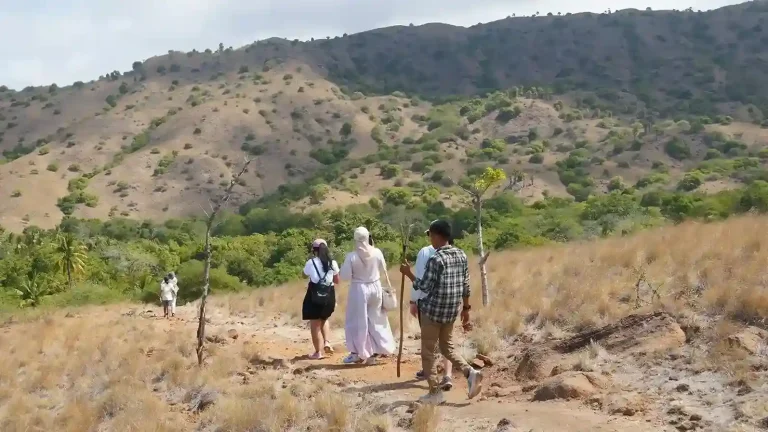
Adding Rinca or Komodo Island to a Manta Day
Rinca Island is the more common Komodo-dragon pairing with a Manta Point day, since it typically sits closer to Labuan…
Island Travel
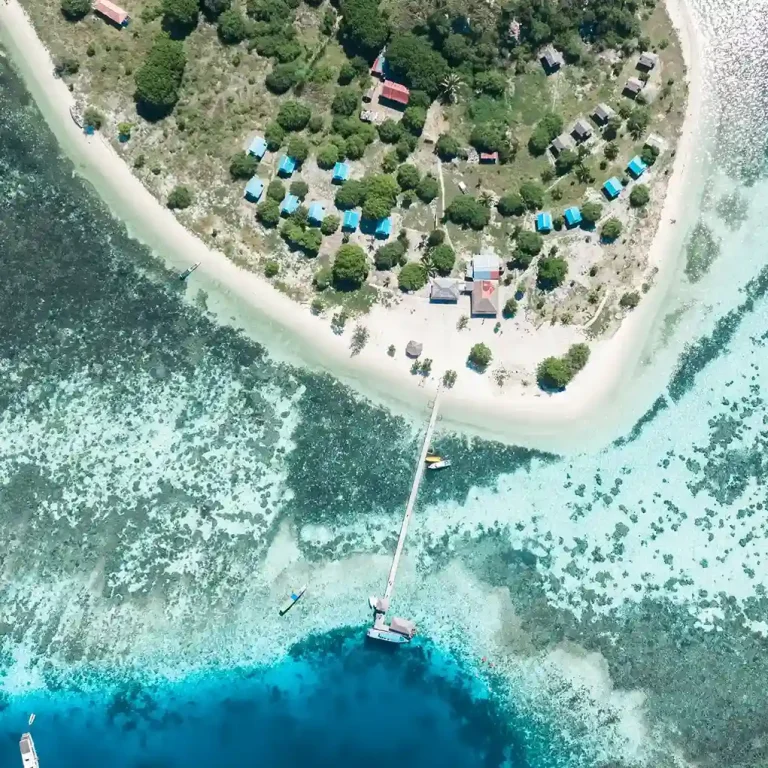
Kanawa, Kelor & Sebayur Stopovers
Kanawa, Kelor, and Sebayur are small islands between Labuan Bajo and Manta Point commonly used as stopovers or alternate snorkel…
Island Travel
Komodo Liveaboard Routes with Manta Point
Komodo liveaboard itineraries typically route through Manta Point in the first or second day, then continue to Manta Alley, Batu…