
Are Manta Sightings Guaranteed in Komodo?
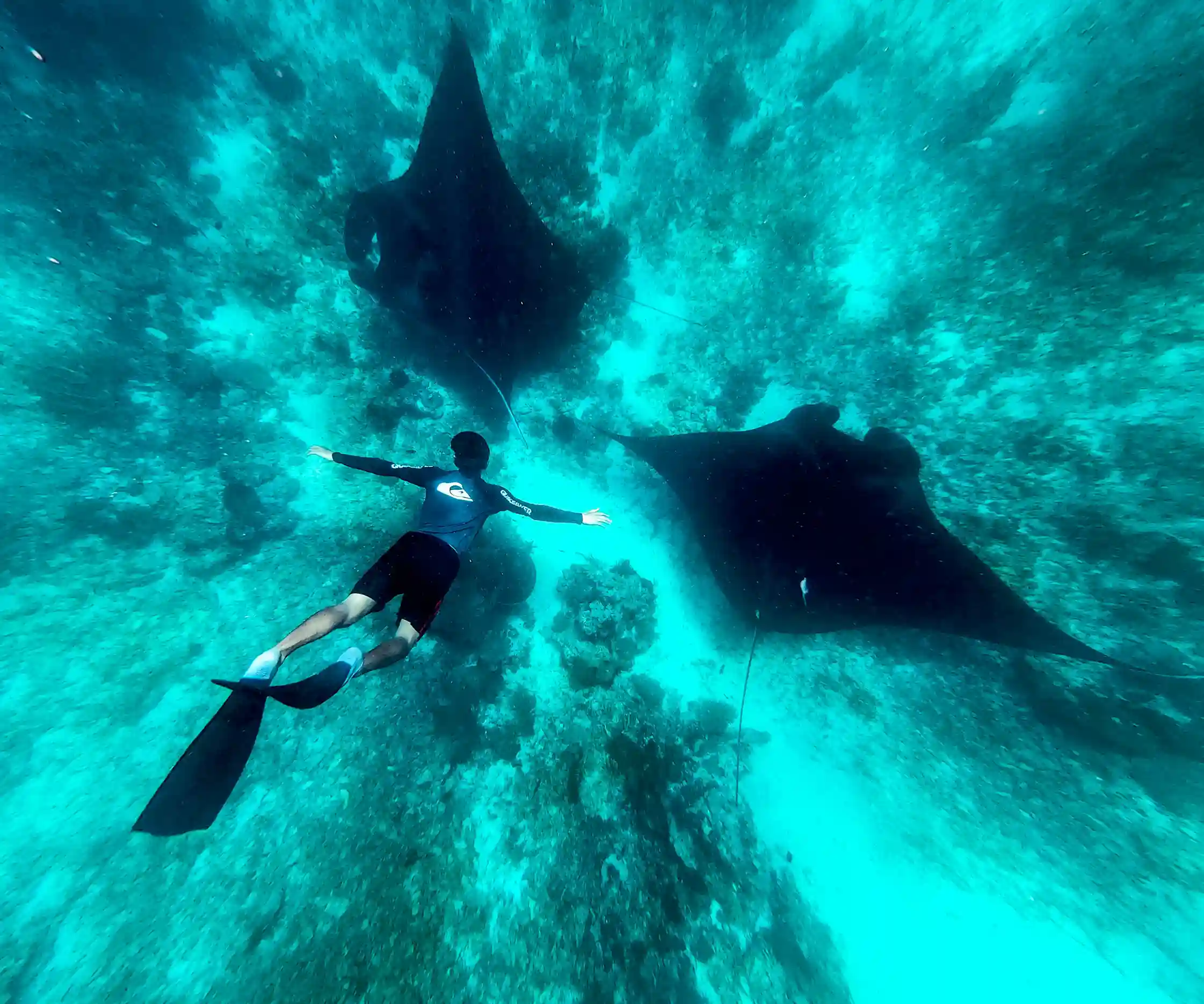
No, manta ray sightings at Manta Point are never guaranteed on any single trip, in any month. Local operators report high encounter rates, especially December through March, but wildlife is wildlife — the honest answer is that most trips see mantas, some don’t, and no operator or website can promise one on your specific date.
Are Manta Sightings Guaranteed at Manta Point?
No. Nothing in nature is guaranteed, and any operator or website promising a 100% sighting guarantee is overselling. What is true is that Manta Point is one of the more reliable manta sites in Indonesia precisely because it functions as a cleaning station — mantas return to the same reef repeatedly for a specific biological reason, rather than passing through at random — which is why encounter rates here run higher than at sites without that draw.
What Do Operators Actually Claim, and How Reliable Is That?
Dive and tour operator sites commonly cite sighting rates in the 80–90% range year-round, rising to claims of 95%+ in peak months (most often cited as December through February, though the exact window each operator publishes varies). These figures come from operator logs and marketing pages, not from a peer-reviewed, independently audited dataset — treat them as a reasonable directional signal, not a scientific guarantee.
What Does the More Rigorous Research Actually Show?
A peer-reviewed study of Komodo manta ecology found that sightings per dive varied by month and by site, with fewer sightings recorded at central park sites specifically in August and September, and the study explicitly noted data gaps for a complete month-by-month picture. That is a meaningfully different, more cautious statement than “95% guaranteed in peak season” — it tells us sightings vary and dip in certain months, without giving a clean site-specific probability we can quote as fact.
Our Honest Position
Reef mantas use the Karang Makassar cleaning station in every month of the year, so no date is empty and no date is certain. What changes across the calendar is predictability: December through March, the wet season, is the stretch local operators report most consistently, and that report rests on years of accumulated crew observation rather than on one published scientific survey. Sightings in the remaining months are ordinary; they are only harder to forecast. Neither a government agency nor a dive-research body publishes a month-by-month guarantee for this particular site, which is why a fixed sighting percentage quoted anywhere should be read as marketing rather than verified data. We are not going to invent a percentage we cannot source, and we are skeptical of any site that quotes one without a citation. If you want the most defensible planning advice: book in the December–March window if your dates are flexible, understand that sightings still happen outside it, and go into any single trip knowing that manta encounters — like any wildlife encounter — are probabilistic, not promised.
What Actually Improves Your Odds
- Booking within the December-March window, per the operator-observed pattern above.
- Choosing an operator that visits Manta Point specifically, not a generic “manta rays subject to conditions” itinerary that may substitute another site.
- A multi-day liveaboard gives you several attempts across different days rather than one shot on one date — see our liveaboard guide.
- Good timing within the day around tide and current, which your guide manages — see our best time of day page.
What If You Don’t See a Manta?
A no-sighting trip still typically includes the reef itself, other marine life at the cleaning station, and often a combined stop like Padar or Pink Beach on the same day (see our combined-day guide) — it is not a wasted day even without a manta encounter. Ask your operator about their policy if this matters to you; some liveaboards build in a return pass at a different tide if the first attempt comes up empty, though this is operator-dependent and not something to assume as standard.
Should a “No Guarantee” Answer Change Your Booking Decision?
Not really — it should just calibrate expectations honestly. Manta Point remains one of the more consistent manta encounter sites in Indonesia specifically because of its cleaning-station function, and most visitors who book in season do see mantas. The point of this page is simply to correct the marketing habit of quoting guarantee-sounding percentages without a source, not to talk anyone out of visiting.
Last Word
Go anyway; the odds are genuinely in your favor even without a guarantee.
A Note on This Page’s Purpose
This page exists specifically to counter marketing-driven certainty language; it is not meant to discourage a visit, which remains a good decision for most travelers regardless of the exact odds on any given day.
Why Some Sites Quote Higher Percentages Than Others
Sighting-rate claims vary partly because operators define “sighting” differently (a single distant manta counted the same as a close encounter with several), partly because some sites genuinely have more reliable manta traffic than others, and partly because marketing incentives favor a higher, more attractive number. This is another reason we don’t quote a single figure as fact on this page — the honest range from credible sources is wide enough that any single confident number should raise a question about how it was calculated.
How This Compares to Other Wildlife Encounters
The same honest caveat applies to any wildlife encounter travel product — whale watching, Komodo dragon treks, bird-watching tours — all of it is probabilistic, and reputable operators in every category avoid absolute guarantees for the same reason we avoid one here. Manta Point’s cleaning-station function genuinely does make it more reliable than a random open-ocean wildlife search, which is a real point in its favor; it just doesn’t make it a certainty, and no honest operator should claim otherwise.
Frequently Asked Questions
Is a manta ray sighting guaranteed at Manta Point?
No. No operator or website can guarantee a wildlife sighting on any specific date. Manta Point has a comparatively high encounter rate due to its cleaning-station function, but sightings are never certain.
What percentage of trips actually see mantas at Manta Point?
Operators commonly claim 80-90% year-round and higher in peak season, but these are operator-reported figures, not from an independently audited scientific dataset. Treat them as directional, not exact.
Does peer-reviewed research support a specific sighting percentage?
Not a clean one. A published Komodo manta ecology study found sightings varied by month and site, with fewer sightings at central sites in August and September, but it did not publish a complete probability table.
What can I do to improve my chances of seeing a manta?
Book within the December-March window if your dates are flexible, choose an operator that visits Manta Point specifically, and consider a multi-day liveaboard for multiple attempts.
Is it still worth visiting Manta Point if sightings aren’t guaranteed?
Yes — most visitors who go in season do see mantas, and the trip typically includes other reef life and nearby stops even on a no-sighting day.
Ready to plan the trip? If you want to discuss whether manta sightings can be expected in Komodo, tell +62 811-3823-875 or sales@komodoluxury.com your travel dates and route.
Other Big Animals: Whale Sharks and Pelagics Near Karang Makassar
Whale sharks occasionally pass through Komodo National Park, but they are not a recognised feature of Karang Makassar. Sightings tend to be one-off encounters reported by individual crews rather than a recurring pattern. Treat any mention of whale sharks near Manta Point as a rare bonus, not as something you can plan a trip around or meaningfully predict from season alone.
Large pelagic visitors such as Mobula birostris, big trevally and tunas are more realistic “extra” species at this site. Their presence is linked to current strength, plankton density and chance timing rather than to a specific month. Operators do not have tools to forecast these appearances; they simply position the boat in the known manta travel corridors and observe what comes through on that tide.
Turtles, Reef Sharks and How They Fit Into a “Manta” Dive
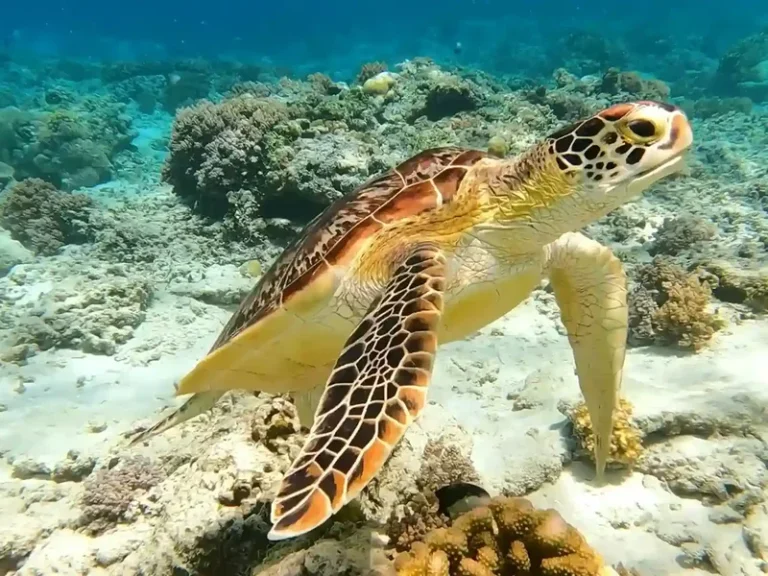
Green turtles and hawksbills use the long coral and rubble edges of Karang Makassar for resting and grazing. On many dives, one or two will be seen tucked into bommies or crossing the sand channels between coral blocks. The calmer sections of the reef-plateau, away from the strongest current, tend to hold more turtles, so guides often finish the drift there to give divers time to look for them.
White-tip and black-tip reef sharks also patrol parts of the plateau and drop-off. They are not as site-defining as the rays, but short, passing views are reasonably common, especially where current intersects the reef corner and prey fish aggregate. Currents that are strong enough to bring plankton for mantas usually help shark and turtle sightings too, but can reduce how long you are able to stop and watch any one animal.
Across a week of diving in Komodo National Park, most visitors who log multiple dives at Manta Point will see Mobula alfredi on at least some of those immersions, but no individual day can be guaranteed. Upwelling, plankton density, wind, moon phase and boat traffic all shift the pattern of manta use of the cleaning stations. You can increase your odds with flexible scheduling, choosing neap-tide days and accepting that occasionally conditions line up perfectly and the animals are still elsewhere.
Frequently asked questions
Is Manta Point Komodo still worth visiting if mantas are not guaranteed that day?
Yes, most divers still find the site worthwhile even on low-manta days. The reef-plateau holds turtles, reef sharks, schooling fusiliers and occasional pelagic visitors, and the drift itself is a useful introduction to Komodo currents. The trade-off is that if your main goal is repeated, close manta passes, you must accept that another, quieter site might deliver more predictable general reef life.
Do operators cancel Manta Point Komodo trips if manta sightings have been low recently?
Trips usually run as planned, even if sightings have dipped, because conditions can change within hours and there is no reliable short-term “manta forecast”. Operators are more likely to adjust or cancel for safety reasons such as swell, wind or park restrictions. If mantas have been scarce, some boats will add alternative sites on the same itinerary to balance the wildlife chances.
What are the chances of seeing manta rays at Manta Point Komodo in August?
August is within the clearer-water dry-season core, when cleaning-station visits are often steady, so your chances are generally good rather than exceptional. Plankton is usually lower than in the wet season, so huge feeding aggregations are less common, but water visibility is often better for watching individual rays. As always, a specific date can still produce few or no mantas despite the broader seasonal pattern.
Are manta sightings at Manta Point Komodo consistent year-round, or mainly seasonal peaks?
Manta use of Karang Makassar is year-round, but the type of encounter shifts with the seasons. Wet months tend to favour larger feeding groups with reduced visibility, while the drier core months bring clearer water and more classic cleaning-station patterns. There are shoulder periods when rays are present but move less predictably. Planning several possible manta days in your trip spreads your risk across these fluctuations.
Are manta ray sightings guaranteed at Manta Point Komodo?
No, manta ray sightings at Manta Point are never guaranteed on any given day or dive. The site is a key cleaning and feeding area with resident Mobula alfredi, so long-term encounter rates are high, but short-term variability is real. Responsible operators will be clear about this and focus on using conditions, tides and timing to give you the best available odds, not certainty.
Keep reading
Manta Guides
Whale Sharks, Turtles and Other Megafauna
Beyond reef manta rays, Manta Point Komodo (Karang Makassar) hosts blacktip and whitetip reef sharks, eagle rays, green turtles, and…
Manta Guides
How to Identify Individual Reef Mantas
Researchers identify individual reef manta rays by the unique pattern of dark spots on their belly, especially the area between…
Manta Guides
Cleaning Station Behaviour at Manta Point
Manta Point is a cleaning station, not a feeding ground — reef mantas hover there to let small cleaner fish…